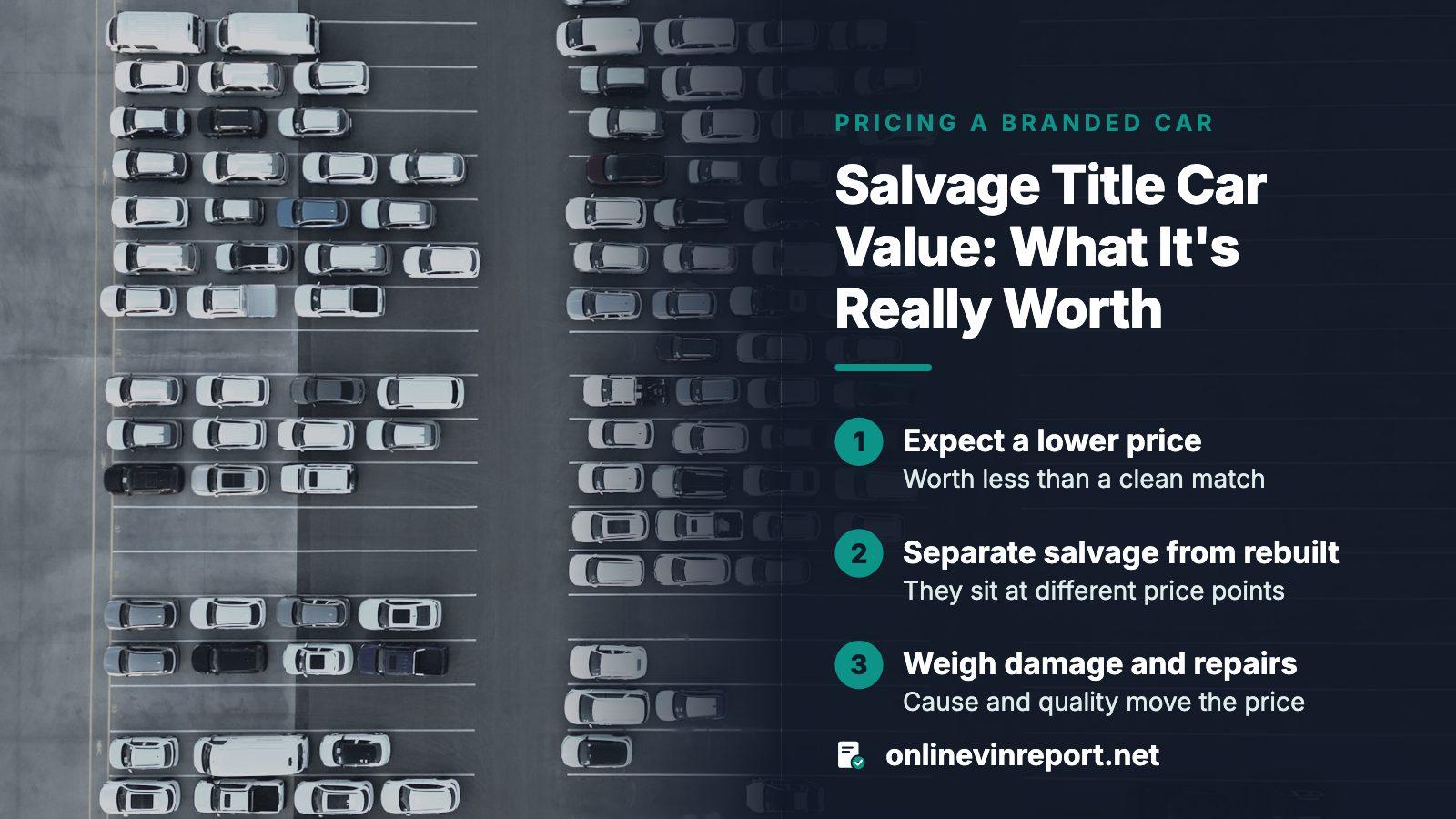
THE SHORT ANSWER
Expect a salvage or rebuilt car to sell for substantially less than a comparable clean-title car. The size of the gap is not set by any agency, because it depends on the original damage, how the repair was done and whether the car can be insured. Run the VIN through an online title check first, then price the car from what the record shows.
- Official stance
- Worth substantially less than a clean-title match
- Fixed discount
- None published by the sources we read
- Biggest unknown
- Damage cause and repair quality
- First step
- Read the brand history by VIN
What the official pages say about value
Texas DMV tells buyers that rebuilt values vary, yet each one will sit well under a never-salvaged match. The agency's reason is plain: the car was once a write-off. That is as specific as the official guidance gets.
None of the government pages we opened gives a percentage, a formula or a table of typical discounts. Any figure you see quoted elsewhere is someone's estimate. Treat it as a starting guess and let the individual car decide where it lands.
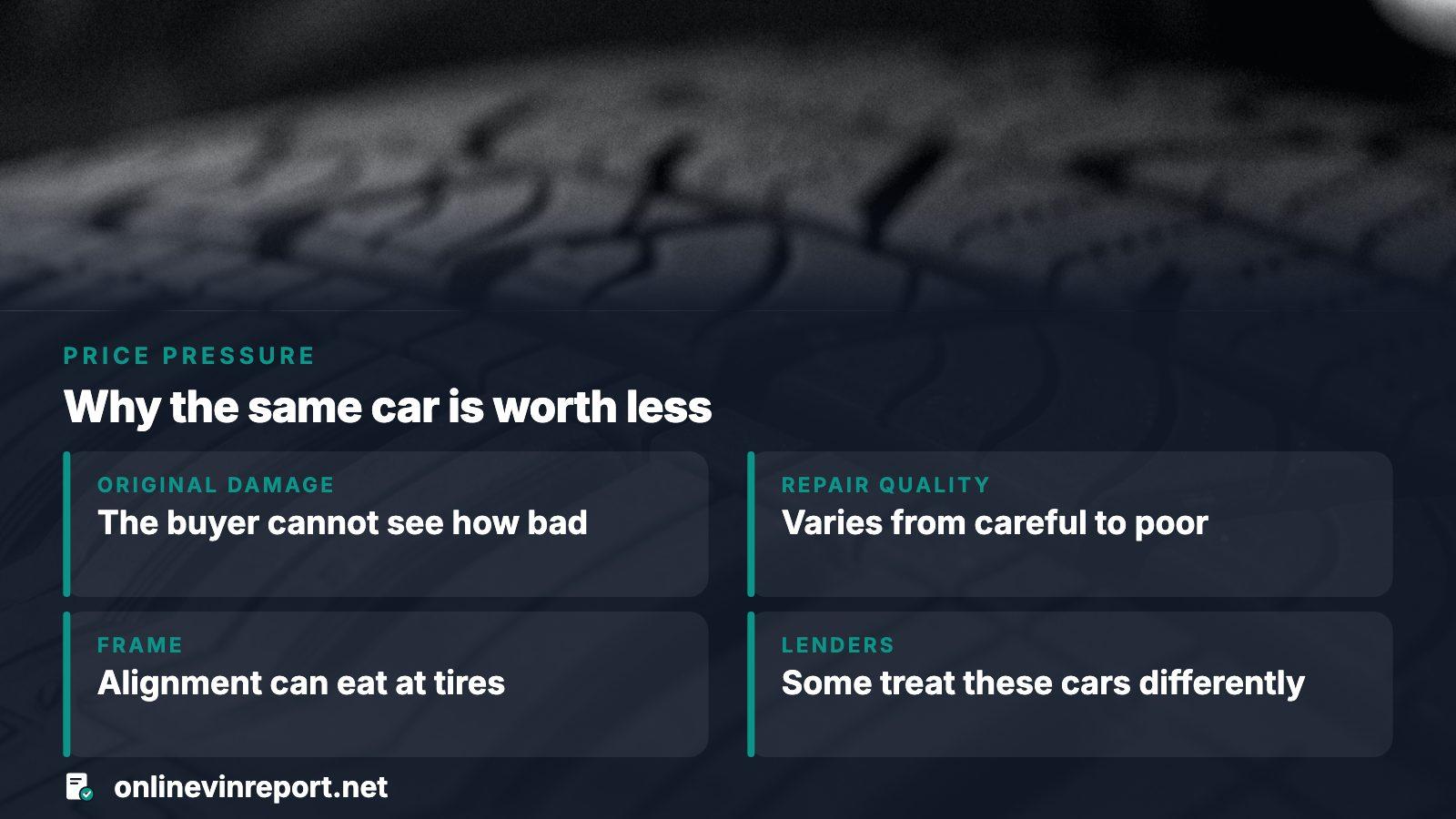
Why the same car is worth less
A salvage brand marks a car that cost more to fix than it was worth before the damage. Insurers usually make that call, and the federal definition also counts what the wreck itself would sell for.
- The buyer cannot see how bad the original damage was.
- Repair work done after a total loss varies from careful to sloppy.
- Texas DMV notes that some shops build replacement pieces by welding sections or reusing damaged parts.
- Frame alignment matters, since a crooked one eats at tires, brakes and the drivetrain.
- Some insurers and lenders treat the car differently, which shrinks the pool of buyers.
Fewer buyers and more doubt both push the price down, and the second one is what a good record and a good inspection can reduce.
Salvage and rebuilt are different price points
A car still wearing a salvage title usually cannot be driven on a road. Texas requires repair and inspection before road use, and until that happens the paperwork options are narrow. Buying one means buying a project.
A rebuilt car, also called prior salvage, has been repaired and has passed safety and anti-theft inspections, so it can return to the road. It costs more than the project car and less than a clean match.
| Status | Can it be driven | What you are pricing |
|---|---|---|
| Salvage | Not until rebuilt and inspected | Repair cost and risk |
| Rebuilt | Yes, after inspection | Past damage and repair quality |
| Non-repairable | No, cannot be re-titled in California | Parts value only |
What moves a particular car's price
Two cars with the same brand can be worth very different amounts. Start with the cause. A hail-pocked body is a different story from a flood car or a frame-bent collision car, and the brand label alone will not tell you which you have.
Next look at the repair file. Photos of the damage, receipts for parts and the shop's name let you judge the work. Without them, assume the worst case and price accordingly.
Finally consider insurability. Texas DMV lists insurability and resale value as things to weigh before buying. A car you cannot easily insure or sell later deserves a lower offer today.
Odd brands that change the math
Some entries look like salvage but carry a different story. Texas lists an Owner Retained brand for a total loss the owner chose to keep. It also lists Salvage Stolen, used when an insurer paid out on a theft and the state then reported the car as salvage.
Check the stolen flag
Texas DMV advises contacting the reporting jurisdiction to confirm that a Salvage Stolen vehicle is no longer considered stolen. Settle that before you discuss price.
In California, insurance can trigger a Salvage Certificate, requested on form REG 488C, and a separate Non-Repairable Vehicle Certificate exists for cars that can never go back on the road.
Run the VIN before you price it
A brand is a tag a state titling office puts on a car, for example junk, salvage or flood, and the federal NMVTIS database keeps the tags from every state a car has passed through. The government's consumer guide warns that a buyer lacking that history can overpay or get a car that was never properly fixed.
Our online title check reads the VIN and shows brand entries, total-loss and salvage records and odometer readings. Start with the free preview to see whether a brand exists, then buy the full report in one payment if the car is still on your list. See the pricing page for the options.
A clean record is a good result. The federal guide describes an NMVTIS report as intentionally short, so a short report is not a missing one.
Turning the record into an offer
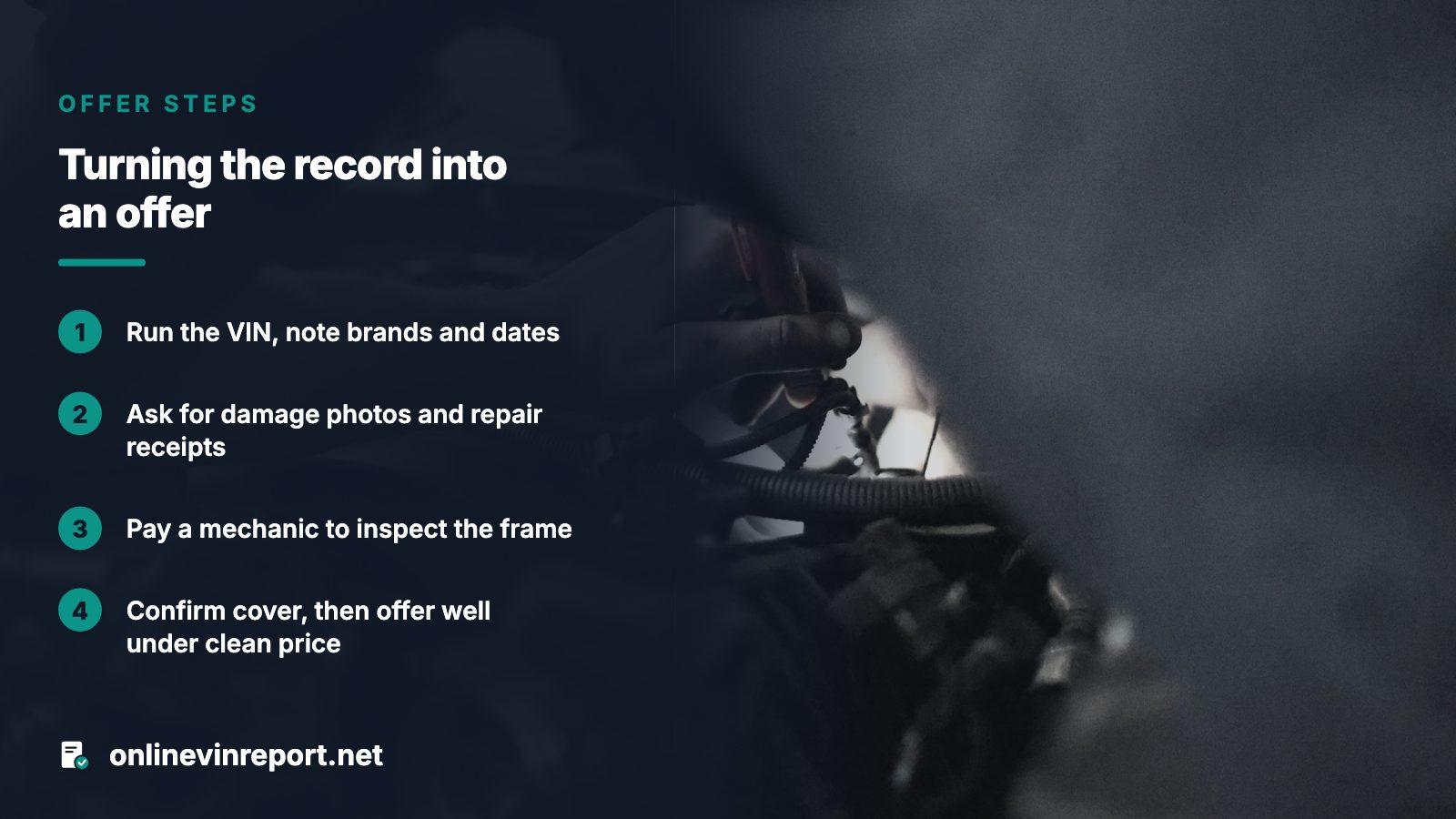
- Run the VIN and note every brand, date and state.
- Ask the seller for the damage photos and repair receipts.
- Pay an independent mechanic to inspect the frame and the repair.
- Confirm an insurer will cover the car before you sign.
- Make your offer well under the clean-title price, and be ready to walk away.
If the seller resists the inspection or the VIN check, that reluctance is information. A fair salvage deal survives scrutiny.
Where this information comes from
- Texas DMV: Rebuilt vehicles — worth substantially less, inspection and repair questions
- Texas DMV: Salvage brands — salvage definition, special brands, buying tips
- NMVTIS: Understanding a vehicle history report — why brand history affects what a buyer pays
- California DMV: Total loss salvage and non-repairable vehicles — salvage certificate and non-repairable rules
Sources and photos: Facts checked against the sources above in November 2026. Photos by Iain, Mustafa Sheikhmouss and Yvette S on Unsplash; diagrams by OnlineVINReport.
Keep reading
- Is a rebuilt title worth buying? What to check firstDecide whether the lower price is worth the risk on a rebuilt car.
- Selling a salvage title car: disclosure, buyers and paperworkSee the seller side of the same value question.
- Salvage title VIN check: run it online before you payRun the VIN to find out whether a brand exists.
- Clean title vs salvage title: how to tell them apart with a VIN checkCompare the two titles before you price either.
Frequently asked questions
How much less is a salvage title car worth?
No official source we read gives a percentage. Texas DMV says only that rebuilt vehicles are worth substantially less than comparable cars that were never salvaged. The gap for your car depends on the damage, the repair and how easy it is to insure and resell.
Is a rebuilt title worth more than a salvage title?
Usually yes, because a rebuilt car has been repaired and inspected and can be driven. A car still carrying a salvage title generally cannot be used on the road until that work is done, so you are paying for a project.
Can a clean VIN report mean the car was never totaled?
A report with no brand, total-loss or salvage entry is a good sign, and the federal guide calls it a good thing. It still reflects only what was reported, so an inspection remains worthwhile before you pay.
Does a salvage brand ever disappear from the record?
The national database holds brands from every state, so retitling in another state does not wipe the entry. If a seller claims the brand is gone, run the VIN and read the history yourself.
What should I check before offering on a salvage car?
Learn the cause of damage, ask for repair receipts and photos, have an independent mechanic inspect the frame, and confirm you can insure it. Then price from the record and the inspection, not from a rule of thumb.
Now check the car itself
The guide explains what to look for. The report shows what this VIN has on record.