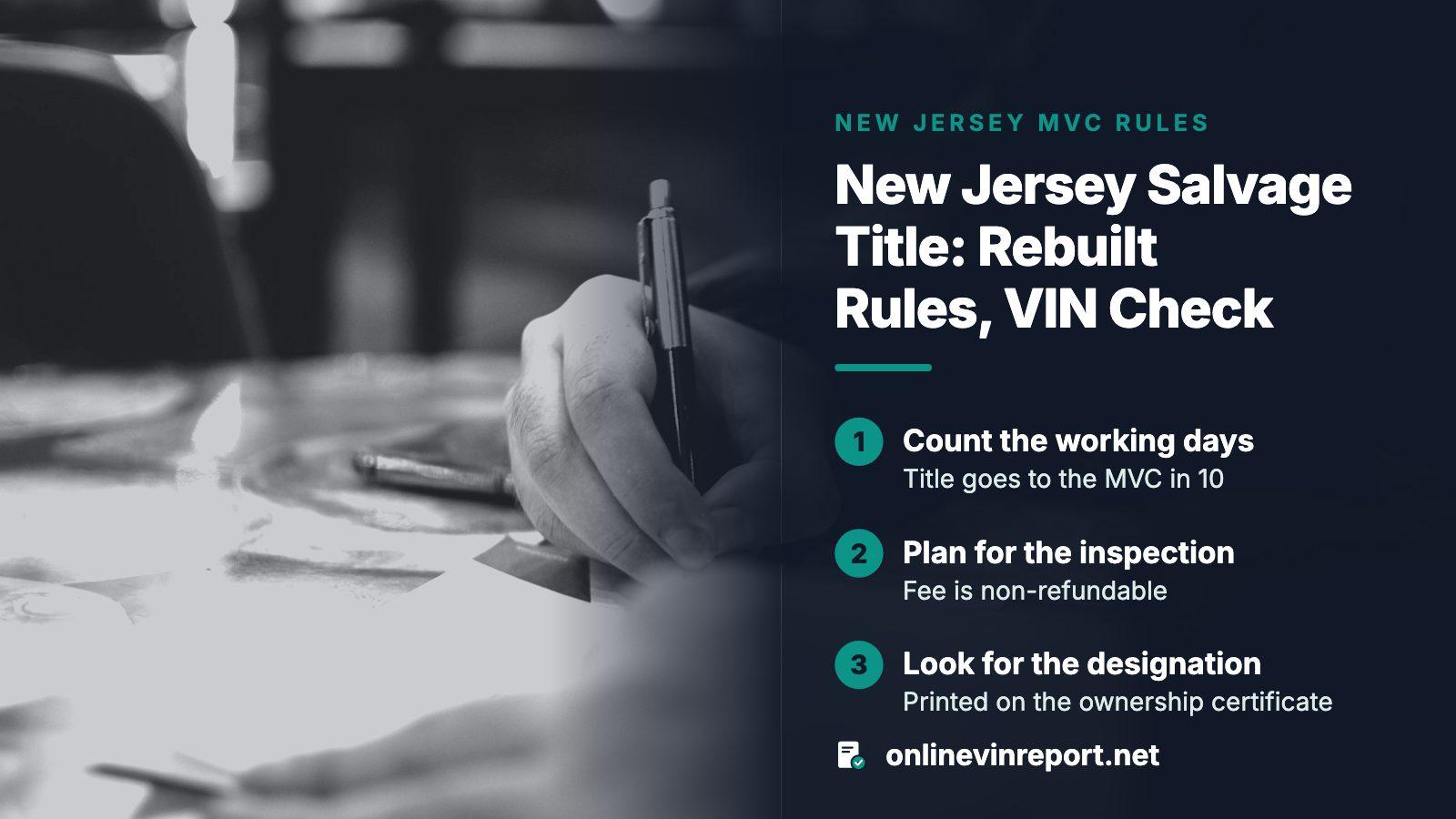
THE SHORT ANSWER
In New Jersey the owner, insurer or title holder must hand the title to the MVC within 10 working days of a theft report, damage or total loss settlement. The state then issues a salvage title. The car cannot be registered for the road until it is repaired, inspected and given a certificate of ownership carrying a salvage designation. A VIN title check shows the brand.
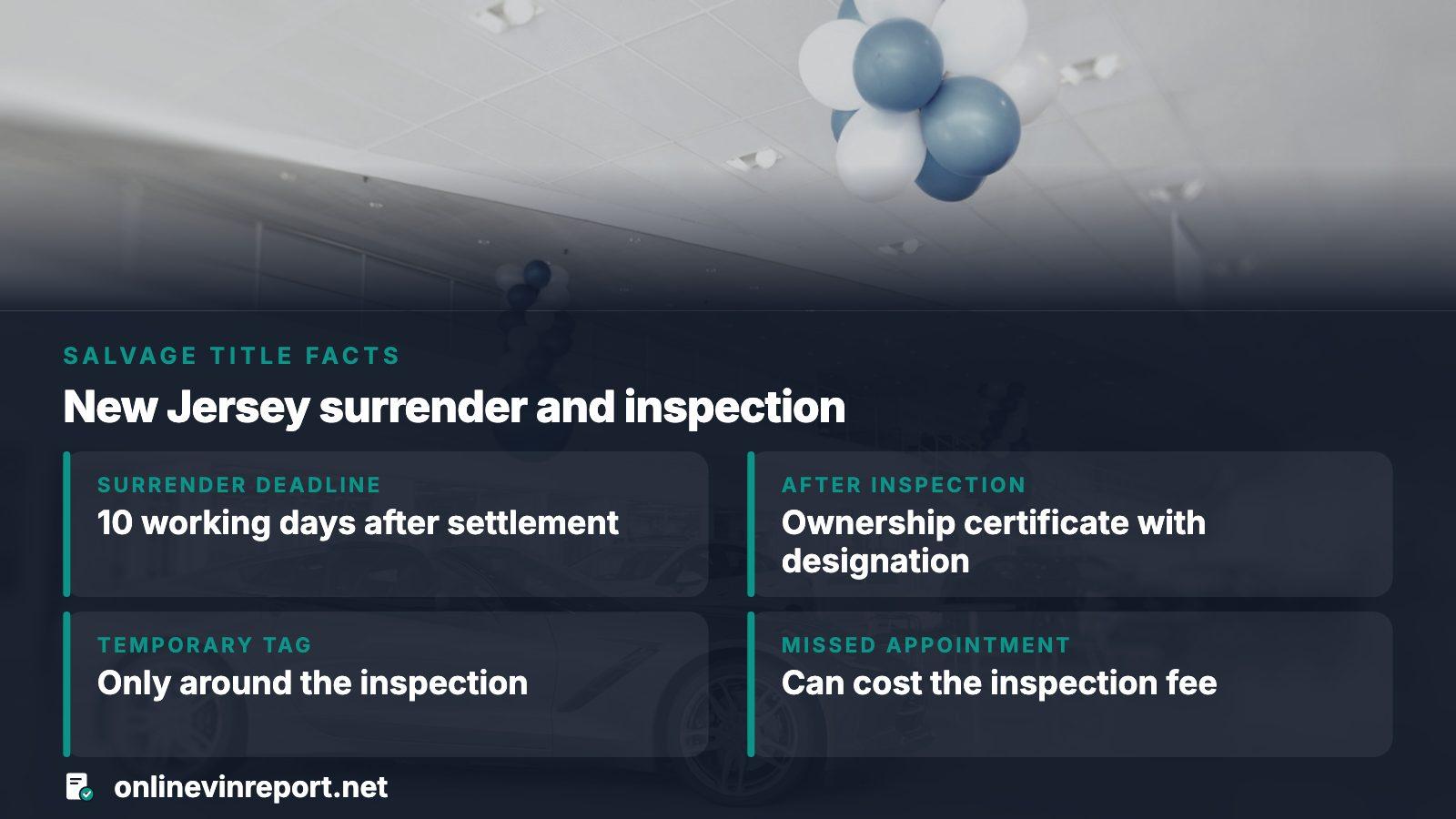
- Surrender deadline
- 10 working days after theft, damage or total loss settlement
- Inspection fee
- $200 per car, $100 per motorcycle, non-refundable
- Temporary registration
- 5 days, $5, only around the inspection
- After inspection
- Certificate of ownership with a salvage designation
When New Jersey calls a car salvage
The state's rules reach any vehicle that was reported stolen or was damaged until repair is economically impractical. Two tests decide the second part, and the age of the car picks which one applies. For a newer car, meaning one built no more than eight model years back, salvage means a qualifying repair estimate reaches the market value the car had right ahead of the loss.
Older cars follow a second path. If the car was worth at least what a comparable model from five model years ahead would be worth, it counts as salvage when repairs hit its pre-loss value. It also counts when the insurer pays out a total loss claim. A paid total loss can therefore brand a valuable older car even if the estimate fell short.
Who gets to put a number on the damage
A salvage decision rests on paper that someone outside the car's household produced. Only two sources qualify: a licensed collision shop, or an adjuster licensed to work in the state for an insurer. If several estimates exist, the highest governs. An estimate the owner wrote does not count.
Value is not left to opinion either. The rules use the average of the valuation manuals that the state's banking and insurance department has approved for physical damage claims. For a buyer this means a car does not slip below the line because a seller shopped for a low estimate.
From wreck to salvage title
The clock starts with the report of theft or damage, or with the total loss settlement. Ten working days later, the paper title must be at the MVC, surrendered by the owner, the insurance company or whichever party has it in hand. If a lender is on the title, the salvage title goes in the owner's name but is delivered to the lienholder, and the lien stays noted until it is paid off.
- A $60 title fee, plus a $25 penalty if the request lands late: more than 10 days past the sale date printed on the old title, not counting weekends and holidays.
- The insurer's listing sheet, giving actual cash value, the kind of loss, the damage estimate, and the car's year, make and serial number.
- A signed-off lien, if the face of the title shows one.
- For an unrecovered theft, the police report named on the stolen stop.
Salvage title requests are taken at a Vehicle Center by appointment. Out-of-state residents can be titled too.
What a salvage-titled car cannot do
Until a certificate of ownership exists, the car can change hands only as a salvage vehicle. Whoever buys it then has 10 working days to get a salvage title issued in the buyer's own name. Auctions follow the same rule: the car moves only with its assigned salvage title.
Registration for road use is off the table. The single exception is a temporary one, valid five days and costing $5, available starting five days before the inspection appointment. At the counter the owner shows the appointment notice, the salvage title and a liability insurance card or declaration page.
Why that matters at a private sale
A seller holding a salvage title cannot hand you a car you can legally plate. If the price looks like a bargain and the paperwork says salvage, you are paying for repairs, an inspection and a retitling that have not happened yet.
What the rebuild inspection looks at
Repair first, inspect second. The inspection confirms the car's VIN and the identification numbers on the major parts used in the rebuild. Those parts include the engine, transmission, bumpers, fenders, hood, doors, quarter panels, roof, cowl and frame, along with the decklid, tailgate or hatchback.
| Item | What the owner supplies |
|---|---|
| Photos | Color pictures before and after repair, showing every side |
| New parts | Bill of sale with a description and part number |
| Used parts | Bill of sale naming the donor vehicle and its VIN, or a seller letter explaining why none exists |
| Work order | A record of every repair, with the parts VINs |
| Flood car | A damage report from the insurer |
| Recovered theft | The law enforcement report from whoever recovered the car |
Paperwork goes by email to one of three specialty sites and must be approved before an appointment is booked. Expect roughly an hour at the site. The owner has to wait elsewhere while inspectors work.
Inspection cost and how it can be lost
The fee is $200 for a car and $100 for a motorcycle. It cannot be refunded and lapses after one year. A recovered stolen vehicle whose VIN or plate was missing, altered or damaged pays nothing.
Rescheduling costs nothing if the owner gives at least five days notice. Miss that window, or arrive late, and the fee is forfeited and has to be paid again. Ask any seller of a half-finished rebuild whether the inspection fee was already spent, and on which date.
The title you get after a pass
A total-loss car that has been repaired and passed gets a new ownership certificate that still carries a salvage designation. Repairs do not wipe the brand. Converting a salvage title to the next stage is done only at the MVC's special title agency in Trenton.
Two outcomes differ. A recovered theft whose VIN is intact and whose damage stayed short of a write-off gets a certificate with no salvage wording at all. A car rebuilt from several salvage vehicles receives a brand new VIN assigned by the MVC, so a VIN lookup on that number may show a history shorter than the parts that built it.
Where the inspection stops
A car fails if it is stolen, holds a stolen major part, or carries the identification of a stolen vehicle. Police can seize it. That is a provenance test. Nothing in the rules or on the inspection form describes a check of how well the frame was straightened or the airbags were replaced.
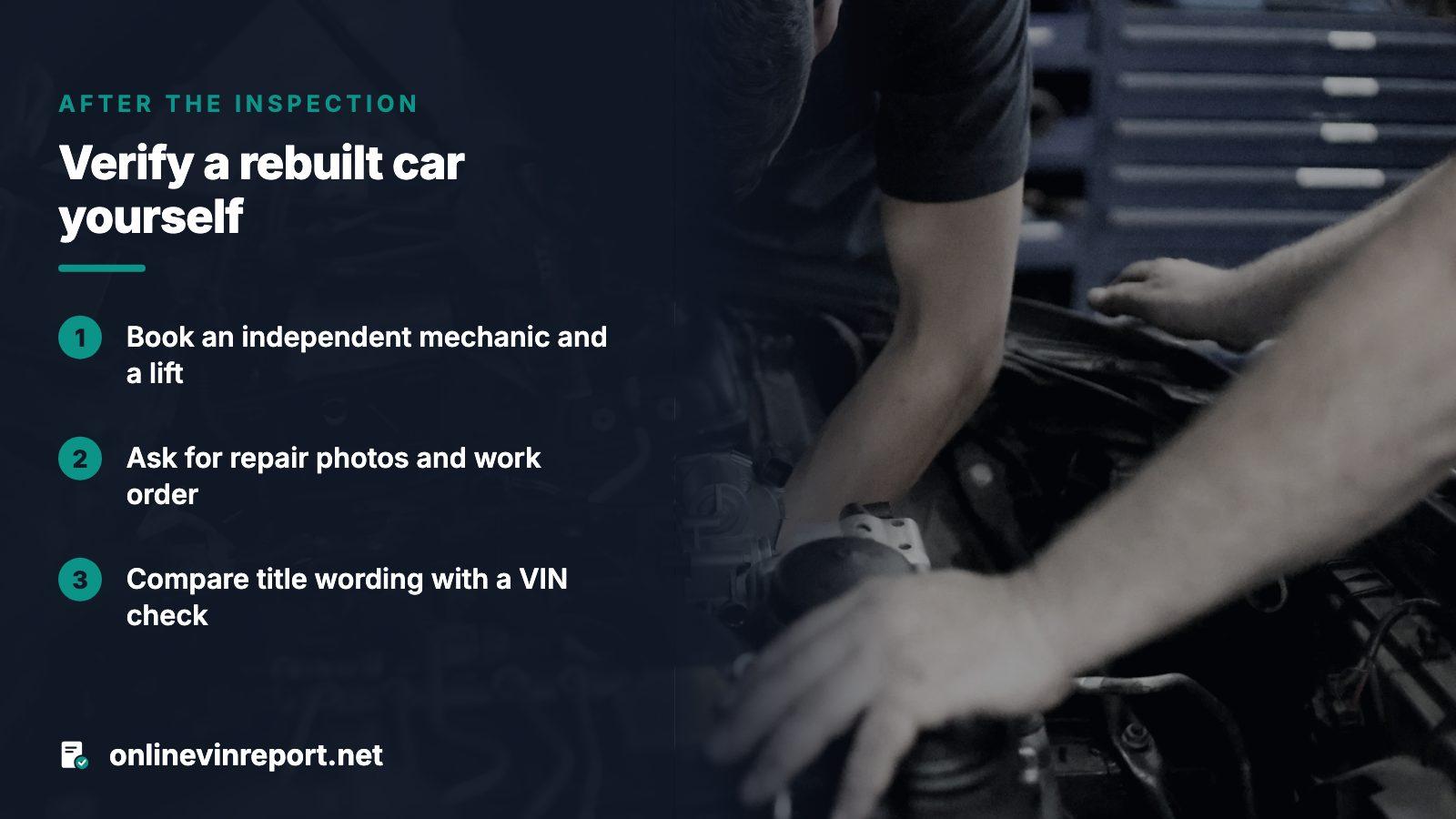
- Book an independent mechanic to look underneath the car, on a lift, before money changes hands.
- Ask for the repair photos and the work order the owner filed.
- Compare the title wording with what a VIN title check reports.
Run a VIN title check before you pay
The federal title information system, NMVTIS, was set up so unsafe and stolen vehicles do not get resold, and reports drawing on it surface title brands whichever state issued them. Copy the VIN from the car and from the title separately, then confirm the two agree.
The preview on this site is free and tells you whether a brand is on file. If salvage, rebuilt or flood appears, the full report is a single payment, priced on the pricing page, and adds damage, auction records and odometer readings to weigh against what the seller says.
Where this information comes from
- NJ MVC: Salvage/Rebuilt Vehicles — what the title request needs, the fees and the post-repair steps
- N.J.A.C. 13:21-22 salvage certificates of title — definitions, deadlines, temporary registration and the failure grounds
- NJ MVC: Salvage Inspection Fee Application — inspection paperwork, parts list and sites
- NMVTIS: VehicleHistory.gov — purpose of the federal title information system
Sources and photos: Facts checked against the sources above in November 2026. Photos by Owen Michael Grech, Mustafa Sheikhmouss and Richard R on Unsplash; diagrams by OnlineVINReport.
Keep reading
- Salvage title VIN check: run it online before you paySee what a VIN check shows for a salvage brand.
- Rebuilt title inspection: what the state checks and what a VIN title check addsCompare how rebuilt inspections work across states.
- Total loss threshold by state and what it means for a VIN title checkSee where other states draw the total loss line.
- Rebuilt title check by VIN: is the car clean or rebuilt?Check whether a rebuilt brand sits on a specific car.
Frequently asked questions
What is a salvage title in New Jersey?
It is the ownership document the MVC issues for a vehicle reported stolen or damaged until repair is economically impractical. The car may be transferred only as a salvage vehicle and may not be registered for road use until it is repaired, inspected and given a new certificate of ownership.
How long do you have to turn in the title after a total loss?
Whoever holds the ownership paperwork, be it the owner or the insurer, has 10 working days counted from the theft report, the damage, or the total loss settlement. Anyone who buys a salvage vehicle gets the same 10 working days to have a fresh salvage title put in their name.
Can you drive a New Jersey salvage car to the inspection?
Not on a salvage title alone. You can tow it, use a flatbed, or get a temporary registration good for five days. You bring the appointment notice, the salvage title and liability insurance proof, and pay $5.
Does a passed inspection mean the repair was done right?
No. The inspection verifies the VIN and the identification numbers on major parts, and fails cars with stolen parts or stolen-vehicle identification. Repair quality is separate, so have an independent mechanic examine any rebuilt car you plan to buy.
Will a VIN check show a New Jersey salvage brand?
A title history report built on state and federal title records is designed to show brands such as salvage, rebuilt and flood. Enter the VIN from the car in the preview first. If a brand shows up, the full report adds damage and auction detail.
Now check the car itself
The guide explains what to look for. The report shows what this VIN has on record.