THE SHORT ANSWER
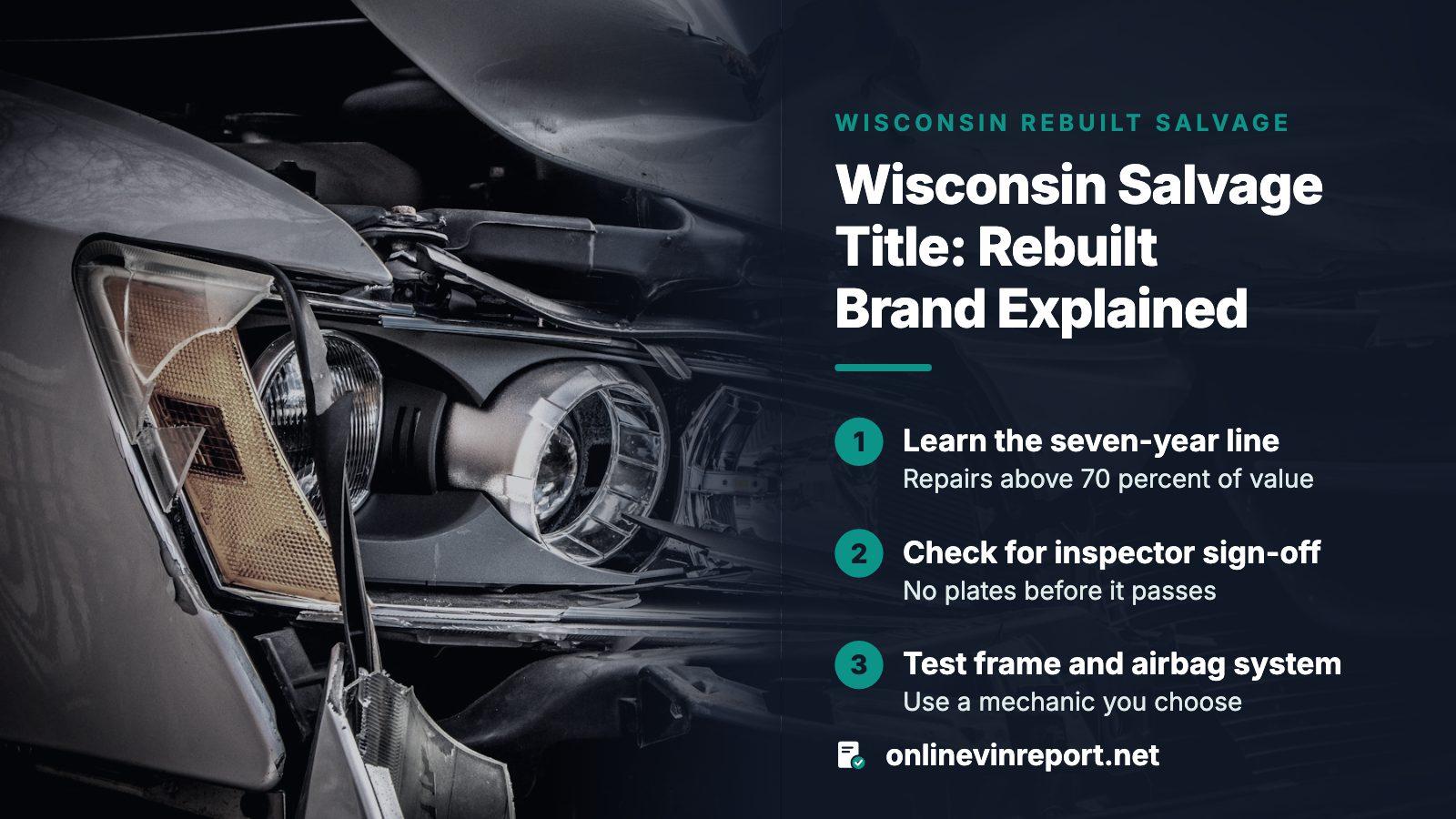
In Wisconsin, a car under seven years old with repair costs above 70 percent of its pre-damage value is branded salvage, as is any car arriving with a salvage brand from another state. It cannot be plated until a certified inspector passes it. After that the title says rebuilt salvage, and the brand is permanent on later Wisconsin titles.
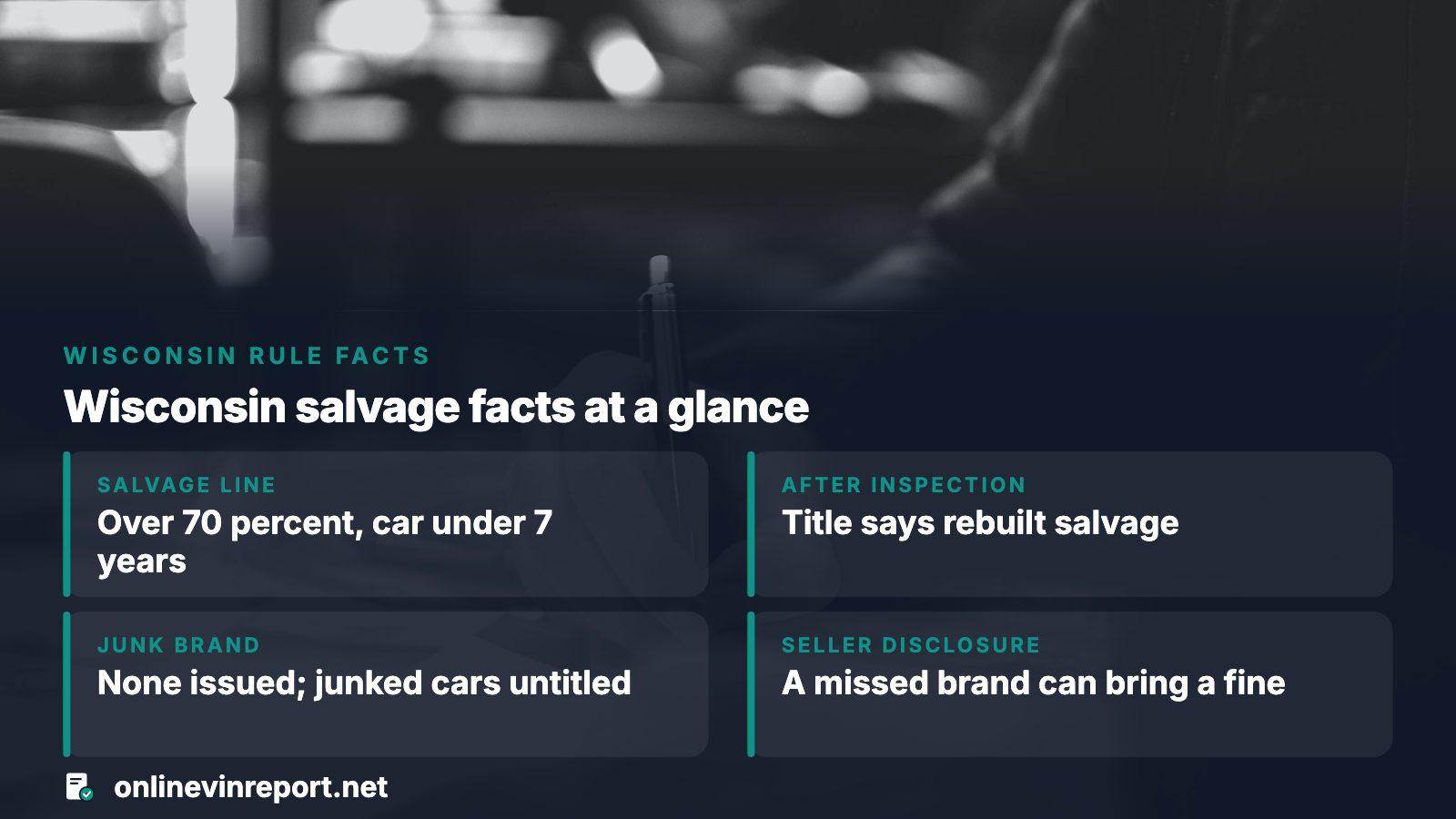
- Salvage line
- Repairs above 70 percent of value, car under 7 years old
- After inspection
- Title brand becomes rebuilt salvage
- Junk brand
- None issued; junked cars stay untitled
- Seller disclosure
- Missing a brand can mean a fine up to $5,000
How Wisconsin decides a car is salvage
Wisconsin's definition has two doors. The first is damage: the car is under seven years old, it is not junk, and collision or some other event (hail excepted) left a repair cost above 70 percent of its fair market value. The second is history: a vehicle of any age counts as salvage when the last title issued by another jurisdiction carried a salvage brand.
Whichever figure is higher counts, the adjuster's estimate or what the shop actually billed. Value here is the price the car would have fetched on the day before the loss, taken from guidebooks, dealer quotes or valuation software that insurers and dealers rely on. You never see that figure on the title. The brand is the only trace of the calculation.
From salvage to rebuilt salvage
Until it is inspected, a salvage car sits in legal limbo. Moving it under its own power is allowed only for a trip to or from the inspection station, and no plates are issued before a certified salvage title inspector approves it. The inspector looks for stolen parts or a stolen frame, confirms the needed equipment is fitted, and checks that the car is fit for the road.
After approval, the brand becomes rebuilt salvage: a car once titled here as salvage that then cleared the inspection. Mind the wording when reading a listing. Rebuilt says someone repaired the car and the state checked for theft and safety. It tells you nothing about the severity of the crash, the depth of the structural work or the skill of the shop.
Salvage next to the other damage brands
Searchers often lump every damage label together, yet Wisconsin keeps them apart. Reading the exact word tells you how bad the original loss was and whether an inspection ever happened.
| Brand | What triggers it | Inspection path |
|---|---|---|
| Salvage | Under 7 years old, repairs above 70 percent of value, or salvage brand from another state | Must pass before plates |
| Rebuilt salvage | Salvage car that passed the state inspection | Already done |
| Flood damaged | Water damage past 70 percent; a submerged car gets this brand | Also gets salvage if under 7 years old |
| Hail damaged | Hail only, past 70 percent, no exterior panels replaced | Panel replacement turns it into salvage |
| Claim paid | Under 7 years old, repairs above 30 percent, insurer took the car | None; sits below the salvage line |
Claim paid is the one most buyers have never heard of. It marks a car that was hurt badly enough for an insurer to pay out and take ownership, yet not badly enough to reach salvage.
Where the brand appears on the paper
WisDOT suggests inspecting the face of the title, and asking the seller outright whether any brand belongs in the transfer boxes. Brand wording on titles printed since December 2004 sits in the lower half, labelled Additional Vehicle Detail, and the box also holds brand data from an earlier state.
Read it before the money moves
A brand is permanent. If the title in your hand shows nothing, that only tells you about this state's current record. Cars arrive from elsewhere, and a paper title can lag behind what a database holds.
What a seller has to disclose
Whoever owns the car has to tick the matching brand on the assignment, or on application MV1, at the point of sale or when a new title is requested without that brand already printed. Staying silent risks a penalty of up to $5,000.
That duty is a reason to ask direct questions in writing. A private seller who says the car was never wrecked is making a claim you can test against the brand history in minutes. If the record and the story disagree, the record wins and the price should reflect it.
Junk, total losses and the odd State Farm brand
Wisconsin never issues a junk title. A junked car, which includes any vehicle an insurer takes in when repairs would exceed its worth, cannot get a Wisconsin title, cannot be driven on public roads and has no use beyond parts. If an ad shows a roadworthy car with a junk past, push for answers.
One brand reads strangely: St Farm not inspected. It marks cars State Farm declared total losses without disclosing them as salvage, under a settlement with the state Department of Justice. WisDOT says such a car is not treated as a Wisconsin salvage vehicle and has not passed a salvage inspection. If you see it, ask why, and weigh the repair history with extra care.
Cars that come from other states
States set their own thresholds. A car that was totaled elsewhere may have been branded under one rule and not branded at all under another, and flood is the classic example. Wisconsin's rule that an out-of-state salvage brand makes a car salvage here, at any model year, closes part of that gap for cars that arrive already branded.
That is the gap the federal NMVTIS database targets. It gathers records from state title offices, recyclers, scrapyards and insurers, and part of its purpose was to stop flood cars being laundered by hauling them across a state line. A title check built on it reads brand history from several states at once.
Run the VIN title check before you pay
Photograph the number stamped on the car and compare it against the title and the listing; any mismatch is a reason to walk. Type it in for the free preview, which says whether brand or damage records exist. If you are still interested, the full report fills in the detail, such as total-loss entries and salvage auction records with photos. Payment is a single charge, shown on the pricing page.
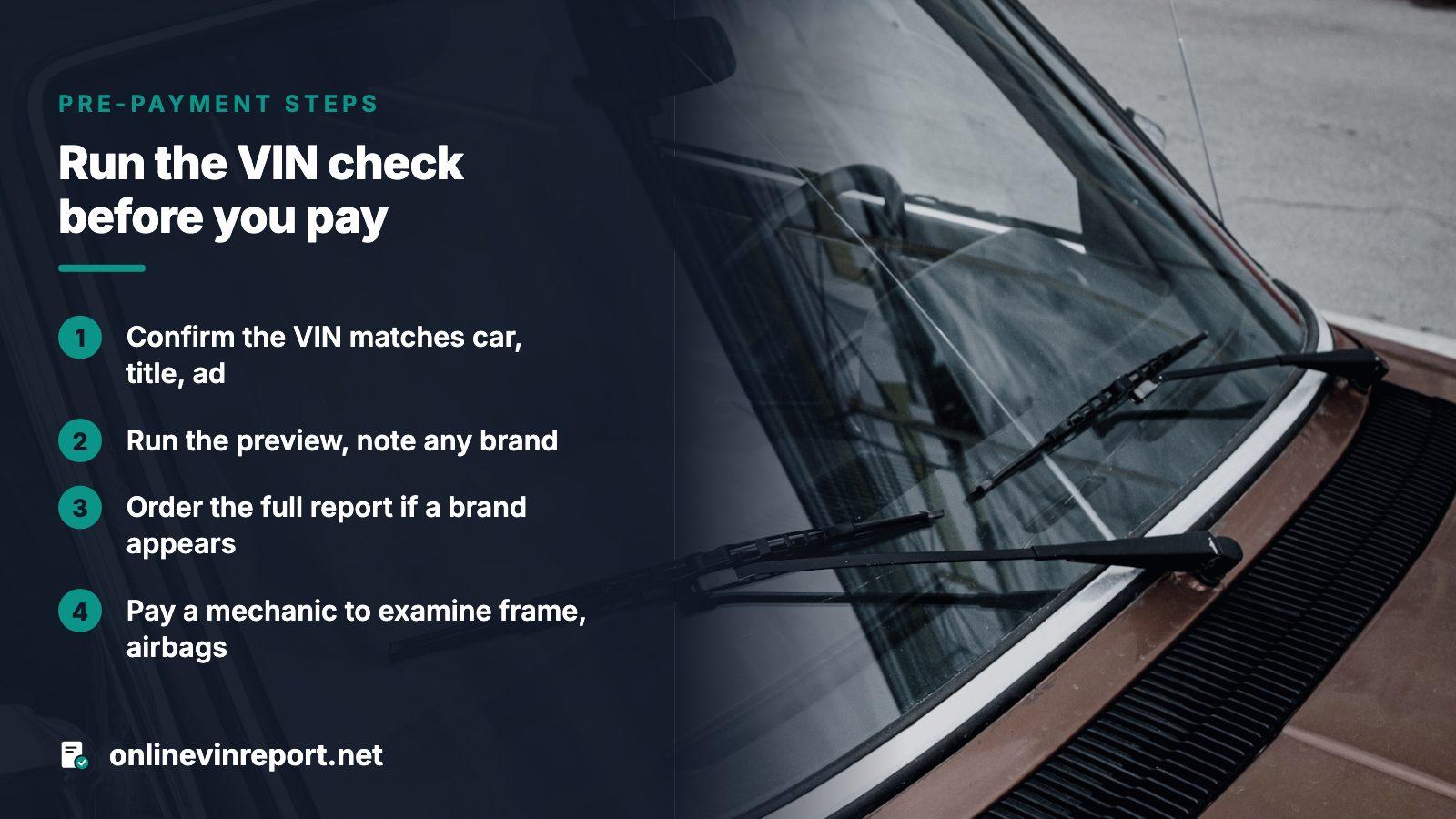
- Confirm the VIN is identical on the vehicle, the title and the ad.
- Run the free preview and write down any brand it flags.
- Hold that brand up against the seller's account of the car.
- Order the full report whenever a brand, total loss or auction entry turns up.
- Pay a mechanic of your choosing to examine the frame and airbag system.
If you still want a rebuilt salvage car
Plenty of rebuilt cars give years of service, but the state inspection checks theft and basic safety, not repair quality. Ask for the repair invoices and photos of the car before work began. Pay a shop you chose to put it on a lift. Expect the price to carry a discount, and expect that insurers and lenders may treat the car differently, so check with them before signing.
Where this information comes from
- WisDOT: Flood damaged vehicles and other title brands — definitions of salvage, rebuilt salvage and the other brands, plus the seller disclosure rule
- WisDOT: Salvage title inspection — certified inspector requirement for repaired salvage vehicles
- WisDOT: Insurance company title notice — how insurers report damaged vehicles and the claim paid brand
- NMVTIS: For consumers — what the national title database holds and why brands travel between states
Sources and photos: Facts checked against the sources above in November 2026. Photos by Clark Van Der Beken, Max Tokarev and Owen Michael Grech on Unsplash; diagrams by OnlineVINReport.
Keep reading
- Salvage title VIN check: run it online before you paysee how a VIN check surfaces salvage brands in any state
- What is a rebuilt title? What it means and what a VIN title check showsthe rebuilt label explained beyond Wisconsin
- Total loss threshold by state and what it means for a VIN title checkcompare Wisconsin's 70 percent line with other states
- Do you have to disclose a rebuilt title when you sell a car?what a seller owes a buyer about a rebuilt car
Frequently asked questions
Is a rebuilt title in Wisconsin the same as salvage?
No. Wisconsin brands the car salvage first. Once it passes a certified inspection, the brand changes to rebuilt salvage. The first means it is not yet cleared for plates, while the second means the inspection was passed. Both brands stay on the record permanently.
Can I drive a Wisconsin salvage car home?
Only to or from an inspection site. The state treats operating a salvage vehicle anywhere else as illegal, and plates are not issued until a certified salvage inspector passes the car. Plan transport with a trailer if the car is not inspected yet.
Does Wisconsin have a junk title?
No brand called junk exists in this state. If a car is junked it can never be titled again, cannot go on a public road and is good only for parts. Sellers who scrap a car write the word across the title, which ends its life as a road vehicle.
Can an older car be salvage in Wisconsin?
By its own damage, only a car under seven years old qualifies. An older car still counts as salvage if the last title from another jurisdiction carried that brand. So an old unbranded Wisconsin title says less than it seems, and a history check helps.
How do I find a brand before I buy?
Study the front of the title and its Additional Vehicle Detail area, put the question to the seller in writing, then run the VIN through a history report. The free preview signals whether records exist, and the national title database search catches brands set by other states.
Now check the car itself
The guide explains what to look for. The report shows what this VIN has on record.