THE SHORT ANSWER
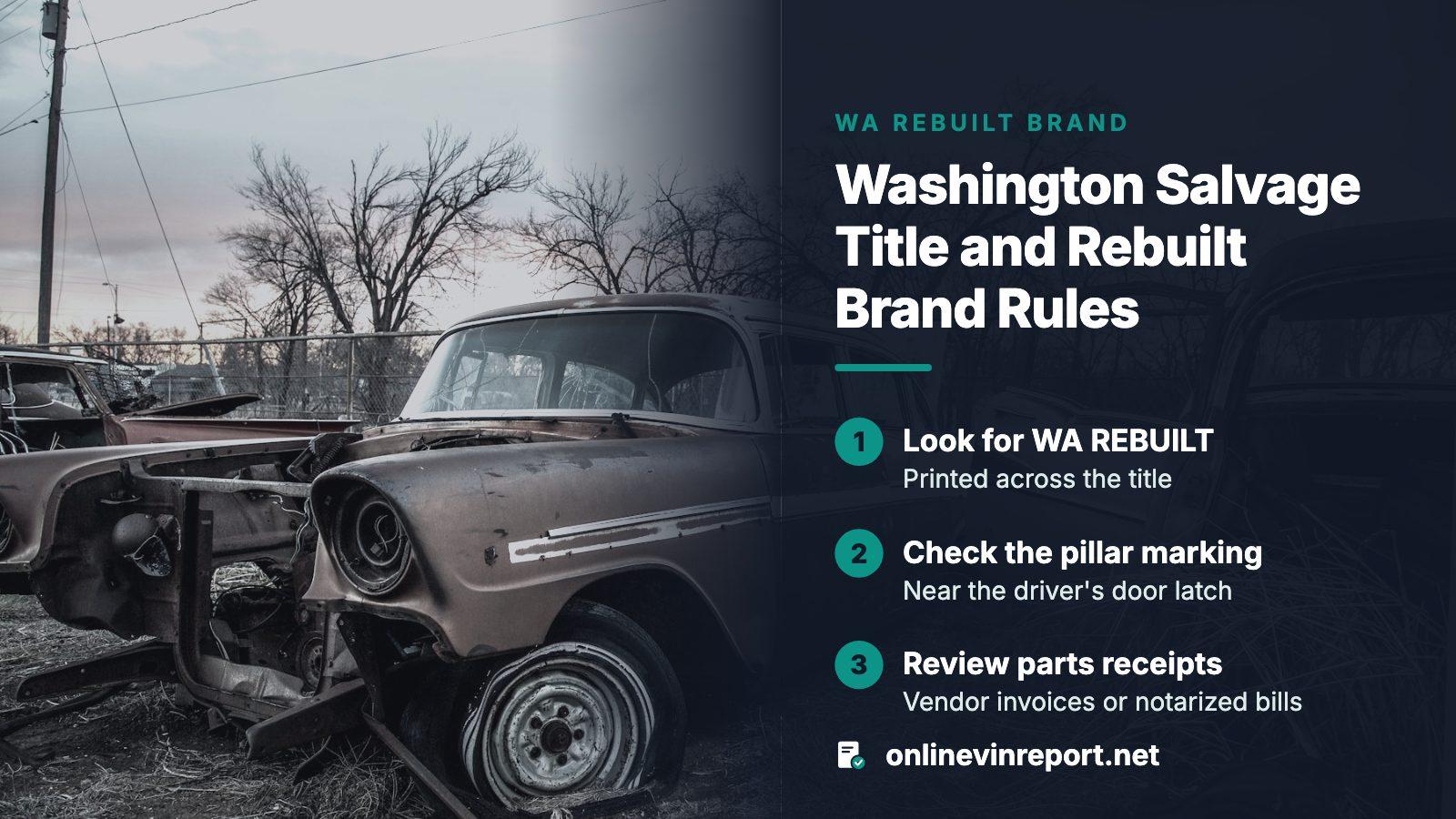
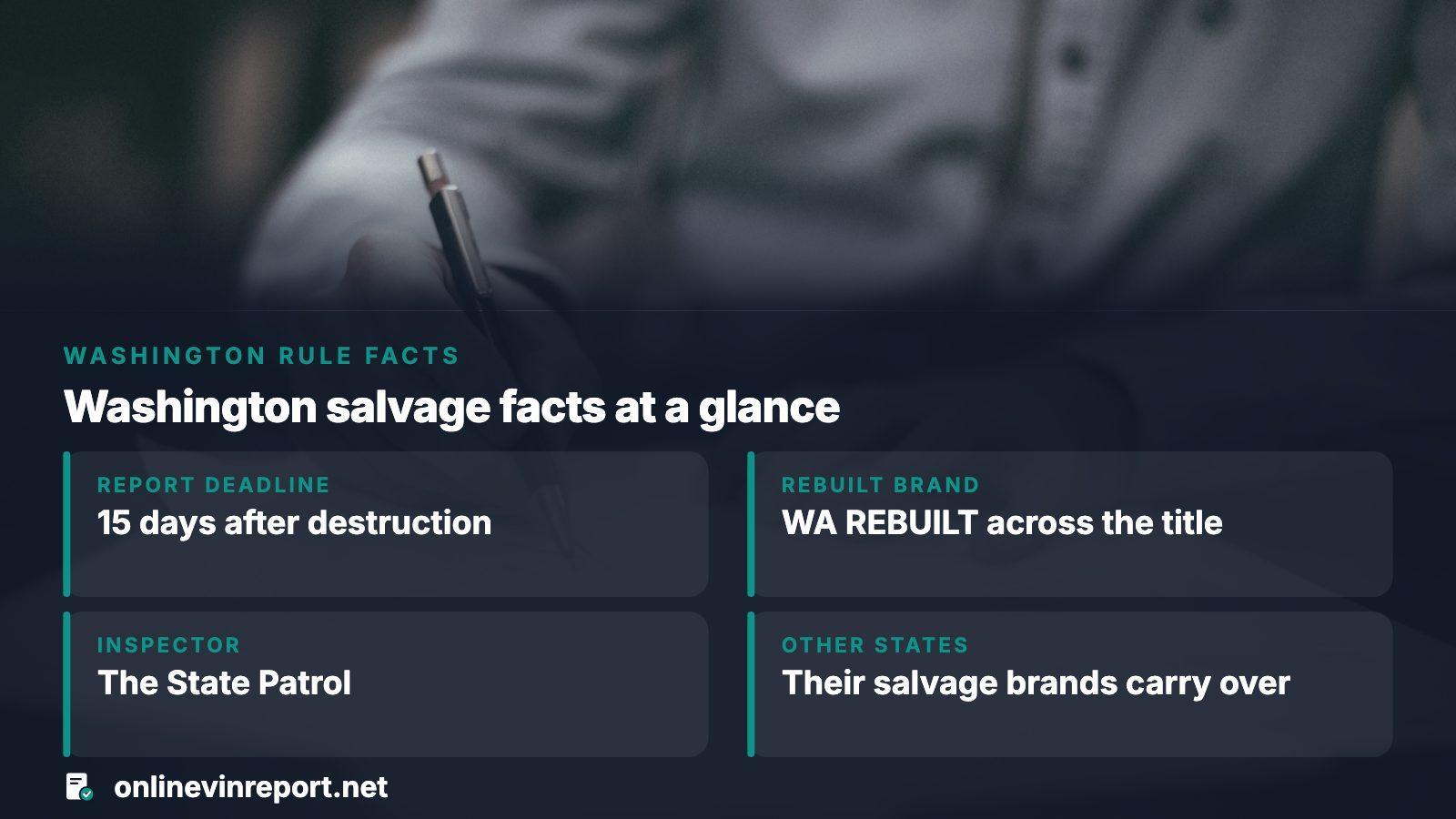
A Washington car becomes a salvage vehicle when it is reported destroyed or totaled, or when the repair bill would outrun what the car is worth. Reports are due within 15 days. After repairs, the State Patrol inspects the car and the new title is branded WA REBUILT. That brand stays on the record, and other states' salvage brands are carried onto Washington titles.
- Report deadline
- 15 days after destruction or claim settlement
- Value line in DOL's rule
- $12,220 for cars six to 20 years old
- Brand on a rebuilt car
- WA REBUILT, printed across the title
- Preview
- A free look first, then a paid one-time report
When Washington calls a car a salvage vehicle
State law defines a salvage vehicle in two ways. The first is administrative: the owner or an insurer sent the title to DOL because the car was destroyed or declared a total loss. The second is economic: someone acting for the owner judged that fixing the car would run past its value once parts, labor and scrap proceeds are tallied.
Older cars get a carve-out. A car whose model year sits six or more years before the year of the damage is not treated as salvage, unless just before the damage it was worth at least the state's threshold and was no more than twenty model years old. So a ten-year-old sedan worth less than the threshold can be wrecked without ever picking up the salvage label, which is one reason a clean Washington title does not prove a clean past.
The 15-day reporting clock
Owners must tell DOL within 15 days of a car's destruction and send in the title marked DESTROYED. Still holding that title on the 16th day is a gross misdemeanor. An insurer has the same 15 days, counted from the settlement of the claim, and the duty applies wherever the loss took place. That last detail matters to buyers: a Washington-titled car totaled in another state still gets reported.
- Insurers can file through DOL's online system, send the title marked DESTROYED, or use a total loss claim settlement form.
- A report on a car six model years back or more has to state whether the car met the market value threshold.
- Age is the current calendar year minus the model year.
- If the statement is left out, DOL assumes the threshold was met and brands the title.
Two dollar figures, and which one DOL uses
The statute names $6,790 as the starting threshold, or a larger amount DOL sets by rule. The rule currently states $12,220. Raises follow the western-region price index for used cars and trucks, take effect each July 1, and are skipped until the cumulative change reaches at least $50. When two Washington sources seem to disagree, this is why: one quotes the statutory floor and the other the figure DOL applies today.
Check the figure before relying on it
The threshold moves with the used-car index, so confirm the current amount with DOL when it decides whether an older car was branded. The state rule cited in the sources below is where the number is published.
What the WA REBUILT brand tells you
A brand is a printed entry on the title or registration that flags an unusual condition, kept so the next owner finds out. Washington law calls for a brand across the front of a title when the car was rebuilt after becoming a salvage vehicle. On the printed certificate, a wa rebuilt banner runs across it. Washington-issued brands print first, then unique brands from other jurisdictions, then standard ones.
Brands stay on the vehicle record indefinitely. DOL removes one only when it was applied by mistake, so a seller cannot wait it out, and a buyer should read a rebuilt brand as permanent history rather than a phase.
Brands that arrive from other states
Plenty of Washington shoppers buy cars that were wrecked elsewhere. Washington copies over brands from states that feed the national title database, and the list is long. A car can show any of these on a Washington title if it came with them:
- Rebuilt, junk or destroyed
- Salvage in four flavors: damaged, retention, stolen or other
- Flood, hail or saltwater damage
- Totaled
Brands unique to a state outside that system are copied as printed on the foreign title, shortened if needed. Another route: a wreck sold with only a wrecker or insurer bill of sale, repaired and then inspected in Washington, gets a brand of its own, worded repaired-wrecker/insurance bill of sale. More than one brand can sit on a single title.
What a rebuilder must pass before retitling
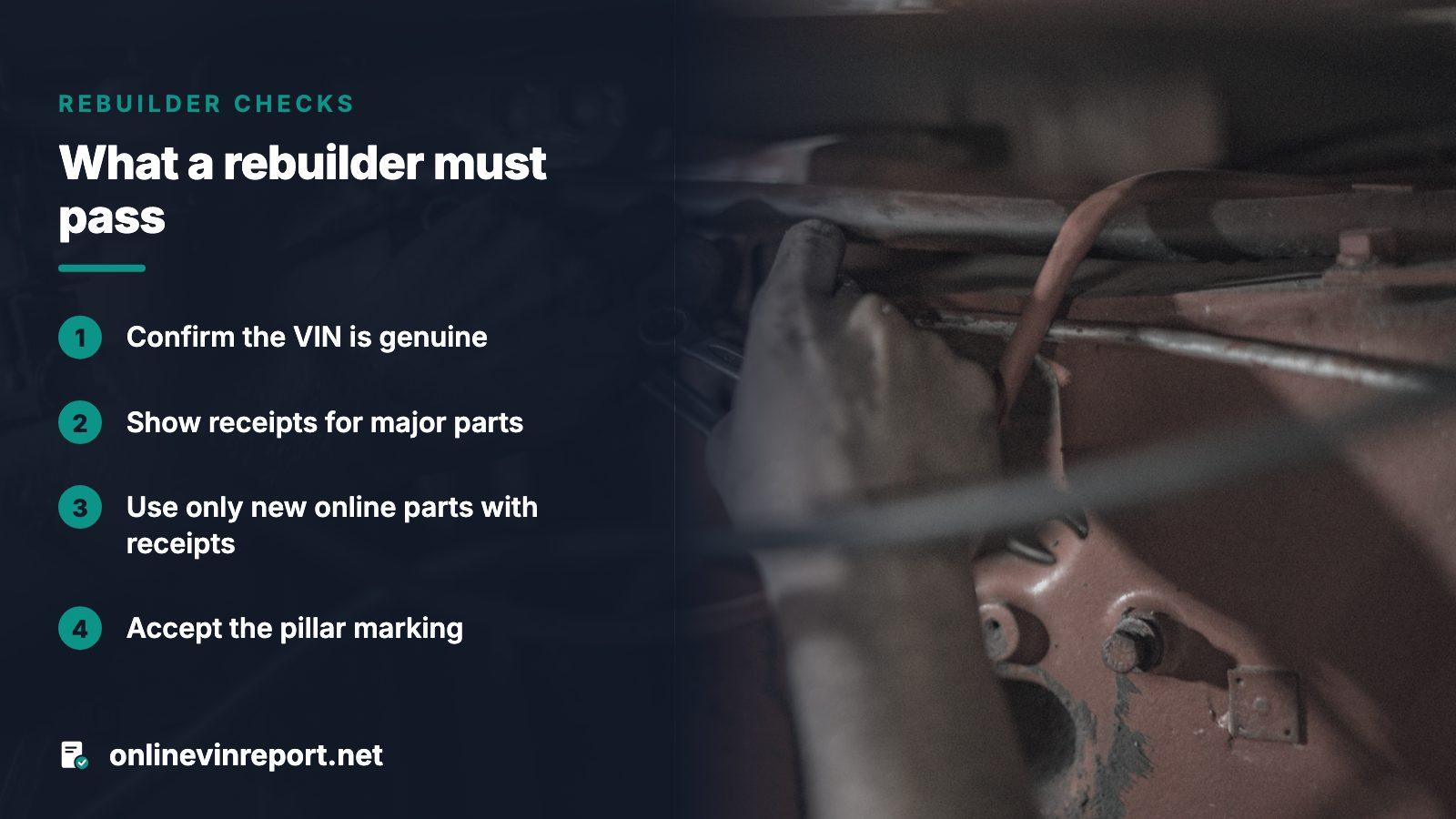
Before DOL will title a rebuilt wreck, the State Patrol inspects it. The appointment starts at a licensing agent, who issues an inspection request form; there are no walk-ins, and a customer gets one slot per week. Every damaged major part, including all airbags, must be fixed or replaced first, because a half-finished car is turned away.
- A VIN specialist confirms the number is genuine and agrees with the paperwork.
- Receipts for major parts are reviewed: invoices from registered vendors or wreckers, or notarized bills of sale from private sellers who hold the donor car's title.
- Parts bought online count only if new, with a printed receipt; auction-style bid receipts do not count.
- A permanent marking goes on the pillar by the driver's door latch, noting the car was destroyed or totaled.
Peeling that marking off is a class C felony, so on a car you are inspecting, finding the spot unmarked or tampered with is a serious warning.
The paperwork behind a rebuilt title
Ask a seller of a WA REBUILT car what DOL received. The new title application goes in with the inspection certificate and a bill of sale from whoever reported the destruction: an insurer, a wrecker, or the owner, whose signature must be notarized or certified. An owner who kept the wreck skips the bill of sale but must supply lien releases or proof the loan was paid. An odometer statement is added when it applies.
Plates are another clue. Wreckers have to pull them, so a car that passed through one needs new plates, and a seller claiming otherwise has some explaining to do. Dealers face their own rule: rebuild to state or federal standards, pass the State Patrol inspection and hold a title in the dealer's name before reselling.
Run a title check before you hand over money
Paper can be shown to you selectively, so check the VIN itself. Type it in here and the preview costs nothing. If the car stays on your list, the full report is a one-off purchase rather than a subscription, with options on the pricing page. On a Washington listing, start with the title brands, then any salvage or auction entries with photos, then the odometer history.
Match the record to the car in front of you
A brand or salvage entry missing from the seller's story is grounds to ask for the inspection certificate and parts receipts. A clean report on a car with fresh body-panel gaps is also worth a second look, since an unreported wreck leaves no record.
What this page does not settle
The Washington licensing department's own pages did not open for automated reading while this page was prepared, so everything above comes from the state's laws and rules and from the State Patrol's inspection page. We did not confirm any fee for a title or inspection, and we are not quoting one. Check current fees and forms with DOL or a licensing agent.
Also note that the sources we read describe the brand a rebuilt car receives. They do not describe a separate Washington salvage certificate for the owner of a totaled car, so we have not described one.
Where this information comes from
- Washington Legislature: RCW 46.04.514, salvage vehicle — who counts as salvage and the age-and-value exclusion
- Washington Legislature: RCW 46.12.600, destruction of vehicle — reporting duty, deadline and statutory threshold
- Washington Legislature: WAC 308-56A-460, destroyed or wrecked vehicle — current threshold figure, rebuilt paperwork and WA REBUILT
- Washington Legislature: WAC 308-56A-530, brands and comments — which brands exist, carry forward and stay on the record
- Washington Legislature: RCW 46.12.560, inspection — when inspection is required and the door-pillar marking
- Washington State Patrol: VIN inspections — appointment process, parts receipts and the readiness rule
- US Department of Justice: NMVTIS vehicle history — what the national title system is for
Sources and photos: Facts checked against the sources above in November 2026. Photos by Leo_Visions, Nina Mercado and Scott Graham on Unsplash; diagrams by OnlineVINReport.
Keep reading
- What is a rebuilt title? What it means and what a VIN title check showsThe general meaning of a rebuilt brand beyond Washington's wording.
- Rebuilt title inspection: what the state checks and what a VIN title check addsWhat a rebuilt-car inspection looks for, step by step.
- Total loss threshold by state and what it means for a VIN title checkHow other states set the line between repairable and totaled.
- Salvage title VIN check: run it online before you payHow a salvage result shows up when you run a VIN.
Frequently asked questions
Does Washington issue a salvage title?
The rules we read describe reporting a destroyed car and surrendering its title, then a WA REBUILT brand after repair and inspection. They do not describe a separate salvage certificate for Washington cars. Salvage brands from other states do appear on Washington titles when a car arrives with them.
Can a Washington rebuilt brand ever be removed?
Generally no. Brands remain on the vehicle record indefinitely, and DOL takes one off only if it was added in error. A seller who promises the brand will drop off after some years is wrong. Plan for a rebuilt car to stay rebuilt in every future history check.
Who has to report a totaled car in Washington?
Both the owner and the insurer have duties. An owner reports destruction within 15 days and sends in the title marked DESTROYED. An insurer reports a total loss within 15 days of settling, even when the loss happened outside Washington.
Do I need an inspection for a car I buy that was totaled elsewhere?
Often yes. State law requires a State Patrol or other authorized inspection when out-of-state papers show a total loss or salvage and no valid registration was issued afterward. The licensing agent tells you at titling whether the car needs one.
What does a free VIN preview show for a Washington car?
The preview tells you whether records exist, such as brands or salvage entries, before you pay. The full details sit in the one-time report. Treat both as a screen, and still ask the seller for the inspection certificate on any WA REBUILT car.
Now check the car itself
The guide explains what to look for. The report shows what this VIN has on record.