THE SHORT ANSWER
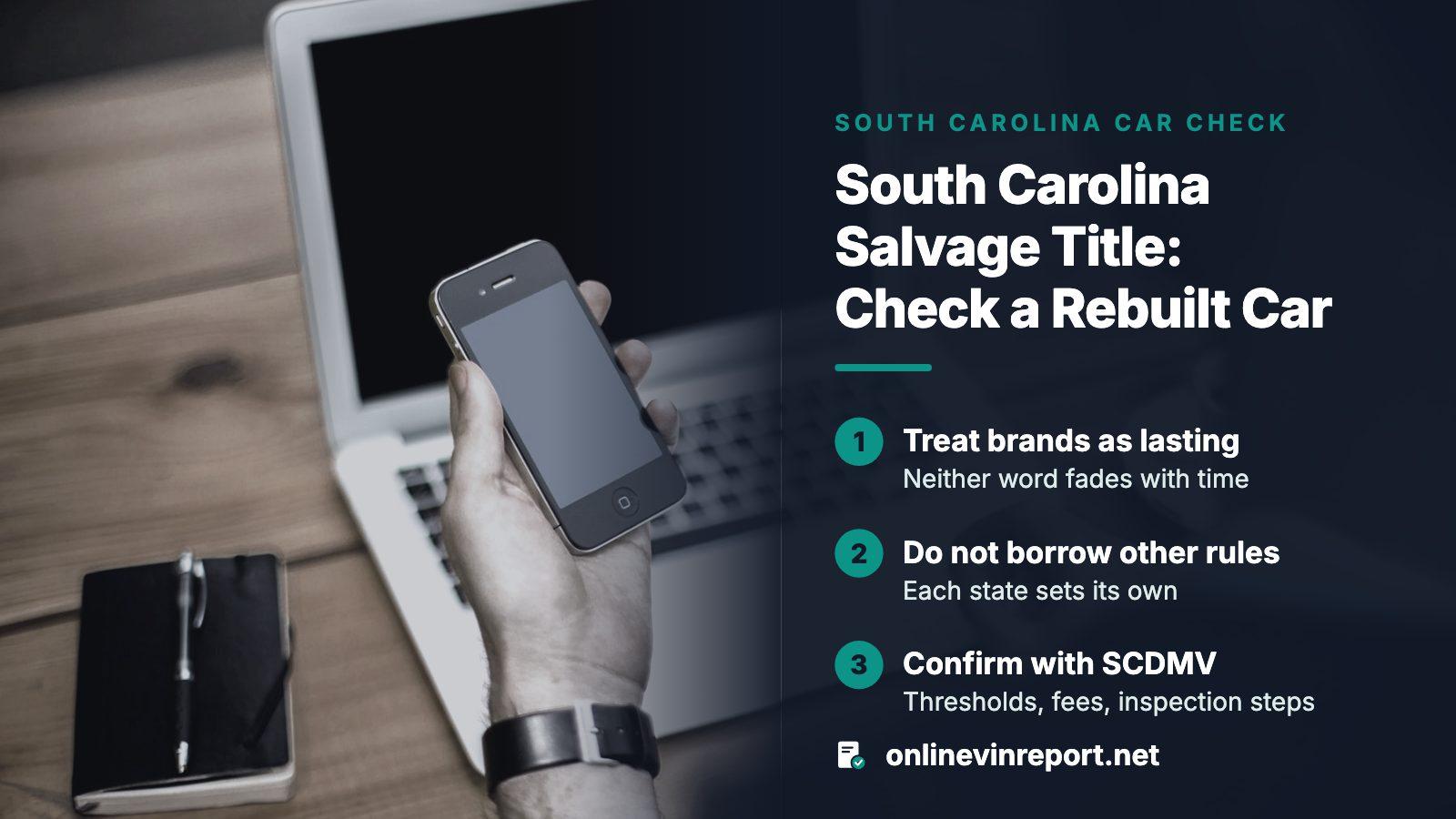
A salvage brand means a car was judged too damaged to drive as it was. A rebuilt brand means someone fixed it and the state let it return to traffic. Neither word fades with time. Before paying for a South Carolina car, run its VIN through a title check, then ask SCDMV for the thresholds, fees and inspection steps that apply today.
- Brand lifespan
- Stays on the federal record once applied
- Insurer reporting
- Newest model year and four earlier ones
- Rules
- Set by each state, so they differ
- Clean report
- Reduces risk but never proves no damage
Salvage then rebuilt: one car, two chapters
Shoppers searching for a rebuilt title in South Carolina or a salvage title in South Carolina are usually looking at the same car at different moments. Salvage describes the wreck: a vehicle that a state or an insurer has written off as not roadworthy in its current condition. Rebuilt describes the aftermath: the work was done, it met whatever the state requires, and it returned to traffic.
The rebuilt label does not mean the damage never happened. It means the car crossed from one status to the next. A buyer who sees only the word rebuilt should still ask what the car looked like before it got that word.
Why South Carolina's rules cannot be assumed from another state
The federal title information system says plainly that every state writes its own brand rules. A car one state labels salvage might go unbranded in the next, and a few states have no flood brand whatsoever. A vehicle sitting in a salvage yard also does not automatically pick up a brand, because state law decides that.
What we could not confirm
South Carolina's own motor vehicle pages refused to open for our automated reader, so this page does not print the state's damage percentage, fees, form names or inspection steps. Those details change, and guessing them would be worse than leaving them out. SCDMV is the place to get them.
Treat any figure you see on a listing or in a forum thread as a lead to verify, not a rule.
What a title check by VIN actually pulls up
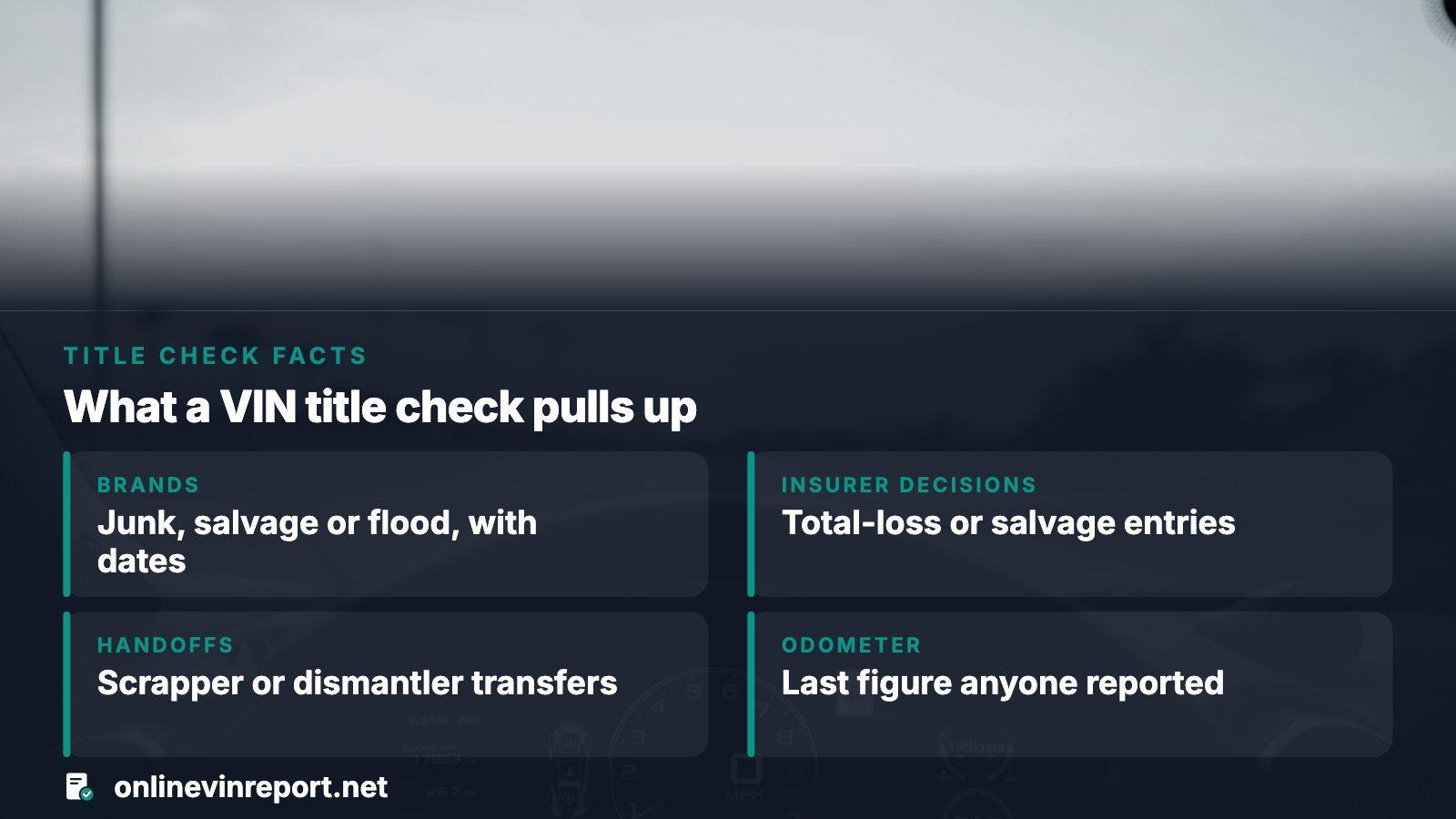
A consumer report built on the national title system draws on the vehicle's current title, any brand that a state has applied, the most recent odometer reading, and determinations from insurers that a car was a total loss. Handoffs to scrap or dismantling businesses are listed too, along with theft history in some cases.
- Any brand the car has worn (junk, salvage, flood) and when it was added
- Total-loss or salvage decisions made by insurers
- Handoffs to a scrapper or dismantler
- The last odometer figure anyone reported
Our search starts with a no-cost preview, and the complete report is one purchase afterward. That order lets you learn whether a brand exists before deciding to spend anything.
Where a title check can still miss something
The system holds part of what a state keeps, not the whole file. Roughly nine in ten vehicles in the country are covered, and not every state feeds it. Reporting is uneven, so a vehicle that truly was written off can still produce a blank result.
| Situation | What it means for you |
|---|---|
| Clean result on a car with fresh paint or new panels | Inspect it anyway; the record may simply be incomplete |
| Insurer wrote the car off, but no brand was issued | The total-loss entry may be the only trace |
| Older car outside the insurer reporting window | Insurer write-offs are reported for newer model years only |
| Repairs done after the brand | The report does not carry repair history |
Total-loss entries need context
Theft claims can end in a payout once a missing vehicle has been gone 30 days. If the owner's car is recovered afterward in good order, the payout classification may still sit on its record. A total-loss entry therefore deserves a follow-up question to the seller rather than an automatic walk-away: what was the cause, and is there paperwork showing it?
The reverse is also true. A wreck that never produced an insurance claim, such as a car fixed with cash, may not appear as a total loss at all.
Six steps before any money changes hands
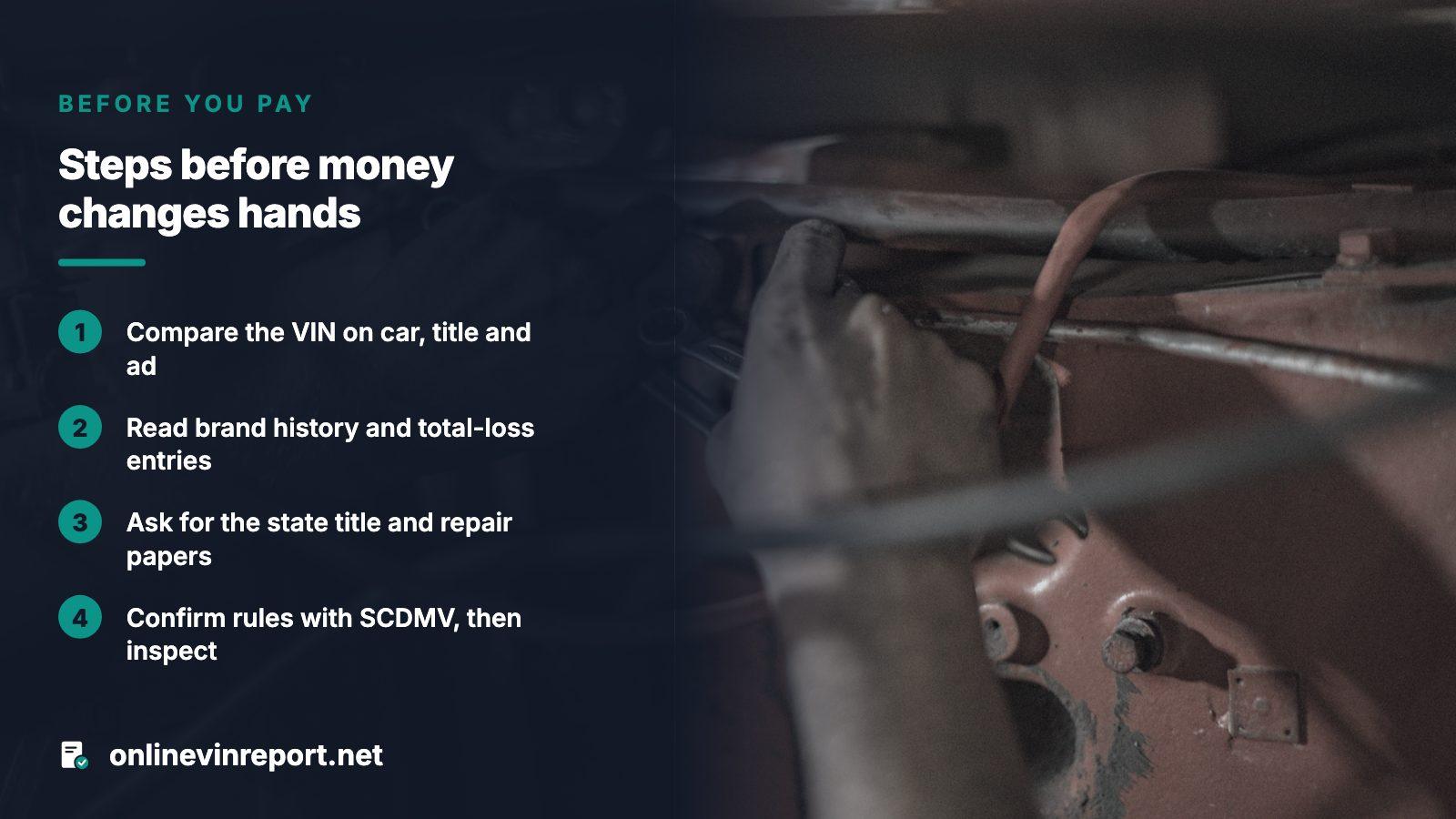
- Copy the 17-character VIN from the vehicle and compare it with the title and the ad.
- Run the VIN and read the brand history and any insurer total-loss entry.
- Ask the seller for the state title and any repair paperwork.
- Request the full state record, since each federal report points back to it.
- Confirm South Carolina's current salvage and rebuilt requirements with SCDMV.
- Pay for an independent inspection if the car carries any brand.
Steps two and four often disagree, and a disagreement is itself information.
Price, resale and the question of cost
A branded car usually trades below an unbranded twin, but we did not read a South Carolina source for how much, so we give no figure. What you can do is compare the asking price against the market value shown in a report, then ask why the seller is above or below it. A brand with no discount attached deserves suspicion.
See the pricing page for how single reports and packs work. Nothing renews on its own.
What to do next
If you have a VIN in hand, start with the preview and see whether a brand is on record. If the car is already branded, move on to the rebuilt questions: how it was repaired, who checked it, and whether you can see photos of the damage. Salvage auction photos sometimes survive in a report and make a better witness than any seller's memory.
Where this information comes from
- NMVTIS: for consumers — what a consumer report shows, its limits, and state differences in brands
- NMVTIS: frequently asked questions — who must report salvage and junk vehicles, and the insurer model-year window
- NMVTIS: approved data providers — how consumers obtain a report
Sources and photos: Facts checked against the sources above in November 2026. Photos by Alejandro Escamilla, Nina Mercado and Dennis Eusebio on Unsplash; diagrams by OnlineVINReport.
Keep reading
- What is a rebuilt title? What it means and what a VIN title check showsHow a rebuilt brand differs from salvage.
- Salvage title VIN check: run it online before you payThe salvage VIN check walked through.
- Rebuilt title inspection: what the state checks and what a VIN title check addsWhat an inspection after rebuilding looks at.
- Total loss threshold by state and what it means for a VIN title checkHow damage lines compare across states.
Frequently asked questions
Does a salvage brand ever go away?
On the national title record, a brand stays once a state applies it. A car can move from salvage to rebuilt, which describes a later stage, but the earlier history remains visible to anyone who checks the VIN, so plan on it affecting resale.
Can I check a South Carolina salvage title by VIN?
Yes. A title check by VIN looks for brands, insurer write-offs and scrapper handoffs. It will not replace the state's own record, so ask SCDMV for the full title history as well when the car is branded.
What is the difference between salvage and rebuilt?
Salvage marks a vehicle judged unfit to drive as it stands. Rebuilt marks one that was repaired and approved to return to the road. Read both words as a history, and ask how the repair was done and inspected.
Why might a branded car show up clean?
State rules differ, reporting has gaps, and a car held at a salvage yard does not always receive a brand. A repair paid for in cash may leave no insurer entry. A clean result is encouraging, not a guarantee, so inspect the car.
Does the report show repair details?
No. The federal system does not carry repair history. A report can show a brand, a total-loss decision and odometer readings, but proof of repair quality must come from the seller's receipts and an independent inspection.
Now check the car itself
The guide explains what to look for. The report shows what this VIN has on record.