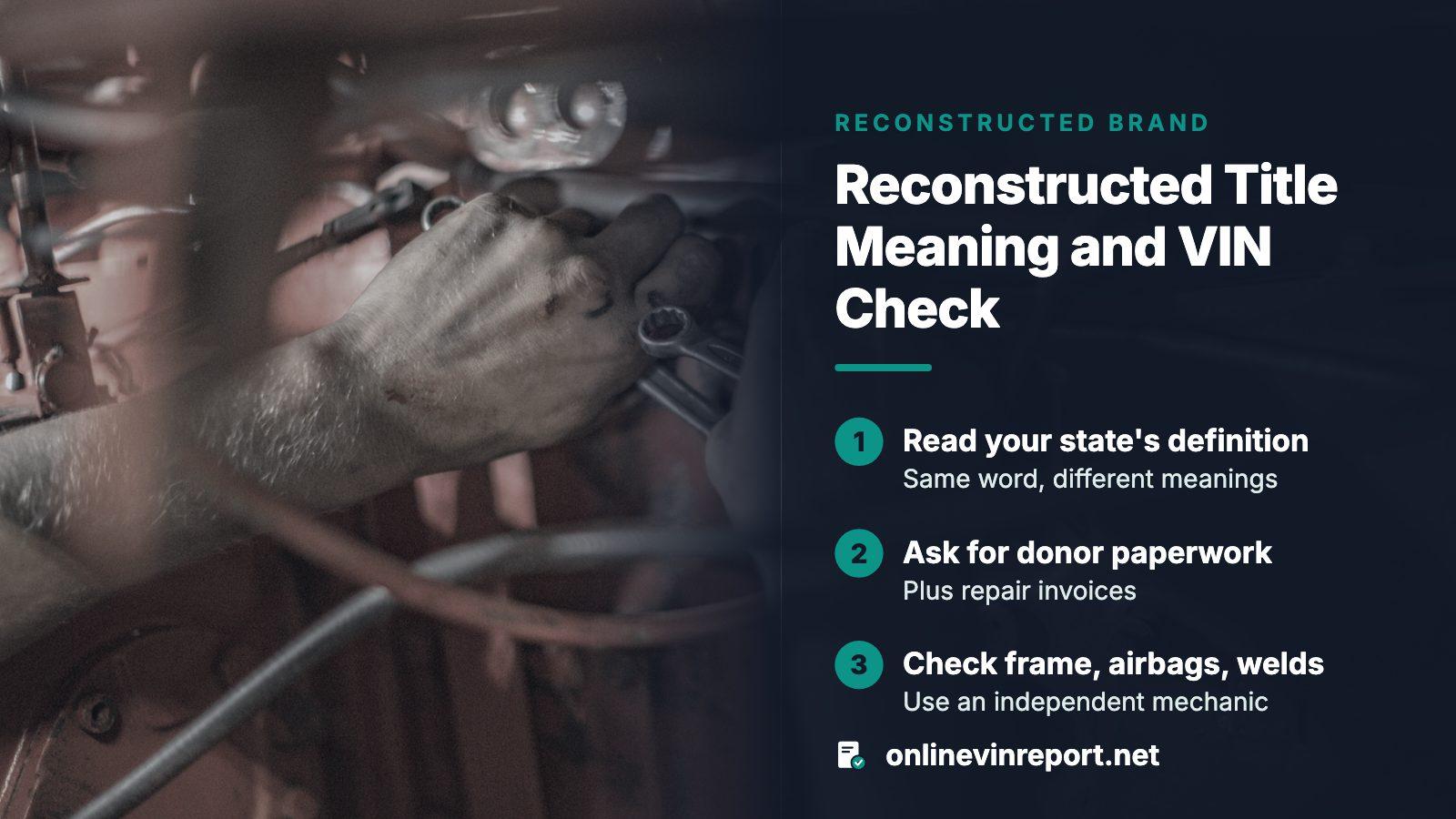
THE SHORT ANSWER
Reconstructed is a state's label, not a federal one, so read it by state. Pennsylvania uses it for a former salvage car that was restored and inspected. Wisconsin and Alaska use it for a vehicle changed so much from the factory build that it is treated as a new assembly. Either way the brand stays with the car. Run the VIN for brand history, then pay a mechanic to look at the structure.
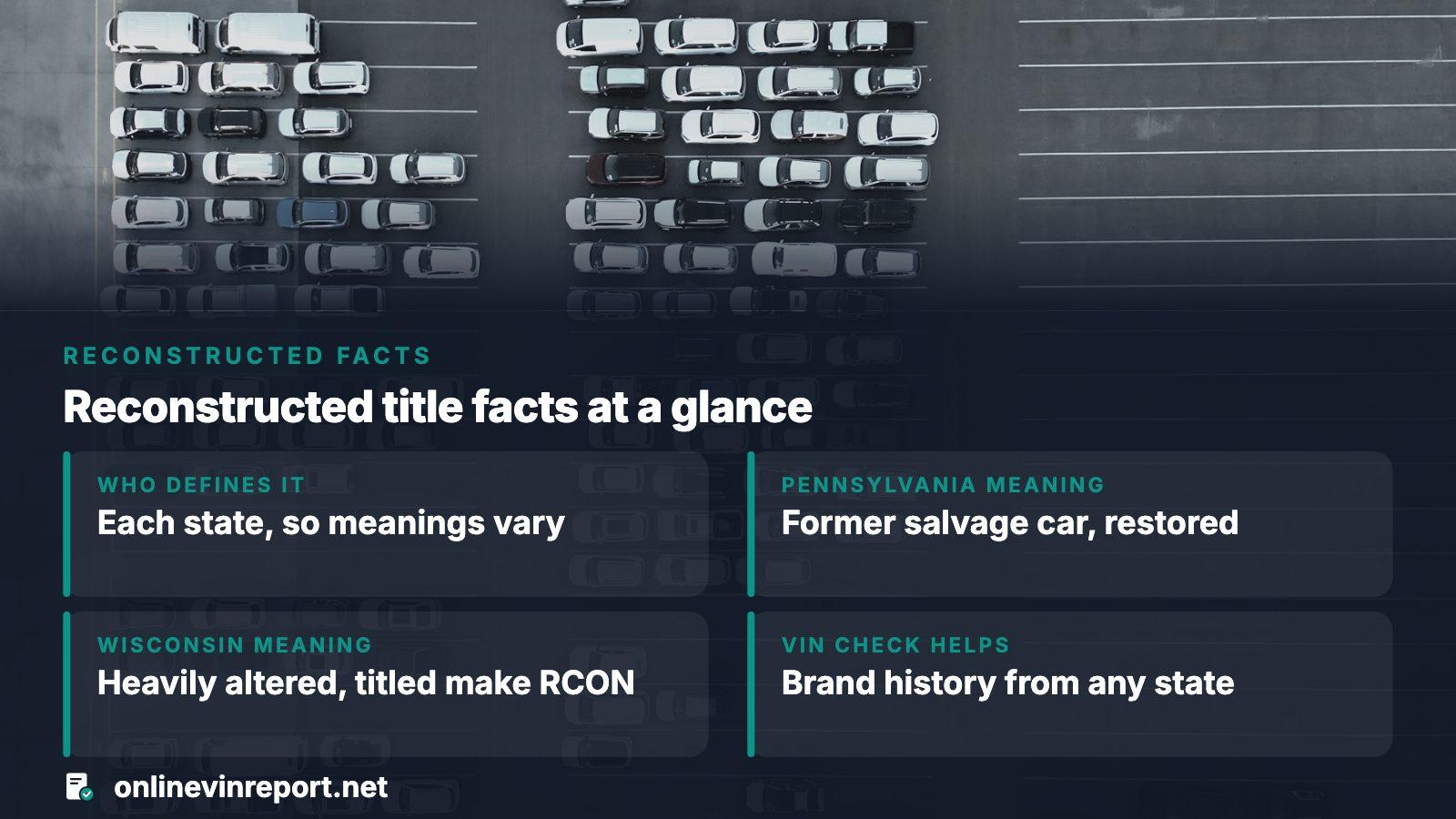
- Who defines it
- Each state, so the same word can mean two things
- Pennsylvania meaning
- Former salvage car, restored and inspected
- Wisconsin meaning
- Heavily altered vehicle, titled with make RCON
- Where a VIN check helps
- Brand history from any state that applied one
A word with no single definition
Ask three motor vehicle agencies what reconstructed means and you can get two different answers. Individual states print the term, and each decides which cars earn it. Texas says even rebuilt shifts a little between states. Reconstructed shifts more.
For a buyer this changes the first question. Do not stop at the word on the title. Find out which state issued it and what that state's rules mean by it, because one meaning is a repaired wreck and the other is closer to a kit car. Your risks, your insurance questions and your inspection plan differ between the two.
The three meanings you will actually meet
These come from the states' own pages. Other states word theirs differently, so read the rows as common cases, not law.
| Meaning | Where it appears | What the state says it is |
|---|---|---|
| Repaired salvage car | Pennsylvania | A vehicle that received a salvage certificate and was later restored to operating condition and inspected |
| Heavily altered vehicle | Wisconsin | A vehicle of any age so far from stock that it looks like a different machine |
| Parts swapped or assembled | Alaska, Nevada | A vehicle with its chassis, body or engine removed, added or substituted, or built from several vehicles |
Only the first row is a wreck story. The other two are about construction, which can still matter: a car built from several donors has a frame number that came from one vehicle and parts from others.
The Pennsylvania version: a salvage car that came back
PennDOT's February 2025 fact sheet says a reconstructed vehicle must be restored to the maker's operating condition, specifications and appearance, and it names air bags, restraint systems and emissions parts. The car then has to pass an inspection at an enhanced safety station, but only for its first title. Later periodic inspections can happen at any station.
The paperwork trail is useful to a buyer. The owner files form MV-426B with the salvage certificate, proof of insurance and photos taken at inspection. Ask a seller in that state for copies, since they show what the car was before the repair and who vouched for it afterward.
What the inspection does and does not settle
The state exam confirms the car meets equipment and inspection standards on the day. It does not replace a mechanic who measures the frame, checks airbag modules and looks at weld quality. Treat the brand as the reason to inspect, not as the inspection.
The Wisconsin and Alaska version: a vehicle built into something new
Wisconsin gives a dune buggy as its example. Such a build gets a safety equipment inspection first. The owner supplies paperwork for each donor vehicle, plus receipts for the big components. The state then issues a title showing make RCON, the year the build passed, and a VIN the state assigns.
Alaska draws the line at essential parts. Swap or add the chassis, body or engine so the vehicle is materially different and it counts as reconstructed, though changing only the engine does not. The owner surrenders titles for the donor frame, shows invoices for major parts, passes a VIN inspection and signs a notarized builder's affidavit.
A reconstructed brand of this kind says nothing about a crash. It says the car in front of you is partly a new creation, so ask who built it, with what, and whether any donor was itself salvage.
What an online VIN title check can and cannot show
The national title database stores every brand a state has applied. Its report is short on purpose: the title as it stands, any brands, the mileage on record, and whether the car was ever a total loss or a salvage unit. Insurers, recyclers and salvage yards must report into it, so a title moved across a state line still carries its past.
Keep expectations modest, though. A brand may display under another state's wording, so a title that says reconstructed can appear as rebuilt. And a title record is not a repair record. The Justice Department page says repair and maintenance data come from private providers, not from the title system.
- Look for a salvage, junk or total loss entry before the brand
- Compare title dates with odometer readings for a gap or a drop
- Note every state that touched the title, since a move is when brands get lost
- Treat a clean record as good news, not as proof the car was never hurt
Warning signs that should stop a deal
Most trouble with branded cars comes from a gap between what the seller says and what the records say. Some patterns deserve a hard stop.
- A seller who calls the car clean while the VIN record shows a brand
- A title issued in a different state from where the car has lived
- No donor paperwork or repair invoices on a car described as rebuilt by the owner
- A refusal to let your mechanic put the car on a lift
- A parts-only or non-repairable label anywhere in the history, since Alaska says such a vehicle cannot be titled or registered again
Nevada treats concealment as a legal matter. Its law requires written disclosure before a sale if the vehicle is salvage, rebuilt or reconstructed, and it prohibits hiding or washing a brand. Where a seller dodges that conversation, the VIN record settles the argument.
Insurance and resale: ask before you commit
TxDMV warns that rebuilt vehicles are often denied insurance and tells buyers to check with their agent first. It also says the value of such cars is substantially lower. A reconstructed brand invites the same two questions, and the answers depend on which meaning applies.
Call your insurer with the VIN and the state of issue before any deposit. Ask whether they will write both liability and physical damage, how they would value the car after a loss, and whether the brand changes a payout. Get the answer in writing, because the figure you hope for may not be the figure you are offered.
Pull the VIN record first, drive second
Read the VIN off the registration card, or off the glass at the driver's side bottom corner, per NHTSA. Match it to the seller's title, then enter it for a preview. The preview is free; a full report is a single payment, with prices on our pricing page.
Use the title brands and salvage history sections first. If a reconstructed or rebuilt brand appears, the next sections to read are the damage records, auction photos and odometer readings, which tell you what happened before the repair. Also look up open recalls, because a repaired wreck can still carry unfinished safety work. NHTSA's lookup shows unrepaired recalls only, so it will not show recalls already completed.
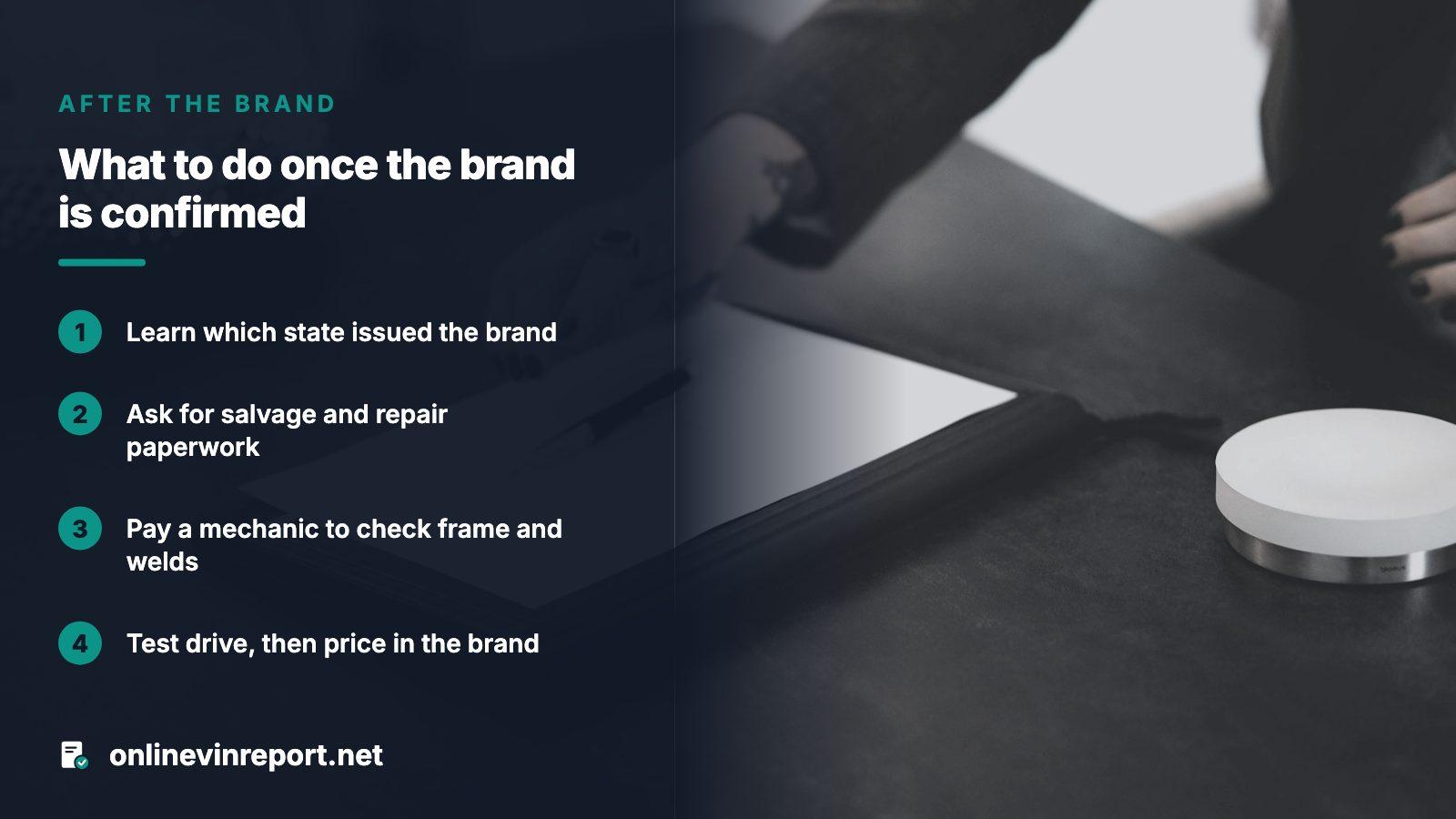
What to do once the brand is confirmed
- Learn which state issued the brand and read that state's own definition
- Ask for the salvage certificate, repair invoices and inspection paperwork
- Pay an independent mechanic to check the frame, airbags and welds
- Test drive on hills, highways and in stop-and-go traffic
- Get a written insurance answer, then negotiate with the brand priced in
If the history is thin or the answers are evasive, walking away is a sound result.
Where this information comes from
- PennDOT: Reconstructed Vehicle Titling Procedure — Pennsylvania's definition, inspection station rule and paperwork for a restored salvage vehicle.
- Wisconsin DOT: Reconstructed vehicles — The statute definition, inspection, RCON make and assigned VIN.
- Alaska DMV: Reconstructed or homebuilt vehicles — Essential-parts definition, surrendered titles, inspection and builder affidavit.
- Nevada DMV: Salvage vehicles — Written disclosure rule covering salvage, rebuilt and reconstructed vehicles, and the ban on washing brands.
- TxDMV: Rebuilt vehicles — Buyer questions on repair quality, frame alignment, insurance and value.
- NMVTIS: Understanding a vehicle history report — The five indicators in a federal title report and what the system leaves to private providers.
- NHTSA: Check for recalls — What a VIN recall search does and does not show.
Sources and photos: Facts checked against the sources above in November 2026. Photos by Nina Mercado, Annika Wischnewsky and Iain on Unsplash; diagrams by OnlineVINReport.
Keep reading
- What is a rebuilt title? What it means and what a VIN title check showsThe closest sibling brand and what its inspection covers.
- What is a branded title? How to read salvage, flood and rebuilt brands by VINHow states label salvage, flood, junk and other events.
- Rebuilt title inspection: what the state checks and what a VIN title check addsWhat a state exam checks and what is left for your mechanic.
- Salvage title VIN check: run it online before you payRun a salvage check by VIN and see the record before you pay.
Frequently asked questions
Is a reconstructed title the same as a rebuilt title?
Sometimes. Pennsylvania uses reconstructed for a salvage car that was restored and inspected, which is what other states call rebuilt. Wisconsin and Alaska use it for a heavily altered or assembled vehicle instead. Check the issuing state's definition, then confirm the history with a VIN record.
Can a reconstructed vehicle be registered and driven?
Yes, once the state completes its inspection and paperwork. Pennsylvania requires an enhanced safety inspection before the first title, and Wisconsin requires a safety equipment inspection. Until then the vehicle may not be legal on the road, so ask for the finished title, not a promise.
Does a reconstructed brand ever go away?
Plan on it staying. Title brands are meant to follow the vehicle from state to state, and national records keep the history of any brand a state applied. Anyone offering to erase one is describing title washing, which is a legal problem for you as the buyer.
Do I have to tell a buyer my car has a reconstructed title?
In some states, yes. Nevada requires written disclosure of salvage, rebuilt or reconstructed status before a sale. Rules differ elsewhere, so read your state's page or ask its DMV, and keep a signed copy of whatever you disclose.
What should a mechanic check on a reconstructed car?
Ask for frame measurements against factory specification, airbag and restraint system checks, weld and panel alignment, and signs of water or corrosion. On a built-up vehicle, also ask which donor cars supplied the frame number, engine and body, and review the matching paperwork.
Now check the car itself
The guide explains what to look for. The report shows what this VIN has on record.