THE SHORT ANSWER
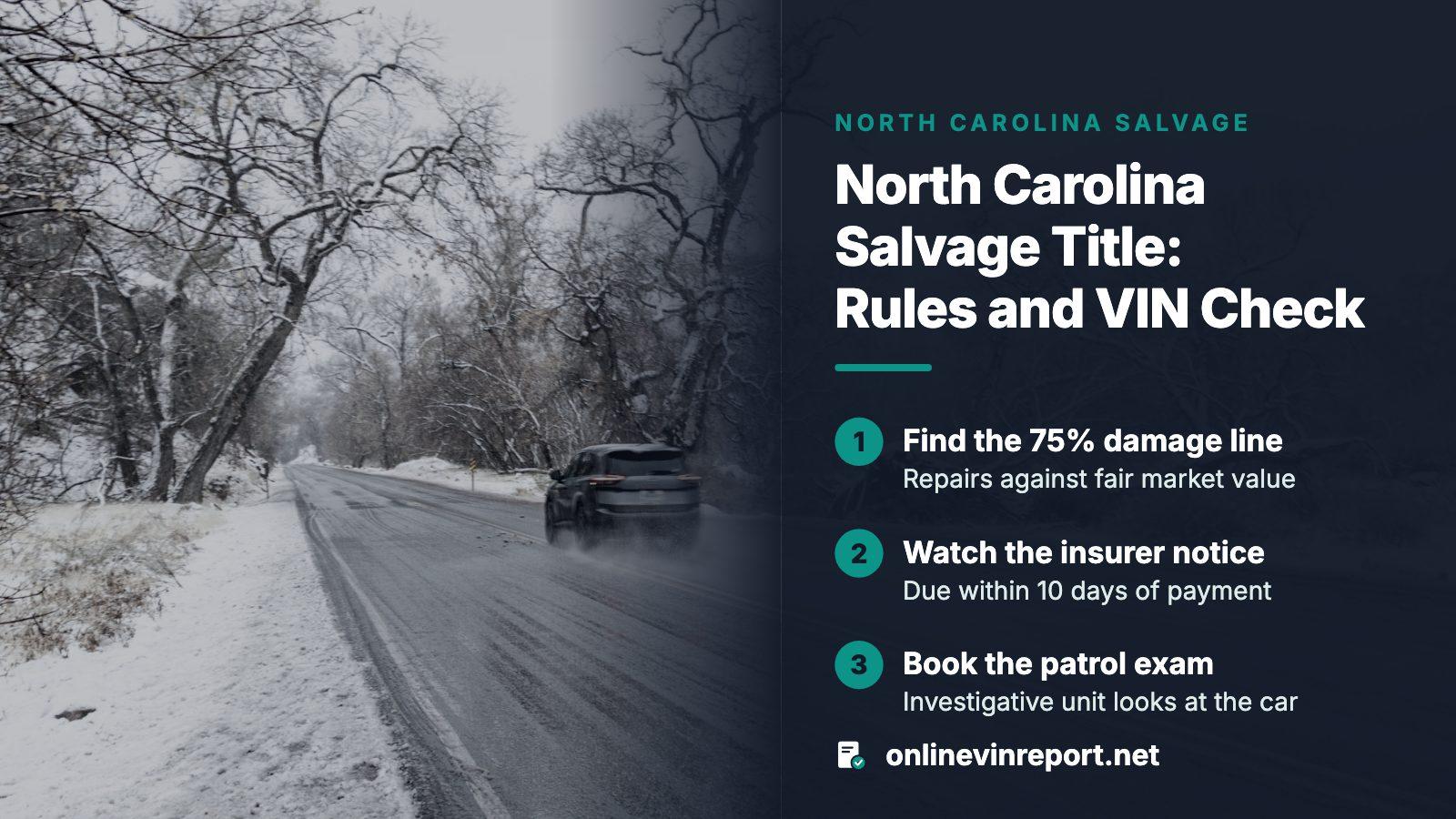
A North Carolina salvage vehicle is one damaged so badly that putting it back on the road would cost more than 75% of its fair market value. A salvage that has been repaired and re-registered becomes a salvage rebuilt vehicle. Before buying either one, look up the VIN and have the State Highway Patrol's investigative unit examine the car.
- Damage line
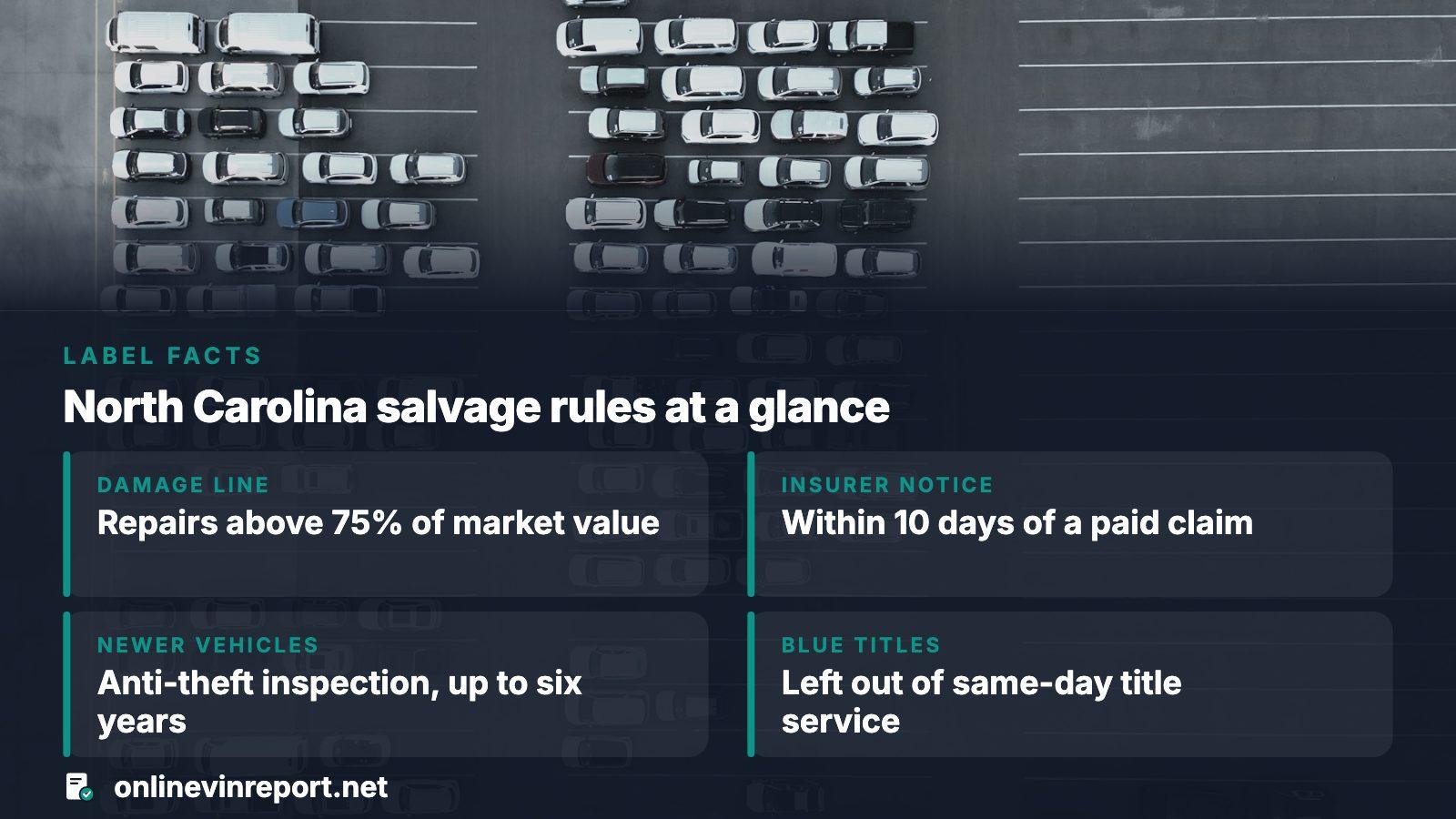
- Repairs above 75% of fair market value
- Insurer notice
- Within 10 days of a paid claim, in-state
- Newer vehicles
- Anti-theft inspection for a car up to six model years old
- Blue titles
- Not eligible for instant title service
Where North Carolina draws the salvage line
The state's motor vehicle agency treats a vehicle as salvaged when a crash or some other event leaves it needing repairs, parts and labor together, that would run past 75% of its fair market value before it could safely drive on public roads.
Notice what the sentence leaves out. It talks about repair cost, not about whether the car was ever driven again, and it does not turn on a seller's story. A car can cross the line without a tow truck ever being called, and a car can look flawless today while its record still carries the brand from a bad week years ago.
Salvage, salvage rebuilt, flood, reconstructed and junk
NCDMV lists several classifications side by side, and reading a listing or a title starts with working out which word is on it. They are not synonyms.
| Label | What the state says it is |
|---|---|
| Salvage | Fixing the damage safely would cost over three quarters of the car's market value |
| Salvage rebuilt | A salvage car that was fixed, then put back on the title and registration rolls |
| Flood | Water got in far enough to harm the body, engine, transmission or differential |
| Reconstructed | Built or changed with swapped, added or removed key parts, such as glider kits or home-assembled builds |
| Junk | Unable to run on public roads and worth only scrap or spares; no title or plate allowed |
The rebuilt label is the one buyers meet most often on used lots, since it marks a car that was repaired and put back into service. Reconstructed tells a different story: the car was assembled or reworked from parts, not necessarily wrecked.
What happens when an insurer pays on a wreck
After an insurer or its agent pays out on a salvaged vehicle, NCDMV must be informed inside 10 days. The deadline applies when both the damage and the title transfer took place in North Carolina.
For a buyer, this reporting is the reason a brand can follow a car. The wreck, the claim and the notice all leave a trail, and the trail feeds the title databases that a history report reads. A seller who says nothing ever got reported is describing a hope, not a fact, and the only way to test it is to look up the VIN.
The Highway Patrol inspection, before and after
Two separate inspection ideas appear on the state's page, and they should not be blurred together. One is a rule. If the damaged vehicle is no more than six model years old, whoever applies for its title needs an anti-theft check by the Highway Patrol's Investigative Services Unit.
The other is a recommendation. NCDMV urges buyers to be wary of salvage cars and to have that same unit go over one thoroughly first. That is the state itself saying a salvage car deserves a second look beyond the seller's word.
A practical reading
The required inspection is aimed at theft, meaning stolen parts and identity swaps. It is not a promise that the repair work behind the panels is sound. Pay a mechanic who knows frame and airbag work to look at the structure as well.
Buying or selling one: paperwork and delays
Moving a North Carolina title means both the seller and the buyer fill in the back of the original, and a North Carolina title also needs a notary. That back panel asks for the buyer's name and address, the date of sale, the seller's signature and printed name, an odometer figure where one is required and a damage disclosure statement.
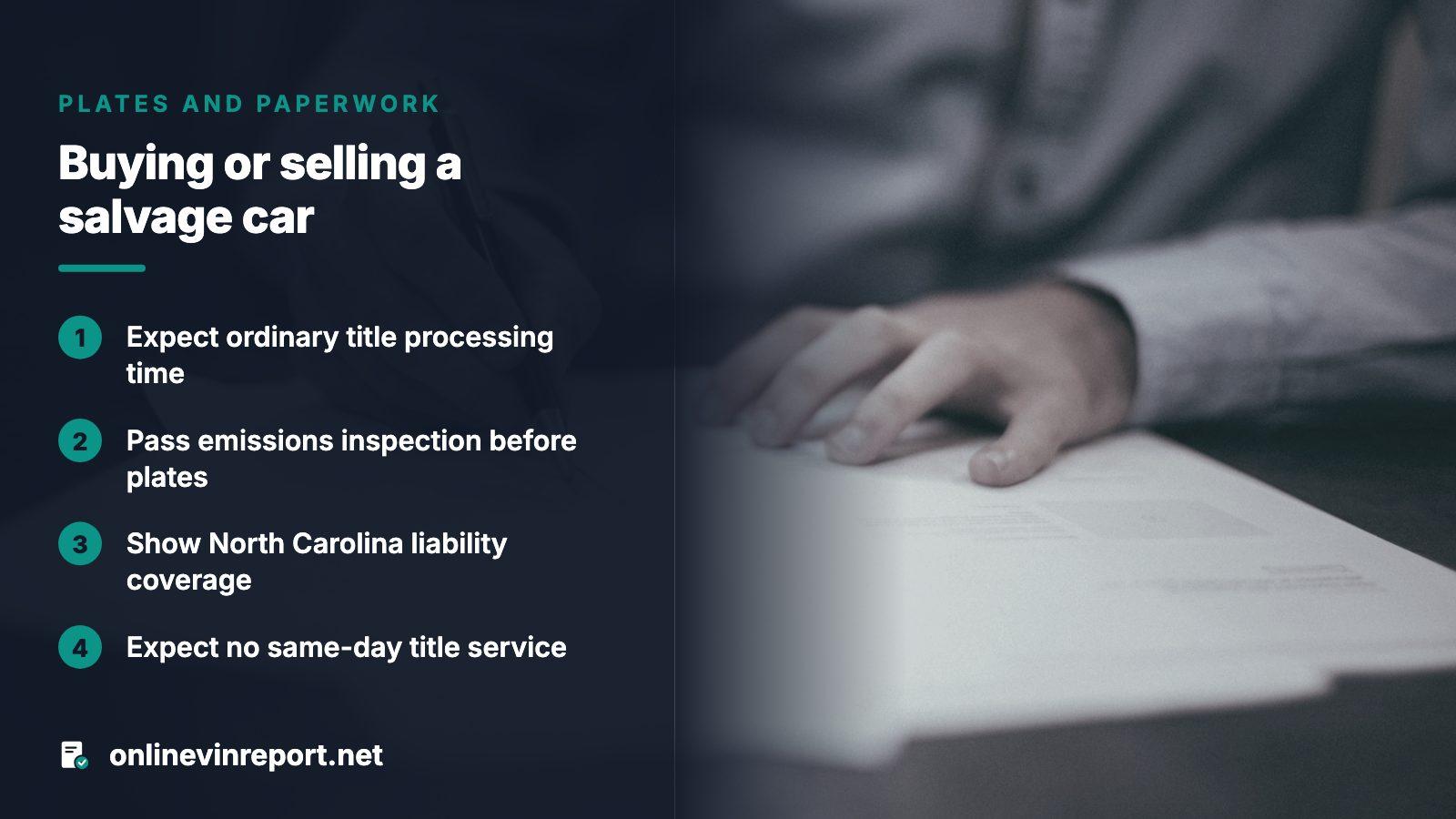
- Salvage (Blue) titles are left out of the instant title service, so expect ordinary processing time instead of same-day paperwork.
- Plates wait on an emissions inspection at an authorized station, except in out-of-state and manufacturer-origin title processes.
- Liability coverage from a North Carolina-licensed insurer comes before plates, and policies from other states do not count.
Sellers should treat the damage disclosure line as more than a box to tick. A buyer who later finds a brand the seller skipped has a signed record of what was said.
Cars that cannot take the bonded-title shortcut
Some buyers hear that a missing title can always be fixed with a bond. The state's page says otherwise for certain brands and histories.
- Anything carrying a parts-only, non-rebuildable or junked designation.
- Cars an insurer wrote off as a total loss without ever putting the title in its own name (G.S. 20-109.1).
- Total-loss cars sold with no title at all.
When a seller hands over a car with no title and a vague story about a past wreck, this list is a good reason to stop and run the VIN before any money moves.
Where an online VIN title check fits
NMVTIS is a federal title database set up so buyers are less exposed to title fraud and unsafe cars, and so thieves cannot easily resell stolen ones. A check by VIN reads records of that kind, so it can surface a salvage, rebuilt or flood brand nobody mentioned, plus insurance and auction records tied to the same number.
OnlineVINReport runs that lookup on whatever VIN you enter. The preview is free to view. To read everything you pay once, either for a single report or a pack of several, and there is no plan to cancel later. The pricing page lists the options. Do it before the test drive, because a brand shifts what the car is worth and whether you want it.
What no title search can promise
A clean result narrows the risk without removing it. Damage that was never claimed, repairs paid in cash and cars moved between states can all leave a record that looks tidier than the car. The Justice Department's NMVTIS site posts notices about flood-damaged vehicles for this reason.
So pair the lookup with a hands-on inspection: uneven panel gaps, silt or a musty smell, bright new bolts on old parts, mismatched paint. Ask for repair invoices and photos, and check that the stamped VIN on the vehicle agrees with the title.
Questions for NCDMV
For salvage or gray market questions, NCDMV lists a dedicated phone line at 919-615-3500. Ask there if your paperwork uses a label that does not match the ones above.
Where this information comes from
- NCDMV: Vehicle Title Special Cases — salvage definition, insurer notice, inspection, other classifications
- NCDMV: Vehicle Titles — title transfer steps, damage disclosure, no instant title for Blue titles
- VehicleHistory.gov: NMVTIS consumer page — what the federal title system is for, flood notices
Sources and photos: Facts checked against the sources above in November 2026. Photos by Zoshua Colah, Scott Graham and Iain on Unsplash; diagrams by OnlineVINReport.
Keep reading
- What is a rebuilt title? What it means and what a VIN title check showsHow a rebuilt brand differs from salvage.
- Rebuilt title inspection: what the state checks and what a VIN title check addsWhat an inspection after rebuilding looks at.
- Salvage title VIN check: run it online before you payRunning a salvage check by VIN, step by step.
- Total loss threshold by state and what it means for a VIN title checkCompare North Carolina's line with other states.
Frequently asked questions
What makes a car salvage in North Carolina?
A crash or other event that leaves repairs, parts and labor included, costing more than 75% of the fair market value if the car is to be safe on public roads. A later rebuild changes the label to salvage rebuilt but does not erase the history.
Can I buy a North Carolina salvage car without an inspection?
The state's page does not forbid it, but NCDMV urges a thorough Highway Patrol Investigative Services Unit inspection first. When the car is no more than six model years old, the title applicant needs an anti-theft inspection regardless. Add a mechanic's look at the structure.
Is salvage rebuilt the same as reconstructed in North Carolina?
No. Salvage rebuilt describes an ex-salvage vehicle that was repaired and returned to the title and registration system. Reconstructed describes a vehicle whose original construction was changed through new or used essential parts. Read the exact word printed on the title.
Can a North Carolina salvage title be processed the same day?
Not through the instant title service, which NCDMV says excludes Salvage (Blue) titles. Standard applications take 10 to 15 business days, so plan any sale or registration deadline around that wait.
Will a VIN lookup show a North Carolina salvage brand?
Often, because insurer claims and title records feed the databases a check reads. It is no guarantee, since unreported damage and moves between states can leave gaps. Use the check to spot red flags, then confirm with an inspection and the paperwork.
Now check the car itself
The guide explains what to look for. The report shows what this VIN has on record.