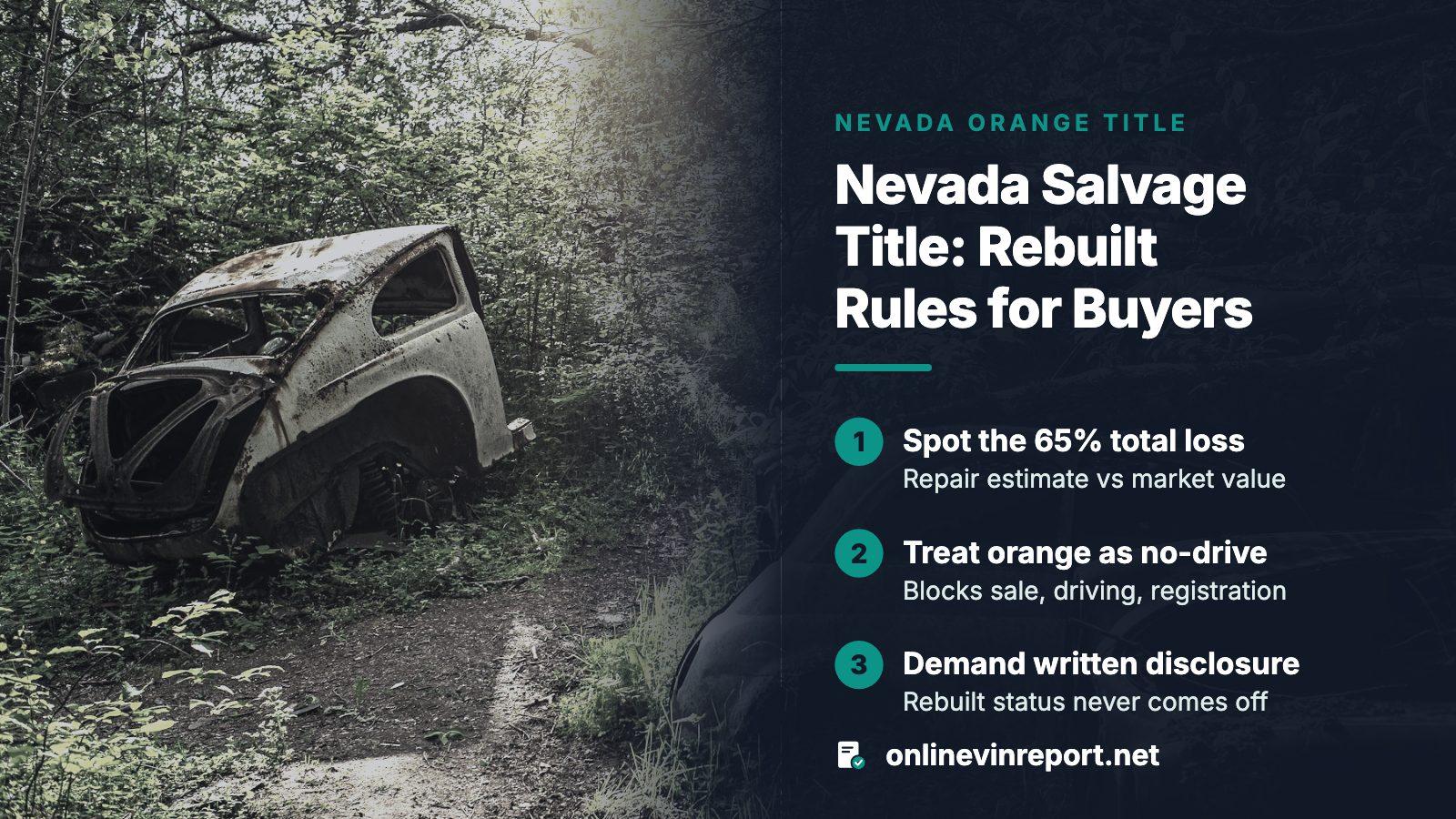
THE SHORT ANSWER
In Nevada, a vehicle is salvage once it has been totaled, ruled flood-damaged or ruled beyond repair. Total loss means repairs would run past 65% of the car's value. An orange salvage title blocks private sales, driving and registration. Once repaired and inspected, later titles read Rebuilt and the brand never comes off. Sellers must disclose rebuilt or salvage status in writing.
- Total-loss line
- Repair estimate above 65% of pre-damage market value
- Salvage title fee
- $10, issued in about 2 business days
- Rebuilt brand
- Permanent on every later Nevada title
- Preview
- A free look first, then a paid one-time report
When Nevada calls a car salvage
The state's wording is broader than most buyers expect. A car counts as salvage if at any point it was written off as a total loss, ruled flood-damaged or ruled non-repairable, or if any past title carried the word salvage or a close cousin. Timing does not matter. A car repaired five years ago is still a salvage vehicle in the eyes of the law.
The total-loss test is arithmetic. If the bill to fix the car would top 65% of its market value from the moment before the crash, it qualifies. Paint work does not count toward that bill. A car whose damage stays under that line is not salvage, which is why a badly dented car can still carry a plain title.
Three kinds of damage, and one exception for older cars
| Type | How Nevada describes it | Back on the road? |
|---|---|---|
| Total loss | Repair estimate above 65% of pre-damage value, paint excluded | Yes, after rebuild steps |
| Flood damage | Water above the door sill and into the cabin, trunk or engine area, or into the electrical system | Yes, after rebuild steps |
| Non-repairable | Parts and scrap value only, stripped, burned or marked for dismantling | No, never restored to operating condition |
Cars 10 model years old or older get a carve-out. If the only work needed is the hood, the trunk lid and no more than two items from the doors, grille, bumper, headlights and taillights, the car is not treated as salvage. Needing more than that sends it back to the 65% test.
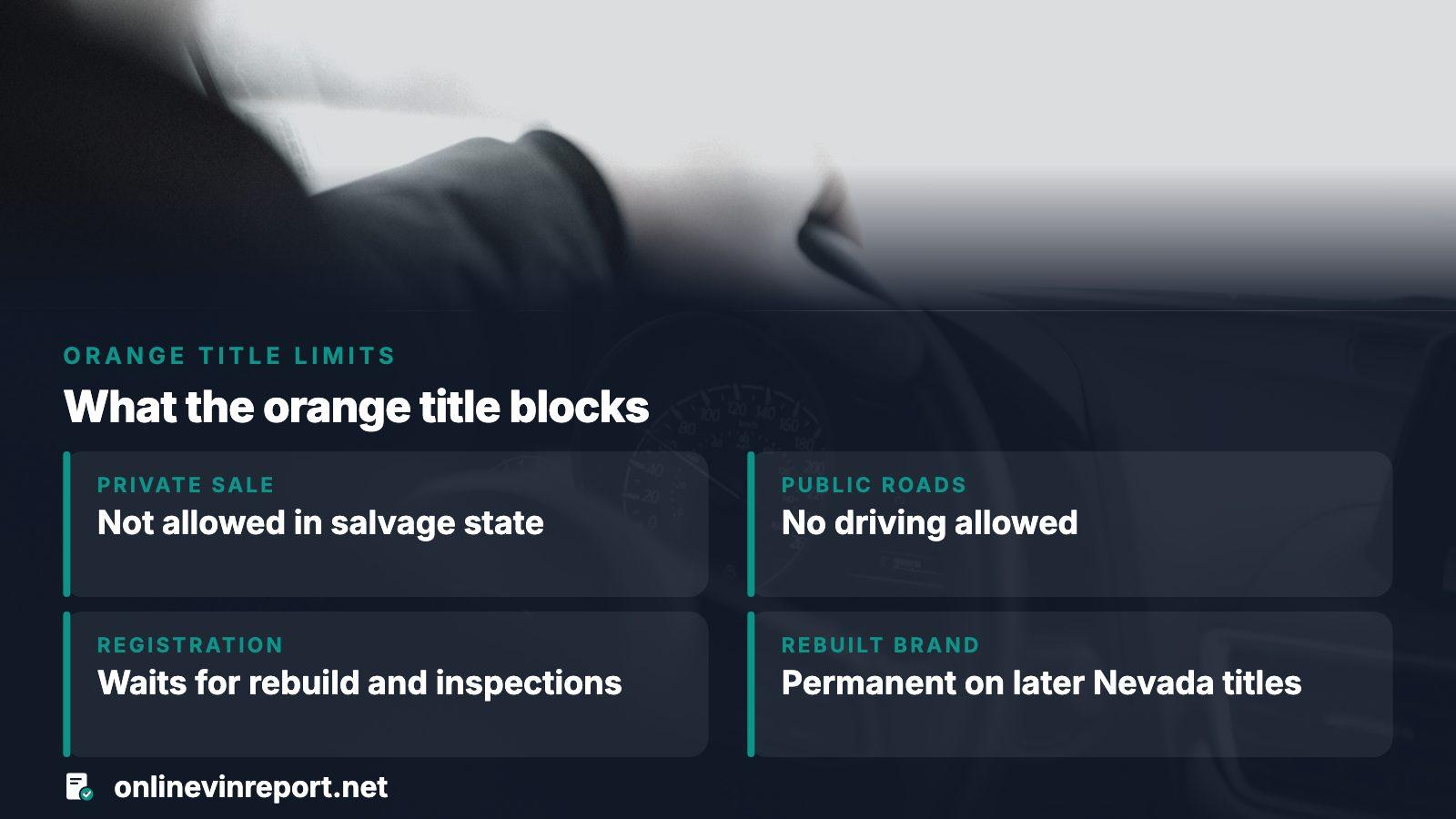
What the orange title blocks
The Nevada DMV is blunt about this: do not buy a car that currently holds an orange salvage title. Selling one to an ordinary individual is against the law until the rebuild and inspections are complete. The only lawful buyers are a licensed rebuilder, a wrecker or a dealer.
- It cannot be sold to an individual in its salvage state.
- It cannot be driven on public roads.
- It cannot be registered until the rebuild and inspections are finished.
- Plates stay with the owner and should come off the car after a total loss.
A private seller handing you a car that still shows the orange design has already told you the sale is a problem.
Who files for the orange title, and how fast it appears
The filer depends on who carries the loss. An insurer that pays a total-loss claim and takes the car applies. If a lender holds the loan and there is no collision coverage, the lender applies within 30 days. If there is no insurer or loan, or the owner keeps the wreck, the owner has 30 days.
Nobody walks this in to a counter. The packet is mailed to the state's central salvage desk in Carson City and holds form VP 213, a $10 check or money order, and either the paper title or a signed request for a duplicate. Non-repairable certificates carry no fee. DMV usually issues the orange title in about 2 business days, so a brand can exist within a week of a claim being settled.
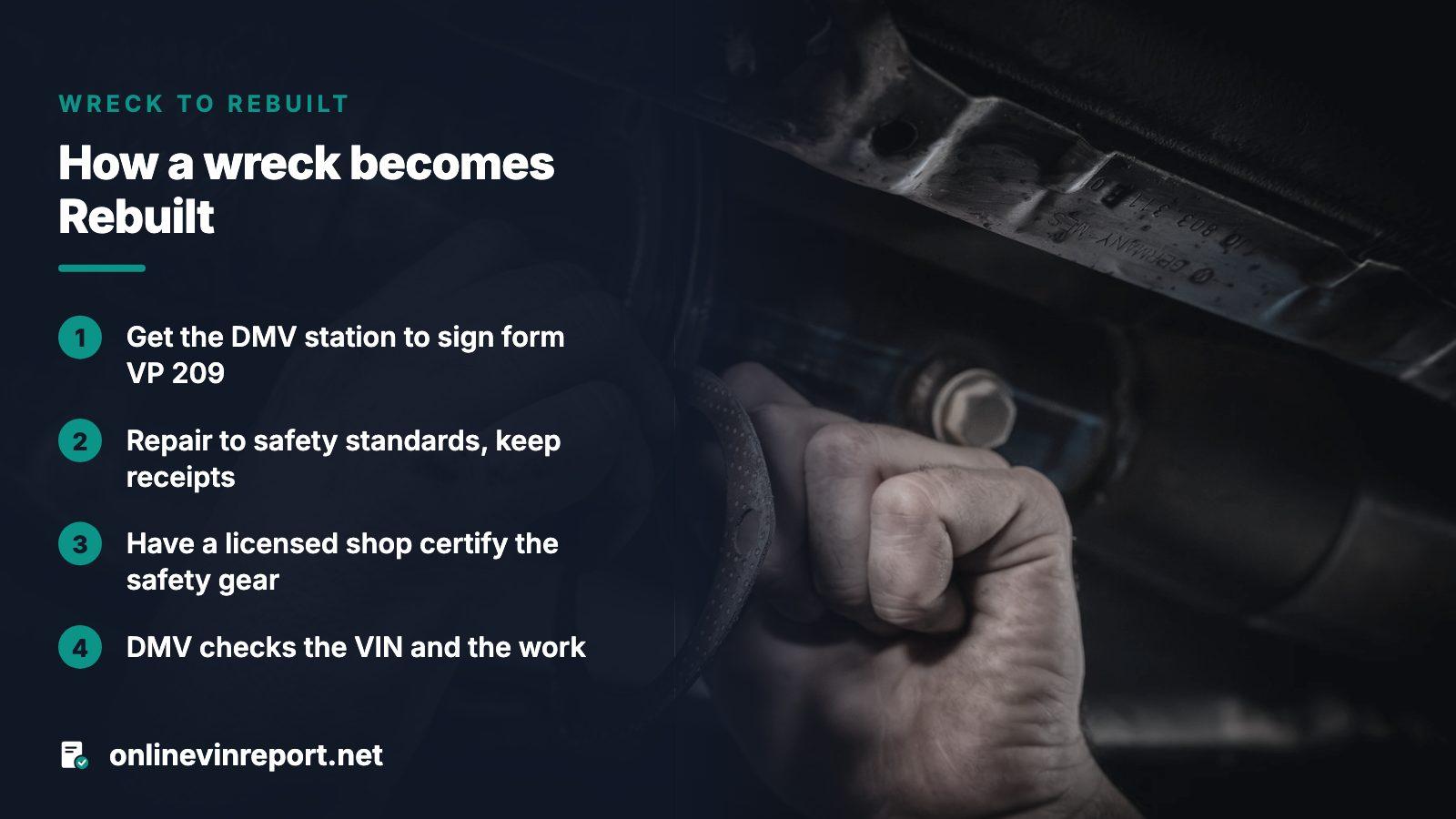
How a wreck becomes a Rebuilt car
- For a car up to 5 model years old, a DMV inspection station looks at the damage first and signs form VP 209, the restoration authorization, before anyone picks up a wrench.
- The owner or a shop repairs the car to safety standards, with working airbags and belts, and keeps receipts and identifying details for every part used.
- A garage registered in Nevada, a licensed body shop or a licensed rebuilder signs off that brakes, lights and other safety gear work, on the Certificate of Inspection.
- DMV inspects the car, verifies the VIN and the work, and then a new title and registration can be issued.
Every title issued afterward is a normal-looking Nevada title carrying the Rebuilt brand. DMV states the brand cannot be removed. Note what the process certifies: the paperwork trail and basic safety, not the quality of structural repair. Ask for the repair receipts and photos.
Rebuilt without a salvage declaration
A Rebuilt brand can also appear on a car that never had an orange title. Replacing certain major assemblies forces it: the cowl, the entire rear clip, a conventional frame plus any second major part, the whole front inner structure of a unibody, the roof, or the floor pan. A truck cab swap on its own is exempt.
Why this matters in a listing
A seller can say no claim ever totaled the car and be technically honest while still selling a Rebuilt-branded vehicle. Trust the brand printed on the title over the story told in the driveway.
What sellers must disclose, and what happens if they hide it
Under NRS 487.830, as DMV describes it, a seller must tell the buyer in writing before the sale if the car is salvage, rebuilt or reconstructed, meaning assembled from parts of several vehicles. Removing or washing a brand, altering documents to look clean, or hauling a salvage car out of state to sell it without a Nevada Salvage Title is illegal.
Where the car is worth $250 or more, breaking these rules is a felony. On the civil side, a buyer who wins in court may collect legal costs, whichever is larger of $5,000 or three times the real loss, plus punitive damages. Hold on to the signed disclosure, since it is your strongest evidence if the story falls apart.
Checking a Nevada car by VIN before you commit
Nevada DMV will not hand vehicle records to someone shopping for a car, and records on crash-involved vehicles stay closed to the public. So the check has to come from elsewhere. DMV points buyers to the NICB lookup for theft and salvage, the NHTSA decoder, the federal NMVTIS title database and the recall lookup. NMVTIS carries brand history, recent odometer readings, insurer salvage rulings and reports of sales to recyclers or salvage yards.
No database sees everything. Brands follow each state's own laws, and a car titled elsewhere can pick up a clean-looking title when the new state does not check the old one. Our preview shows whether a title brand or salvage record turns up for the VIN. The full report is bought once, with rates listed on the pricing page. Pair it with a mechanic's inspection rather than replacing one.
Red flags worth a second look
A seller who cannot produce the title in their own name, a car that smells of air freshener in a flood season, and a price far below the usual market range.
Where this information comes from
- Nevada DMV: Salvage Vehicles — definitions, title steps, rebuild process, disclosure law and penalties
- Nevada DMV: Flood-Damaged Vehicles — title washing warning and water-damage inspection tips
- Nevada DMV: Records — why DMV does not give vehicle records to buyers and which tools it lists
- US Department of Justice: NMVTIS for consumers — what the national title database holds and how brand washing happens
Sources and photos: Facts checked against the sources above in November 2026. Photos by Patrick von der Wehd, Martin Fennema and Miles Loewen on Unsplash; diagrams by OnlineVINReport.
Keep reading
- Salvage title VIN check: run it online before you payHow a salvage result shows up in a VIN report.
- What is a rebuilt title? What it means and what a VIN title check showsThe rebuilt brand explained beyond Nevada.
- Do you have to disclose a rebuilt title when you sell a car?Seller disclosure duties compared across states.
- Title washing: how a brand vanishes and what a VIN title check can showWhy a brand can vanish after a car is retitled elsewhere.
Frequently asked questions
Can I buy a car with a Nevada salvage title as a private buyer?
Not while it holds the orange salvage title. Nevada limits those sales to licensed rebuilders, wreckers and dealers. A private buyer can legally purchase the car only after it has been rebuilt, inspected and retitled with the Rebuilt brand.
Does a rebuilt title in Nevada ever go back to clean?
No. DMV says the Rebuilt brand cannot be removed, so every later Nevada title carries it. If a title looks clean on a car you know was totaled, treat that as a possible washed brand and run the VIN.
How is a Nevada rebuilt title different from a salvage title?
Salvage is the orange title issued after a total-loss declaration, and it bars driving and registration. Rebuilt is the brand on titles issued after repair and inspection, which allows registration but records the write-off permanently.
Does a rebuilt car need a separate inspection in Nevada?
Yes, two steps. A Nevada-registered garage, body shop or rebuilder certifies safety, then a DMV inspection station verifies the VIN and the repair work. Newer cars also need DMV authorization before any repairs begin.
What if the seller never told me the car was rebuilt?
Nevada requires written disclosure before the sale. Concealing a brand can be a felony for vehicles worth $250 or more, and a winning buyer may recover fees, costs and the greater of $5,000 or triple damages. Talk to an attorney about your case.
Now check the car itself
The guide explains what to look for. The report shows what this VIN has on record.