THE SHORT ANSWER
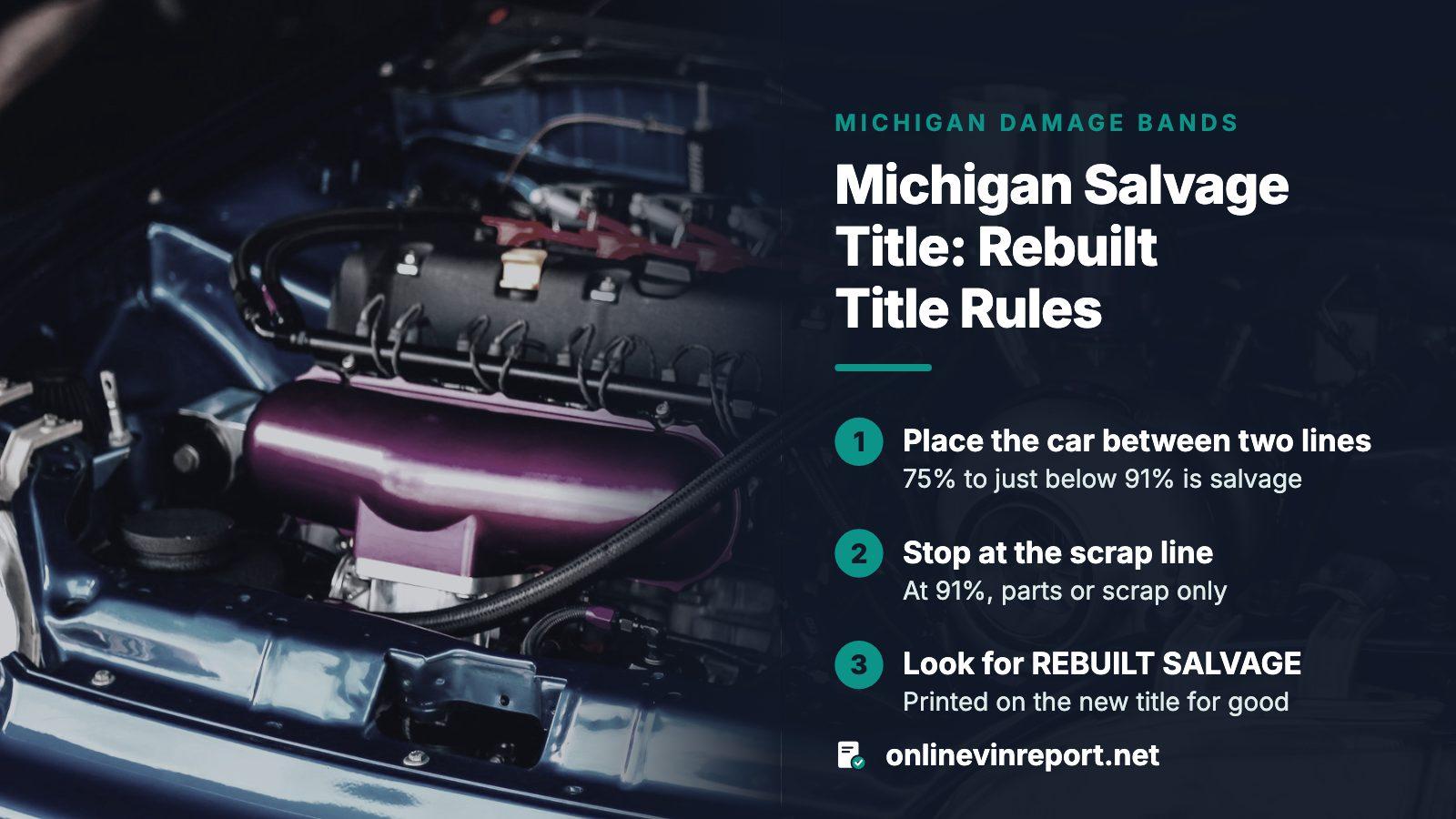
A Michigan salvage title fits a car with damage estimated at 75% up to just below 91% of its cash value before the damage. Reach 91% and the title becomes scrap, so the car never drives again. Repairs plus a state inspection can turn a salvage car into one titled rebuilt salvage, a brand that stays for good.
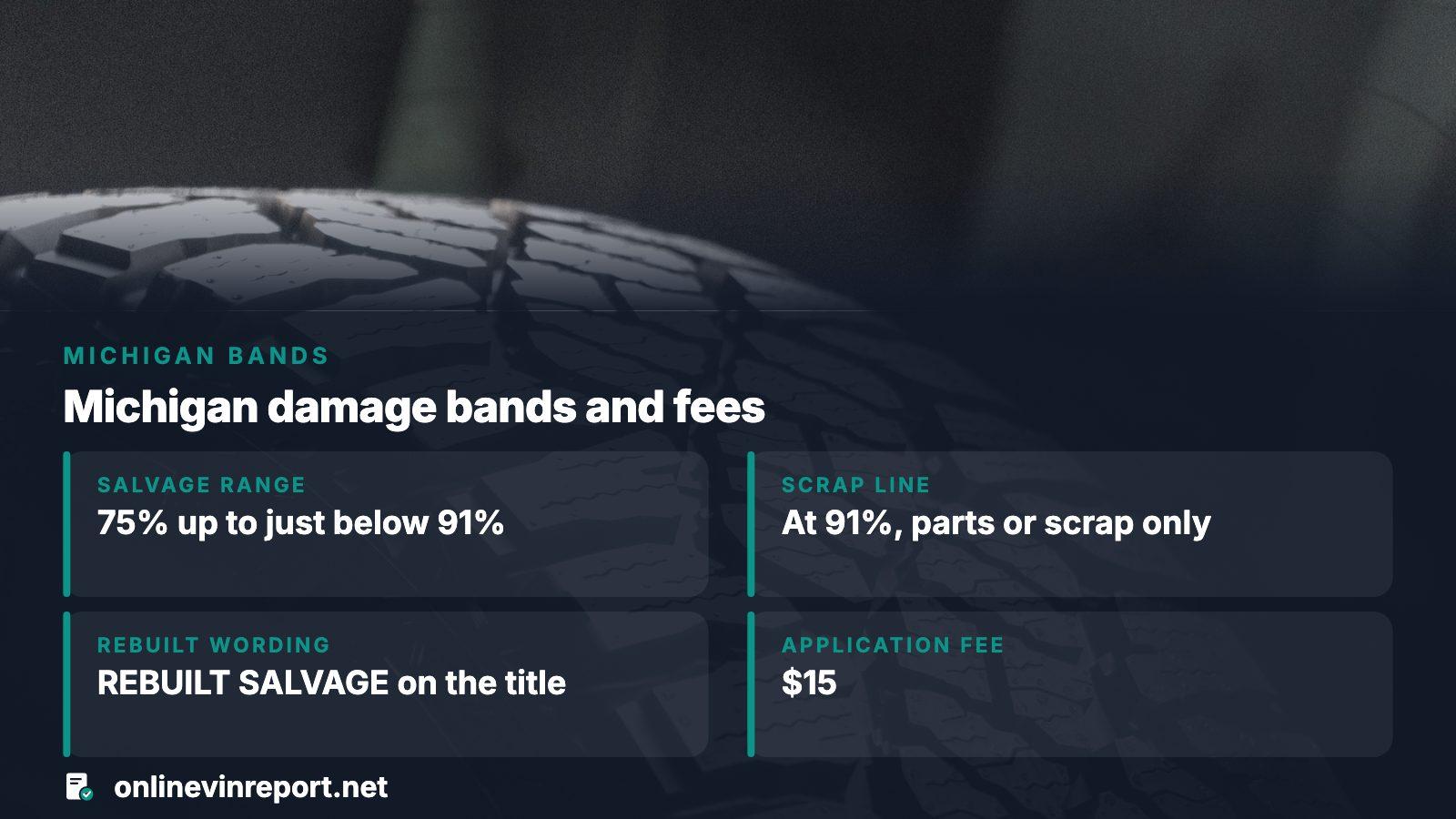
- Salvage range
- From 75% up to just below 91% of cash value
- Scrap line
- At 91%, parts or scrap metal only
- Rebuilt wording
- REBUILT SALVAGE printed on the new title
- Title application fee
- $15
Two percentages sort every damaged Michigan car
Michigan does not leave the write-off decision to opinion. The state calls a damaged car distressed once a major part has been wrecked, destroyed, damaged, stolen or lost, and then it sorts the car by how big the estimated damage is next to what the car was worth just before. Where the estimate lands decides which title the car receives.
| Estimated damage against value before the damage | Title issued | Can it be driven again? |
|---|---|---|
| Under 75% | Regular title stays | Yes |
| At least 75%, below 91% | Salvage | Only after inspection and retitling |
| 91% and above | Scrap | No, parts or scrap metal only |
Buyers who know only the word totaled often miss the second line. A scrap title is a different document from a salvage title, and treating the two as the same thing is how people end up with a car they cannot register.
Who sets the damage figure, and what counts as damage
The owner's insurance company works out the amount of damage, and its certification goes into the salvage application. That matters because the figure is not a body shop's guess after the fact. It is the paperwork trail a title clerk relied on.
The definition also reaches beyond crashes. A part that is stolen or missing counts the same as one that is bent or burned. A car stripped of its engine after a theft can therefore carry a salvage brand without ever having been in a collision. When a Michigan title is branded, the seller should be able to tell you which story applies, and the answer changes what you would have a mechanic inspect.
- Major parts named by the state include bumpers, fenders, the engine, the transmission, the hood, doors, the frame, the tailgate and the body.
- Both salvage and rebuilt titles record the car's color and name any major parts that could not be saved.
- The owner, the insurer or a dealership may file the application.
What a salvage title lets you do, and what it blocks
The salvage title takes the place of the regular one. You can own the car, store it, strip it or fix it, yet no plate goes on it and it stays off public streets until a state salvage inspector has recertified it and a new title is issued. A seller offering a salvage car with a plate on it, or a car that is already out on the street, is telling you something that does not match the paperwork.
To get the salvage title, the applicant brings a few things to a Secretary of State office or mails them to the Department of State in Lansing.
- The completed Michigan Salvage or Scrap Title Application.
- The current title as proof of ownership.
- The insurer's certification of the damage.
- The $15 application fee, paid by check or money order made out to Michigan.
Why a scrap title ends a car's road life
Scrap titles are printed in red with the words Scrap Title across the top. Once one is issued, the car can be sold for parts or crushed for metal, and nothing else. It cannot be registered, and it cannot go back on the road in any repaired form. The application uses the same documents and the same $15 fee as a salvage one.
Owners of old cars have a do-it-yourself route too. According to the state, a seller sending an older vehicle to scrap may handwrite the word scrap or junk on the original title, which closes off any later titling or road use. A buyer who sees handwriting like that on a Michigan title should treat the car as a parts donor, not a project.
A running scrap car is a warning sign
If a seller says the car drives fine but the title or a record says scrap, the car and the paperwork disagree. Only the paperwork is legally operative, so walk away until the state record is explained.
The route from salvage to a rebuilt title
A repaired salvage car gets back to legal use only by passing an officer with special salvage training. The sequence is short but each step leaves a record.
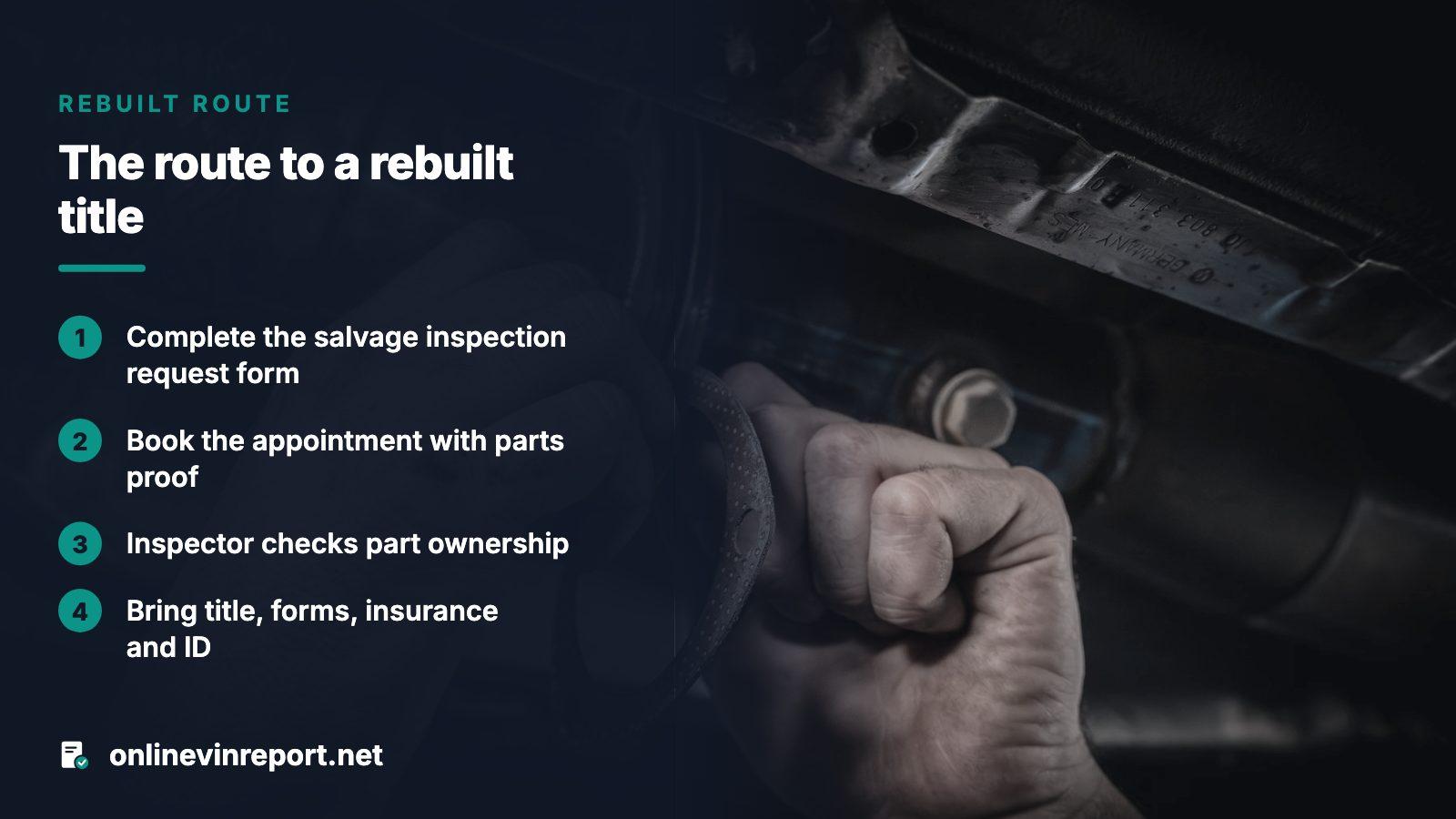
- Complete form TR-13A, the state's request for a salvage inspection, with a licensed mechanic.
- Book the appointment and carry paperwork proving where each replacement part came from, either an assigned title or a bill of sale.
- The inspector checks who owned the replacement parts and whether the car meets the Michigan Vehicle Code's equipment and safety requirements, then signs off on the recertification, form TR-13B.
- Take the salvage title, both forms, Michigan No-Fault insurance, your license or state ID and the $15 fee, plus registration fees, to a Secretary of State office.
The new title reads REBUILT SALVAGE. The state's stated purpose is to alert later owners that an insurer once classified the car as totaled under an earlier owner.
Reading a Michigan title in your hands
Color is the first clue. Titles carrying a salvage, rebuilt or other brand come in orange or in gray and yellow. Brands are not limited to wrecks: Michigan also marks vehicles used as police cars, taxis and municipal vehicles, and it marks flood damaged ones. Once a brand is entered, the state says it stays on every later title.
That last rule is why a seller's claim that the car is basically a normal one now rarely holds up. The word rebuilt is permanent, so a price that looks like a clean-title price deserves a question. If the title in front of you is a plain white-looking regular one on a car with signs of repair, check the VIN against records instead of relying on the paper alone.
Where an online VIN title check fits
A paper title can be lost, copied or held up in another state. A VIN title check looks at the record under the number stamped on the car, which is the same number the state used. NMVTIS is the national title information system, aimed at consumer protection, and a report drawing on it can reveal brands a seller never brought up.
Our report begins with a free preview, and a single purchase gets you the full document. There is no subscription, and the current prices sit on the pricing page. Look first at the title brand history, then any salvage or auction entries with photos, then the odometer readings. A branded title in a state other than Michigan is worth chasing too, since a car can move before it is sold.
A short checklist before you pay for a branded car
- Ask whether the title says salvage, scrap or REBUILT SALVAGE, and compare it to the VIN check result.
- Ask for the TR-13B recertification paperwork on a rebuilt car, and for receipts or bills of sale for replaced parts.
- Have an independent mechanic look at the frame, airbags and welds, since the state inspection covers parts ownership and required equipment.
- Confirm the insurer's total-loss history through the VIN, then ask your own insurer whether it will cover a rebuilt car and on what terms.
- Price the car with the brand in mind, since the label follows it to every future buyer.
If the seller resists any of these requests, that tells you more than the car does.
Where this information comes from
- Michigan Department of State: Titles — salvage, scrap and rebuilt rules, forms, fee and title brands
- VehicleHistory.gov: NMVTIS — federal title database aimed at fraud, unsafe and stolen vehicles
Sources and photos: Facts checked against the sources above in November 2026. Photos by Willian Cittadin, Martin Fennema and Rob Wingate on Unsplash; diagrams by OnlineVINReport.
Keep reading
- What is a rebuilt title? What it means and what a VIN title check showsa plain explanation of the rebuilt brand outside Michigan
- Rebuilt title inspection: what the state checks and what a VIN title check addshow rebuilt inspections work in general
- Salvage title VIN check: run it online before you payrun a VIN check for a salvage brand
- Why a salvage title is bad, and how a VIN check shows it firstwhether a branded car is worth buying
Frequently asked questions
What makes a car salvage in Michigan?
A car turns salvage when a major part is wrecked, destroyed, damaged, stolen or missing and the estimated damage lands from 75% up to just below 91% of its earlier cash value. The owner's insurance company works out the amount, and its certification supports the application.
Can a Michigan scrap title car be fixed and driven?
No. The scrap title applies at 91% and above, and afterward the car is good only for parts or scrap metal. It cannot be registered or used on the road, so repairs do not change what the title allows.
How does a salvage car get a rebuilt title in Michigan?
After repairs, the owner fills out form TR-13A with a licensed mechanic and has a salvage vehicle inspector examine the car. The inspector completes form TR-13B. The owner then takes the salvage title, both forms, No-Fault insurance and ID to a Secretary of State office.
Does a rebuilt salvage title ever go away?
The state says title brands stay on all future titles once entered, and rebuilt vehicles are among those branded. Expect REBUILT SALVAGE to follow the car to every later owner, and expect buyers to price it that way.
How can I see a Michigan title brand before buying?
Ask to see the title, then run the VIN through a title check to compare it against the record. Start with the free preview, then pay once for the full report if you want the detail, so you learn whether a brand turns up before you decide.
Now check the car itself
The guide explains what to look for. The report shows what this VIN has on record.