THE SHORT ANSWER
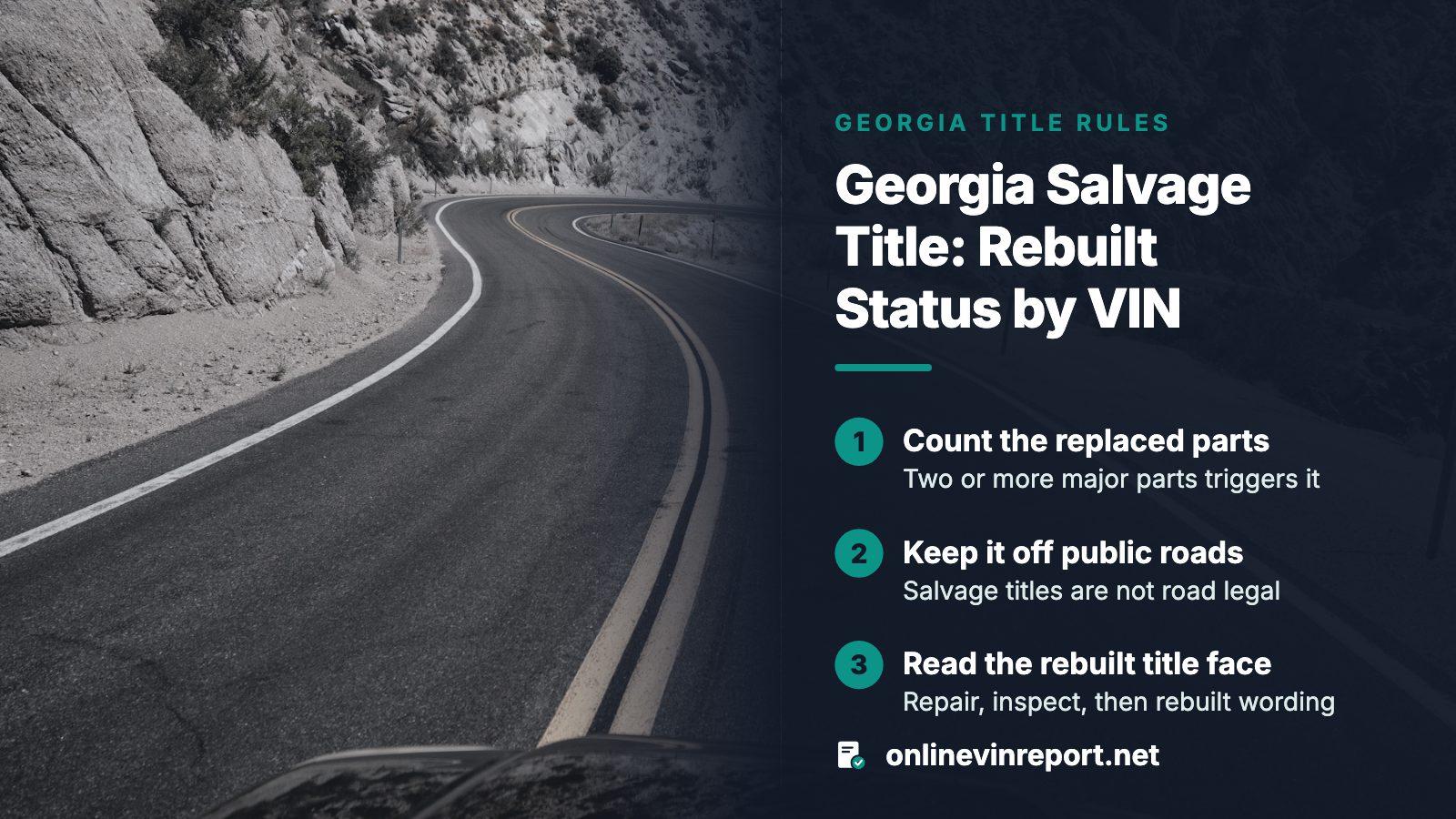
In Georgia, a salvage title marks a car that was totaled, needs two or more component parts replaced, or arrived with a Total Loss, Fire, Flood or Water brand from another state. It cannot be driven on public roads. After repair and an inspection it can get a rebuilt title, which says so on its face. Run the VIN before you pay.
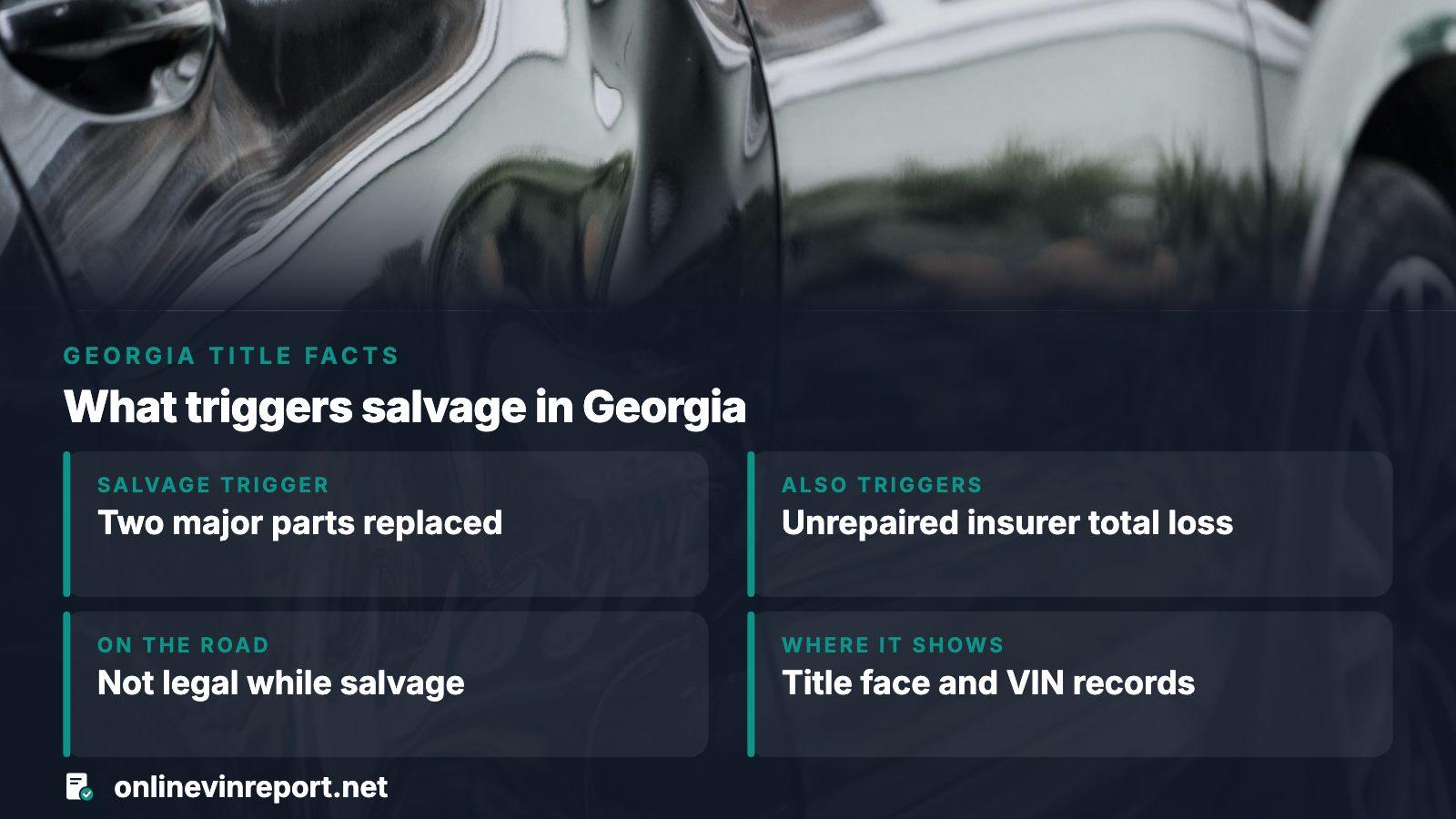
- Salvage trigger
- At least two major parts need replacing, or an unrepaired insurer total loss
- On the road
- Not legal with a salvage title
- Next step
- Repair, inspection, then a rebuilt title
- Where it shows
- On the title face and in title-brand records by VIN
What makes a car salvage in Georgia
The Georgia Attorney General's consumer division lists four ways a vehicle ends up salvaged. The first is physical: at least two component parts need replacing before the car can run again. The second is financial: the insurer settled the claim as a total loss and the car has sat unrepaired.
The other two are less obvious. An imported vehicle that was damaged in shipment, disclaimed by its manufacturer and never sold at retail or titled also qualifies. So does any car that another state has already branded Total Loss, Fire, Flood or Water. Moving a car into Georgia does not wash that history off, and the Georgia treatment follows the brand.
For a shopper this means the word salvage can describe a lightly damaged car and a burned shell alike. The title tells you the category, not how bad the damage was.
Why a salvage-titled car cannot just be driven home
The state's consumer guidance is blunt: running a car on a salvaged title on public roads breaks Georgia law. That changes how you handle a purchase. If a seller offers a salvage car at a discount, plan for a flatbed, not a test drive and a drive home.
Practical consequence
Ask the seller which title the car holds today. If the answer is salvage, you are buying a project that has to be repaired, inspected and retitled before it can legally be on the road, and that work costs money and time on top of the price.
Many sellers advertise a car as rebuilt when the title still says salvage. Read the word on the title yourself rather than trusting a listing.
From salvage to rebuilt: the path back to the road
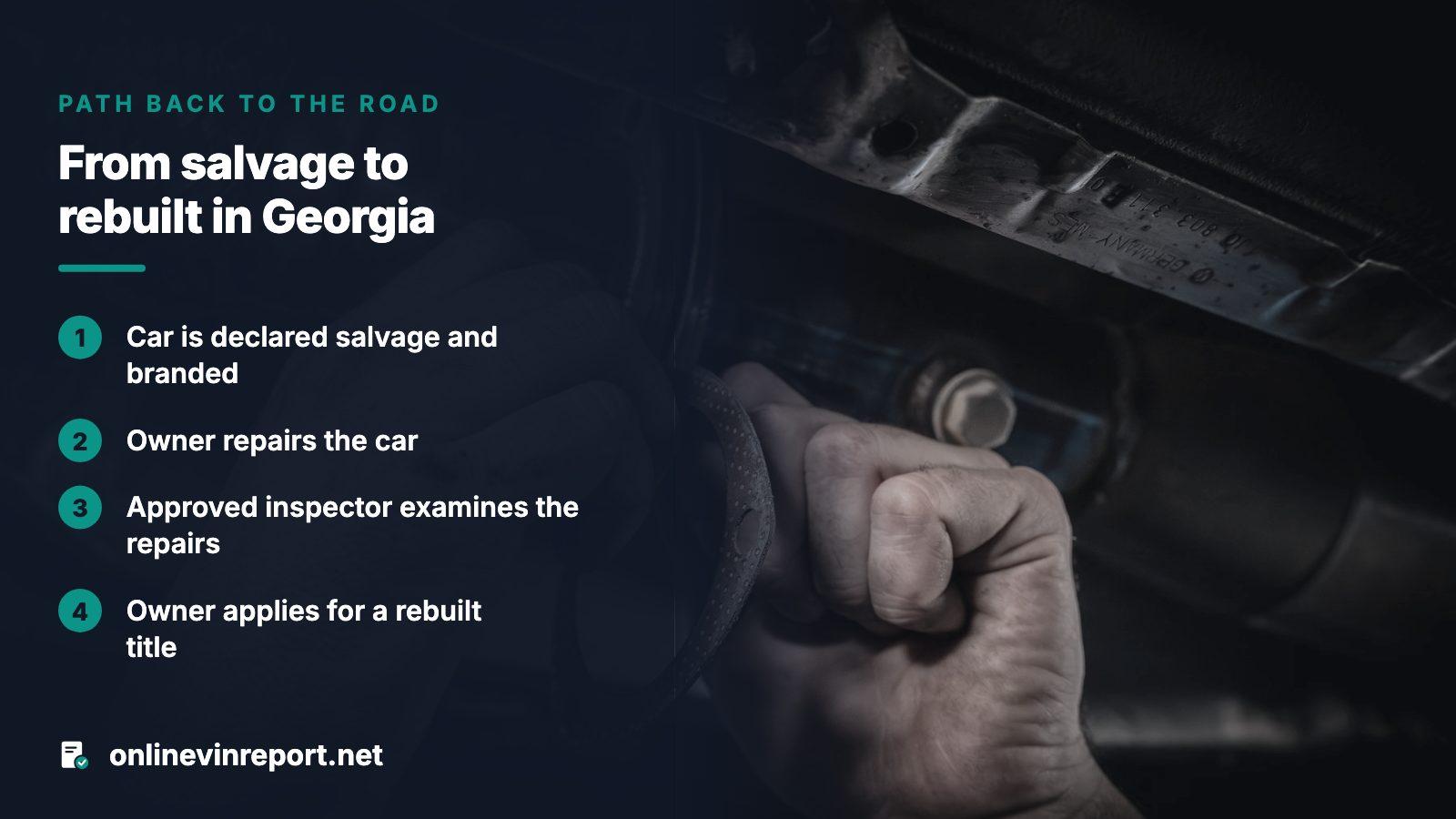
A salvaged car has to be repaired first and then pass an inspection before the owner can apply for a rebuilt title. According to the Attorney General's page, that inspection is done by a private inspector or station approved by the Department of Revenue's Motor Vehicle Division.
- The car is declared salvage and the title carries that brand.
- The owner repairs it.
- An approved inspector examines the repaired car.
- The owner applies for a rebuilt title, and the word rebuilt appears on the face of the new title.
Forms and fees for this process change over time, and the Department of Revenue publishes them on its own salvage and rebuilt titles page. Check that page for current paperwork instead of relying on a seller's account of what was filed.
Reading the title before you hand over money
The state's advice on screening a former salvage car starts with the paper itself. A rebuilt car discloses that status on the face of the title. If you are shown a photocopy, a scan or only a bill of sale, treat that as a gap to close, not a detail.
| What you see | What it usually means | Your move |
|---|---|---|
| Title says salvage | Car cannot legally be driven yet | Price it as a repair project, or walk away |
| Title says rebuilt | Repaired and inspected after a salvage brand | Ask for repair records and photos of the damage |
| Out-of-state title with a flood or total loss brand | Georgia still treats it as salvaged | Do not accept a clean-looking Georgia title without checking the history |
| Seller cannot show the title | No way to confirm the brand | Pause the sale until the title is in hand |
Dealers often sell repaired former write-offs under a rebuilt title, so a dealer lot is no reason to skip the check.
What a VIN title check adds
A VIN carries its title brands across state lines through NMVTIS, the federal title database that the Justice Department oversees. Its consumer information covers brand history from the current title, insurer salvage or total loss decisions, reports of a handover to a junk yard, salvage yard or recycler, the newest odometer reading on file and current title details.
That is exactly the set of records you want when a Georgia seller says the car had a minor fender bender. A branded title, a total loss decision or a trip to a salvage yard shows up in those records whether or not the seller mentions it.
Our site starts with a no-charge preview that signals whether brand records turn up for that number. Going further costs one payment, listed on the pricing page, and brings in the damage and auction detail behind any brand.
What a clean result does not prove
NMVTIS itself cautions that a clean report can be missing data, since some states and entities have not yet started reporting. It adds that a total loss label can be attached to a car that was not destroyed. Both points matter in Georgia, where the same salvage category covers very different cars.
- A clean record lowers the chance of a hidden brand but does not remove it.
- A total loss entry tells you an insurer made a decision, not how the car looks today.
- Neither replaces an inspection by a mechanic you choose.
Use the VIN check to decide whether the car deserves a closer look, then spend money on an independent inspection if it does.
A short routine for a Georgia buyer
Ask for the VIN while you are still at home, then match it against the car and the title when you arrive. Run the lookup with the listing open next to it. Should a brand appear, request the seller's explanation in writing.
- Ask which title the car holds now.
- Run the VIN and read any brand, total loss or salvage yard entry.
- Inspect the title face for the word rebuilt or salvage.
- Ask for the repair records and photos if the car was rebuilt.
- Have an independent mechanic look at the structure and electronics.
If any step fails, the price should drop or the deal should end. Lenders and insurers often treat branded cars differently, so ask yours before you sign.
Where this information comes from
- Georgia Attorney General Consumer Ed: salvaged vehicle FAQ — what counts as salvage in Georgia, road-use rule, rebuilt inspection, title wording
- NMVTIS: information for consumers — what title-brand data a consumer report holds and its limits
Sources and photos: Facts checked against the sources above in November 2026. Photos by Will Truettner, Martin Fennema and Maxim Tolchinskiy on Unsplash; diagrams by OnlineVINReport.
Keep reading
- Salvage title VIN check: run it online before you payHow a salvage entry reads in a VIN report.
- What is a rebuilt title? What it means and what a VIN title check showsWhat rebuilt means once the repairs are done.
- Rebuilt title check by VIN: is the car clean or rebuilt?Check a rebuilt brand before buying.
- Total loss threshold by state and what it means for a VIN title checkHow states decide a car is a total loss.
Frequently asked questions
Can I drive a car with a Georgia salvage title?
No. Georgia's consumer guidance treats driving on a salvaged title as unlawful on public roads. It has to be repaired, inspected and retitled as rebuilt first, so budget for a tow and for the repair work if you buy one.
What is the difference between a salvage and a rebuilt title in Georgia?
Salvage means the car was written off or needs major parts replaced and has not been cleared. Rebuilt means it was repaired and passed an inspection, and the title says rebuilt on its face. Both stay on the car's record, so a VIN check still shows the history.
Does a Georgia title carry over a flood brand from another state?
Georgia counts a car that another state branded Total Loss, Fire, Flood or Water as salvaged. A seller cannot erase that by registering the car locally, which is why checking the VIN across states matters before you buy an out-of-state car.
Will a VIN check always catch a salvage brand?
Not always. The federal title database notes that not every state and entity reports yet, so a clean result may be incomplete. Pair the check with a look at the physical title, repair records and an independent mechanic's inspection.
Where do I find current Georgia rebuilt title forms and fees?
On the Georgia Department of Revenue's salvage and rebuilt titles pages, or by asking its Motor Vehicle Division. Forms and fees change, so use the department's own pages rather than a seller's description or an older article.
Now check the car itself
The guide explains what to look for. The report shows what this VIN has on record.