THE SHORT ANSWER
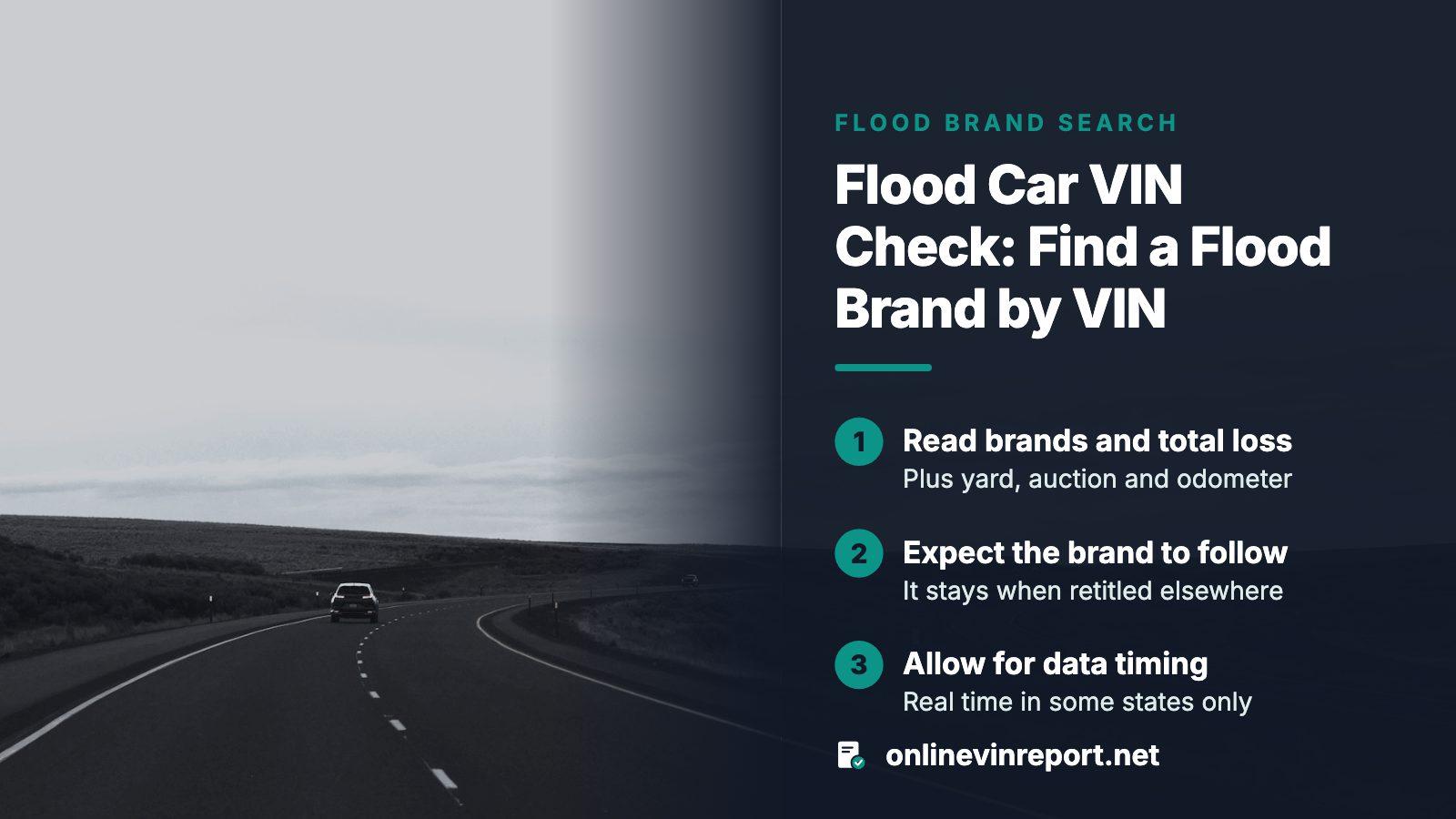
Enter the VIN to pull the car's title record. A flood brand, a total-loss determination or a salvage-auction record means serious damage is on file, so walk away or ask for proof of a proper repair. A blank result is not a dry car: water damage that nobody filed leaves nothing to find, so follow the search with an independent inspection.
- What it reads
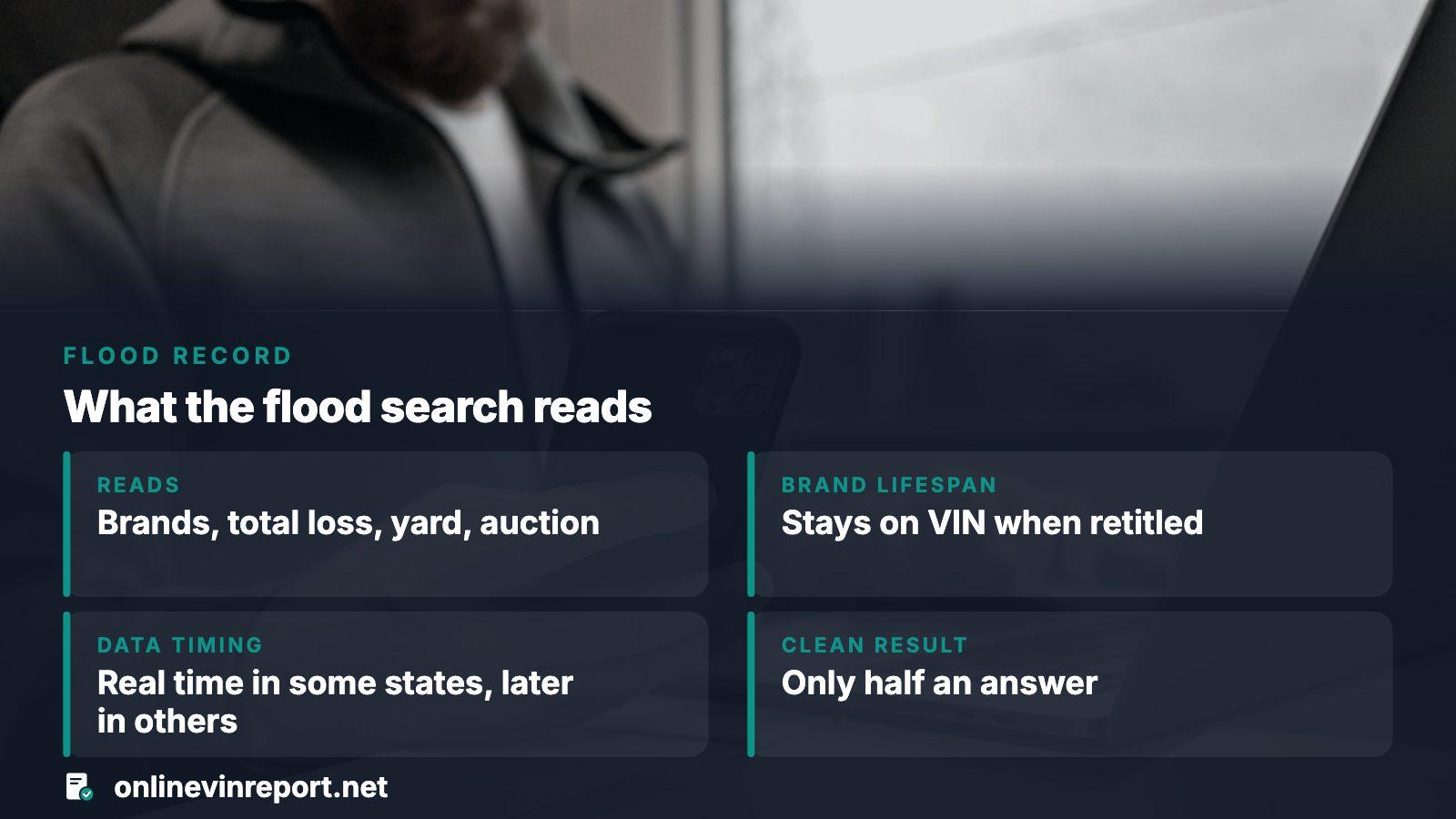
- Brands, total loss, salvage-yard and auction entries, odometer
- Brand lifespan
- Stays on the VIN when the car is retitled elsewhere
- Data timing
- Real time in some states, a day or more in others
- Preview
- Free to run; the full report is bought once
What the title record holds about water damage
Water damage reaches a title record in three ways. A state titling agency can stamp a flood brand on the car. An insurer can write it off as a total loss. A salvage yard or auction can log that it took the car in. The title check at OnlineVINReport lays those entries side by side with the last odometer figure a state recorded.
NMVTIS, the federal title database, shows the design goal: it retains every brand any state has applied, so retitling a flooded car elsewhere does not shake the label off the VIN. That is why you search by VIN and not by the seller's story or the state on the plate.
How to run the search
Four moves, in this order.
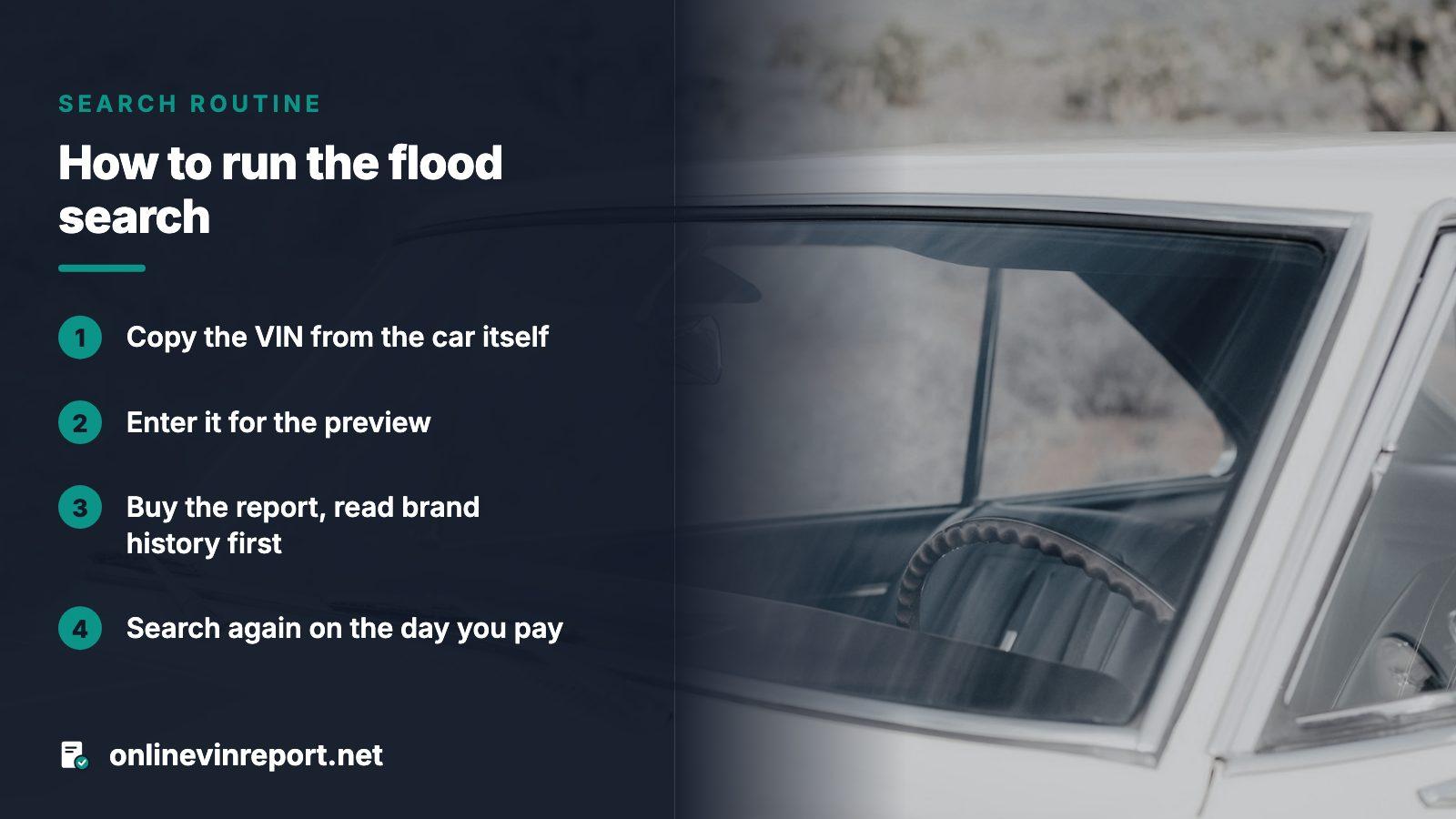
- Copy the VIN from the car itself instead of the listing; the two places it is displayed on the car should agree.
- Enter it for the preview, which confirms year, make and model and shows whether title records exist.
- If the preview fits the car, buy the report. Start with brand history, then move to the salvage, auction and insurance entries.
- Search again on the day you pay. Some states post title updates instantly and others send them daily or over several days, so a record can land after your first look.
Reading the result: what each entry means
| Entry | What it points to | Your move |
|---|---|---|
| Flood brand | A state labeled the car as water-damaged | Walk away, or demand repair proof and an independent inspection |
| Salvage or junk brand | Severe damage on file; the cause could be water, a crash or fire | Look for the loss details and photos |
| Total-loss entry | An insurer wrote the car off; a stolen car later recovered intact can carry one too | Ask what the loss was |
| Salvage or auction entry | The car left ordinary retail channels at some point | Ask the seller to explain it |
| Brand with an unfamiliar name | States use their own wording | Find out what the label means in the titling state |
| No entries | Nothing was filed that the search could see | Inspect the car and do not assume it is dry |
Why a clean result is only half an answer
A title search reports filings, and the federal system itself concedes it can return a false negative. Four gaps explain how a flooded car searches clean.
- Flood branding is a state decision. Some states have no flood designation, so water damage there may never produce one.
- Insurers are required to report cars from the latest five model years. An older car's write-off may not reach the federal record, though yards and auctions report cars of any age.
- Coverage is uneven. The federal consumer page counts 87 percent of U.S. vehicles in the system while saying more than half of states report data, so an empty report can mean nothing was sent.
- States send updates on different schedules, so a very recent loss may not have posted.
The Justice Department's answer is an independent inspection alongside the report, and the FTC adds that history reports typically omit mechanical problems.
A buyer whose report looked fine
The gap is not theoretical: NHTSA's public owner complaints include flood history found after the purchase.
From an NHTSA owner complaint
An owner of a 2016 Kia Optima told NHTSA they read a vehicle history report before buying from a Kansas dealership and found that "nothing stood out that scared me." Seven months and 9000 in repairs later, several mechanics said the car had sat in deep water for a long time, and an electrical specialist warned corrosion could cause trouble later. The owner says someone told them a flood title was warranted and that the dealer stopped replying.
The lesson: a report mirrors what was filed. The car itself still needs a mechanic's look before money changes hands.
When the seller says the title is clean
A listing that says clean title is a sales claim, and the VIN's record is how you test it. On a dealer lot, put any promise in writing on the Buyers Guide; the FTC calls spoken ones difficult to enforce.
From an NHTSA owner complaint
A buyer who bought a 2012 Hyundai Sonata from an Iowa used-car lot in 2017 said they were told the car had a clean title and 70,000 miles, as the online ad claimed. The dash showed a different figure, which the dealer called the trip meter. Phoning back the next day to ask about a salvage title, the buyer was told it was a flood salvage car whose air bags did not work. The buyer also cites open recalls and nothing in writing.
Searching the VIN before payment puts the title history in front of you before that conversation starts. When the record and the listing disagree, stop and ask for documents.
Why flooded cars end up far from the water
Following Katrina, officials said trucks hauled flooded cars out of Louisiana to states as far off as the upper Midwest, where the cars were dried, cleaned and sold into states with no flood brand, per the federal consumer page.
The harm is in the wiring: saltwater makes electrical systems more failure-prone, airbag sensors included. That page also quotes an industry figure of more than 185,000 titles in the first half of 2008 that were branded in one state, then retitled in another so as to look clean. Search the VIN, not the paper in the seller's hand.
What to do at the car after the search
Run the search before you travel, then use your time at the car on what a database cannot see. The FTC recommends hiring a mechanic with no tie to the seller, even for a certified car, with a written report and repair estimates that list the VIN. A seller who blocks outside inspection earns the FTC's answer: try a different dealer.
Test drive it on a hill, a highway and in crawling traffic, and work through an inspection checklist. The flood-damaged car guide on this site covers the water-specific checks in full.
Preview, report and what it costs
A preview runs without payment and tells you whether the VIN matches the listing and whether title records exist. After that the report is a single purchase, with packs for anyone comparing several vehicles. There is nothing to renew; figures sit on the pricing page.
For a flood question, the parts that matter are the title brands, the salvage and auction history with photos, the insurance and damage records and the odometer readings. If the record shows water, stop. If it is clean, the report has done its job and the inspection takes over.
Where this information comes from
- NMVTIS: For consumers — Federal explanation of brands, state differences, search gaps and how flooded cars moved after Katrina.
- NMVTIS: Understanding a vehicle history report — What a federal title report covers and what it leaves out.
- NMVTIS: Frequently asked questions — Who must report, which model years insurers cover and how quickly states send updates.
- NMVTIS: Used car buying tips — A buyer's checklist that points to the NICB's VIN-searchable database and a mechanic's inspection.
- FTC: Buying a used car from a dealer — Federal advice on independent inspections, the Buyers Guide and what history reports omit.
- NHTSA owner complaint 11723539 — owner experience, paraphrased
- NHTSA owner complaint 10957940 — owner experience, paraphrased
Sources and photos: Facts checked against the sources above in November 2026. Photos by John Kakuk, Wesley Tingey and Anastasiia Nelen on Unsplash; diagrams by OnlineVINReport.
Keep reading
- Flood damaged car: what a title check shows and what it missesThe hands-on inspection that covers what a title search cannot see.
- Title washing: how a brand vanishes and what a VIN title check can showHow a branded car can end up with a title that looks clean.
- Salvage auction history check: see if a car was sold as a wreckHow salvage-sale records show where a damaged car has been.
- What is a branded title? How to read salvage, flood and rebuilt brands by VINWhat flood, salvage and junk brands mean and who applies them.
Frequently asked questions
Does a VIN search reveal flood damage?
Only when something was filed. A search can show a flood brand, an insurer total loss or a salvage-yard or auction entry. A car dried out and sold with no claim or state action leaves no trace, so a blank result should send you to a mechanic, not close the question.
Is there a free flood car check?
The National Insurance Crime Bureau keeps a database that includes flood damage and can be searched by VIN, according to the Justice Department's buying tips. This site's preview is free too and confirms the car and whether records exist; the full report is a single paid purchase.
Does a flood brand follow a car to another state?
In the federal database, yes: a brand recorded by one state stays with the vehicle and any state can see it. A new state's paper title may still look clean, which is why the VIN history counts for more than the document the seller hands you.
How soon does a flooded car show up in a search?
That depends on the reporter. Some states post title changes as they happen, while others send them once a day or within a few days, and insurers file monthly. A car written off last week may not appear yet, so a second search on the day you pay is worth a minute.
Is a car with a flood brand worth buying?
Usually not. Federal material ties saltwater floods to electrical systems, airbag sensors included, becoming more failure-prone. Faults can surface later and be hard to trace to the water. If you still want the car, hire an independent mechanic and obtain the repair history in writing first.
Now check the car itself
The guide explains what to look for. The report shows what this VIN has on record.