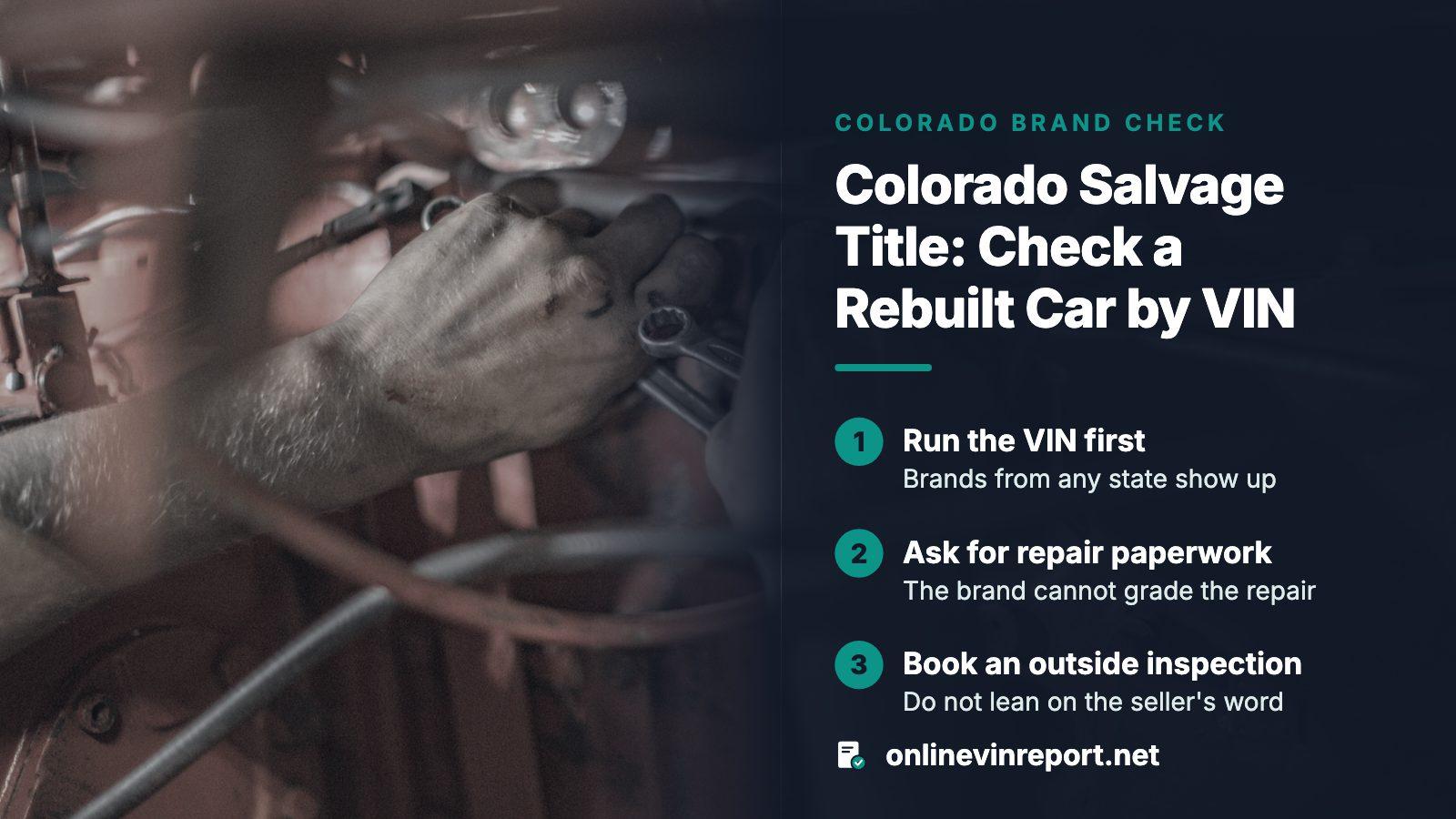
THE SHORT ANSWER
A salvage or rebuilt title in Colorado is a brand placed on the title record by the state, and it stays in the car's history. You cannot judge the repair from the brand alone. Run the VIN through a title check, ask for the repair paperwork, get an independent inspection, and read Colorado's current DMV rules for the exact requirements. We could not open the DMV pages ourselves.
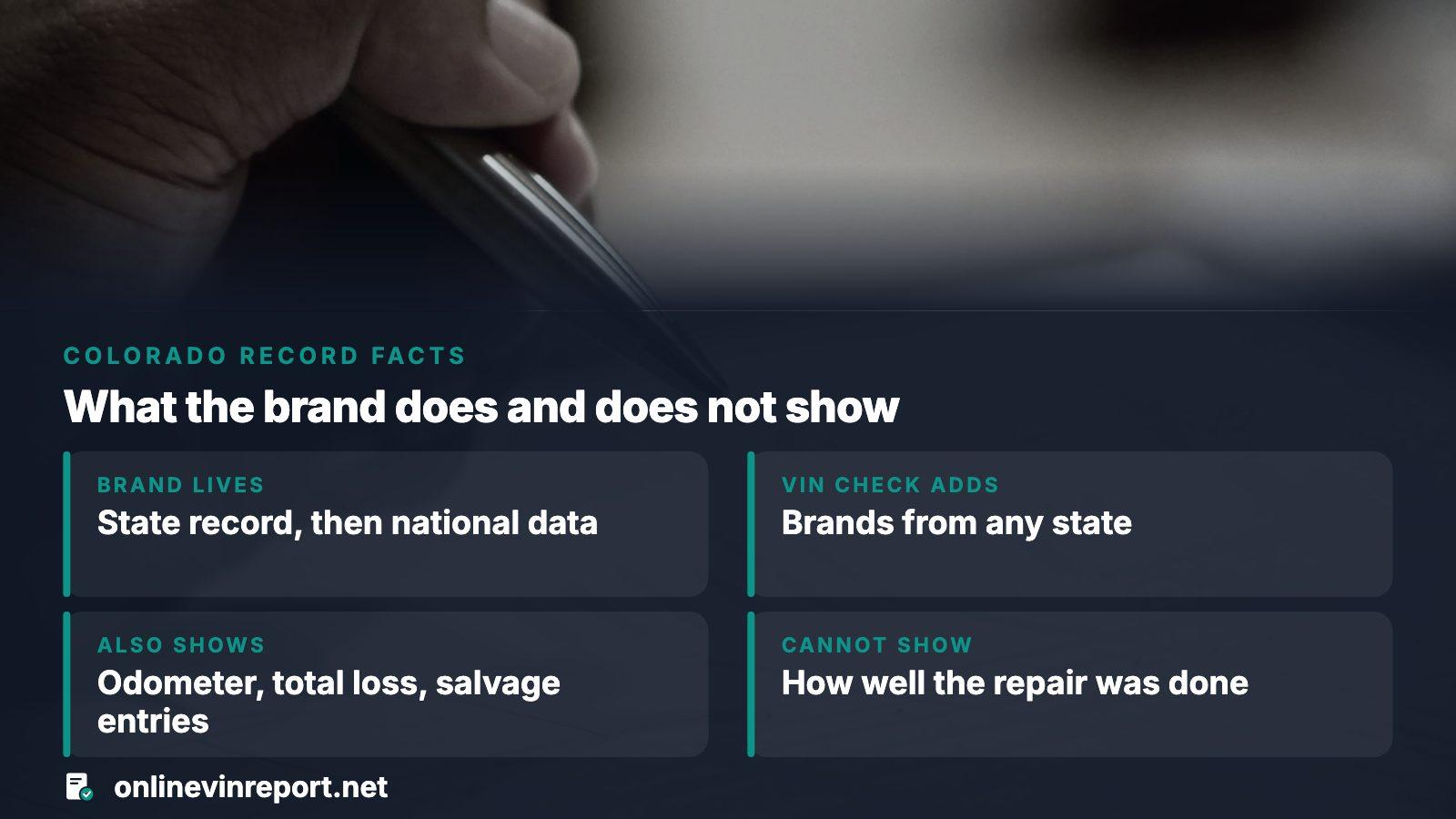
- Where the brand lives
- On the state title record, then in national title data
- What a VIN check adds
- Brand history from any state, odometer, total loss and salvage entries
- What it cannot show
- How well the repair was done
- Preview
- Free look, paid report later
What a Colorado brand tells you, and what it leaves out
Salvage, junk and flood are labels, in the words of the federal title-data system, applied by a state motor vehicle titling agency to describe what happened to a vehicle. When Colorado applies one, it is saying the car's condition changed in a way a later buyer deserves to know about.
What the label does not say is how bad the damage was or how good the fix is. Two cars with the same brand can be a hail-pocked sedan with sound structure and a flood victim with corroded wiring. The brand is the start of your questions, not the answer to them. A buyer who treats it as a verdict in either direction, cheap but fine or hopeless, is guessing.
Salvage and rebuilt are two stages of one car
Most people searching for a rebuilt title in Colorado are looking at the second half of a story. First the car is declared salvage. Later, if someone repairs it and the state accepts the repair, the record shows a rebuilt status. The earlier salvage entry does not vanish, which is why a rebuilt car still shows up in a title check.
| Stage | What it usually means for you |
|---|---|
| Salvage | A loss was declared; the car is typically not ready for normal sale and use |
| Rebuilt | Someone repaired it and the title was updated; the damage history stays attached |
| No brand shown | No brand recorded for this VIN, which says nothing about unreported damage |
The exact Colorado wording, forms and inspection steps for moving between these stages sit on the Division of Motor Vehicles site. That site blocked our automated reading, so this page does not quote them. Open them yourself before you rely on any seller's description.
Why the seller's word is the weakest evidence
A listing that says rebuilt could mean a Colorado rebuild, an out-of-state rebuild, or a loose way of saying the car was fixed after a wreck. Those are different histories with different paperwork. Ask which state issued the brand, when, and who did the repair.
Then compare the answer to a record you pulled yourself. If the VIN check shows a brand the seller never mentioned, or shows none when the seller volunteers a rebuild story, one of the two sources is wrong and you should find out which before negotiating price.
What a national title check adds for a Colorado car
A Colorado title speaks only for Colorado. A car that lived elsewhere first can carry another state's brand, and the federal system behind title checks stores every brand any state applied, not only the newest. That matters when a vehicle crossed a border between owners.
The Department of Justice builds its consumer report around five items, and they make a handy checklist.
- The state that currently holds the title, with the date it was last issued
- Every brand any state has put on the VIN
- Odometer readings that were recorded
- Whether an insurer or owner wrote it off
- Any time it was sold or handled as salvage
The data is fed by motor vehicle agencies, insurance carriers, scrap and salvage operators and recyclers, all of whom owe the system regular reports under federal law.
Reading the result without over-reading it
An empty report is a good sign, and the federal page says as much. It is also narrow on purpose. Repairs, recalls and maintenance are outside its scope, so an empty result tells you little about the car as a whole.
When a brand, write-off or salvage entry does show up, the federal guidance is to treat the car as possibly unsafe. That does not mean walk away every time. It means the price, the inspection and the repair evidence now carry far more weight than the paint and the test drive.
Read the dates
Put the total loss or salvage date next to the title date and the odometer readings. A long gap, or mileage that moves backward between entries, is a question for the seller.
Questions for the seller, before money moves
A properly rebuilt car should come with a story you can document. Ask for the items below, and treat reluctance as information.
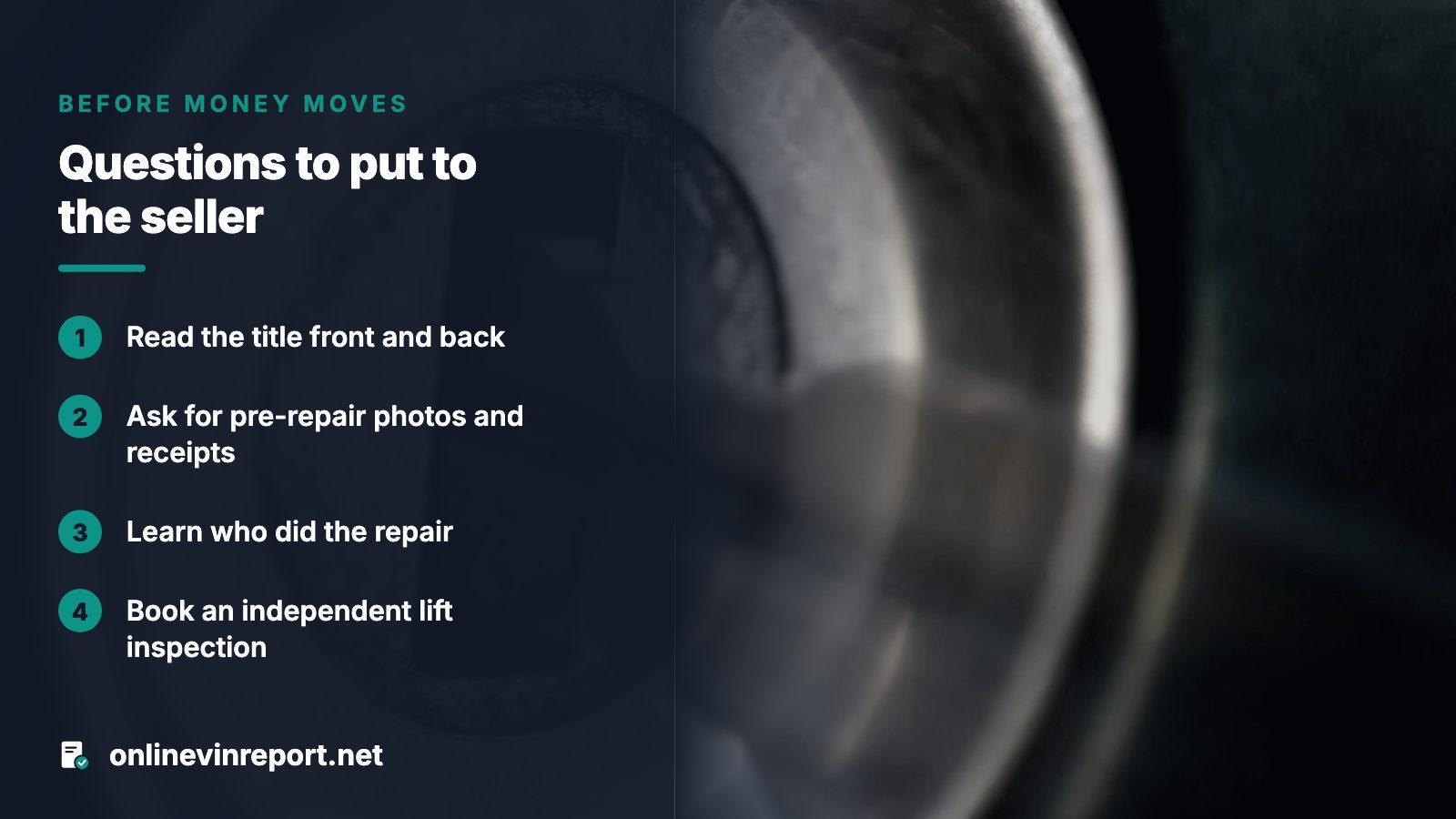
- The title itself, read front and back, with the brand wording in plain view
- Photos from before the repair and receipts for parts and body work
- Who did the repair and whether a shop or the owner did it
- Any state paperwork that moved the car out of salvage status
- Permission for an independent mechanic to inspect it on a lift
Colorado publishes forms for the rebuild process on its DMV site. Check their current names and what they require there, since we could not read them, then ask whether the seller completed them.
A Colorado bill you may see quoted, and why it is not the law
Some pages describe a separate total loss brand for Colorado titles and say a car that is both total loss and salvage gets the salvage brand. That language comes from HB16-1293, a 2016 bill. The General Assembly's own page lists its status as lost.
So a description of that bill is not a description of current Colorado practice. If a seller or an article cites a total loss brand as settled Colorado rule, ask for the statute or the DMV page behind it. The bill's summary is still a handy reminder of what lawmakers wanted buyers to see: the owner and lienholder told when a branded title issues, and the vehicle's damage visible on the record.
Running the VIN check on a Colorado car
Copy the VIN off the car and off the title, and confirm the two agree character for character before typing it in. A mismatch is a reason to stop, not to retype.
OnlineVINReport gives you a free preview of a VIN first. The full report is one purchase with no subscription, and for a branded Colorado car, open the brand, write-off, salvage, mileage and auction-photo sections first. See the pricing page for current options. If the report matches what the seller told you, you have a better basis for the next step, the inspection. If it does not match, you have your answer sooner and cheaper.
After the check: price, insurance and resale
A brand usually changes what a car is worth to the next buyer, and that works against you again when you sell. Ask your insurer before purchase how they treat a rebuilt car, and get the answer in writing if you can. Lenders can also be cautious, so line up financing early.
If the history, the paperwork and the inspection all hold up, a discount for the brand can be a fair trade. If any of the three is missing, the discount has to cover a risk you cannot measure.
Where this information comes from
- Justice Dept (BJA): what the NMVTIS consumer report contains — supports the five report items, brand history across states, and the reporting sources
- US Department of Justice: Approved NMVTIS data providers — supports where consumers can obtain this kind of title report
- Colorado General Assembly: HB16-1293 — supports the lost status of the total loss brand bill
Sources and photos: Facts checked against the sources above in November 2026. Photos by Nina Mercado, Derek Nelson and Masjid MABA on Unsplash; diagrams by OnlineVINReport.
Keep reading
- Salvage title VIN check: run it online before you payHow to find a salvage brand by VIN in any state.
- Rebuilt title check by VIN: is the car clean or rebuilt?What to verify on a car sold as rebuilt.
- What is a rebuilt title? What it means and what a VIN title check showsThe rebuilt brand explained apart from any one state.
- Title washing: how a brand vanishes and what a VIN title check can showWhy a brand sometimes goes missing after a move to another state.
Frequently asked questions
What is a salvage title in Colorado?
It is a brand on the title record showing the car was declared too damaged to treat as an ordinary vehicle. The precise legal test and the steps to return the car to the road are on the Colorado DMV site, which we could not open, so confirm them there before buying.
How do I find out if a Colorado car has a rebuilt title?
Run its VIN through a title check that draws on national title data, then set the record beside the paper title. The check shows brands from any state, so it can catch a brand the Colorado title no longer shows. Ask the seller to explain any mismatch.
If the check comes back empty, was the car never wrecked?
No. It means nothing of that kind was recorded. Damage that was repaired privately, or never reported, will not appear. That is why a clean report should still be paired with an independent inspection.
Is a rebuilt Colorado car safe to buy?
It depends on the repair. The federal guidance warns that a brand or salvage history can mean an unsafe vehicle. Ask for repair records, have a mechanic check the structure and safety systems, and price the car for the risk.
Does the free preview show the brand?
The preview is a first look at a VIN. The detailed title brand, salvage and odometer entries come with the paid report, a one-time purchase. Check the pricing page for the options before you decide.
Now check the car itself
The guide explains what to look for. The report shows what this VIN has on record.