THE SHORT ANSWER
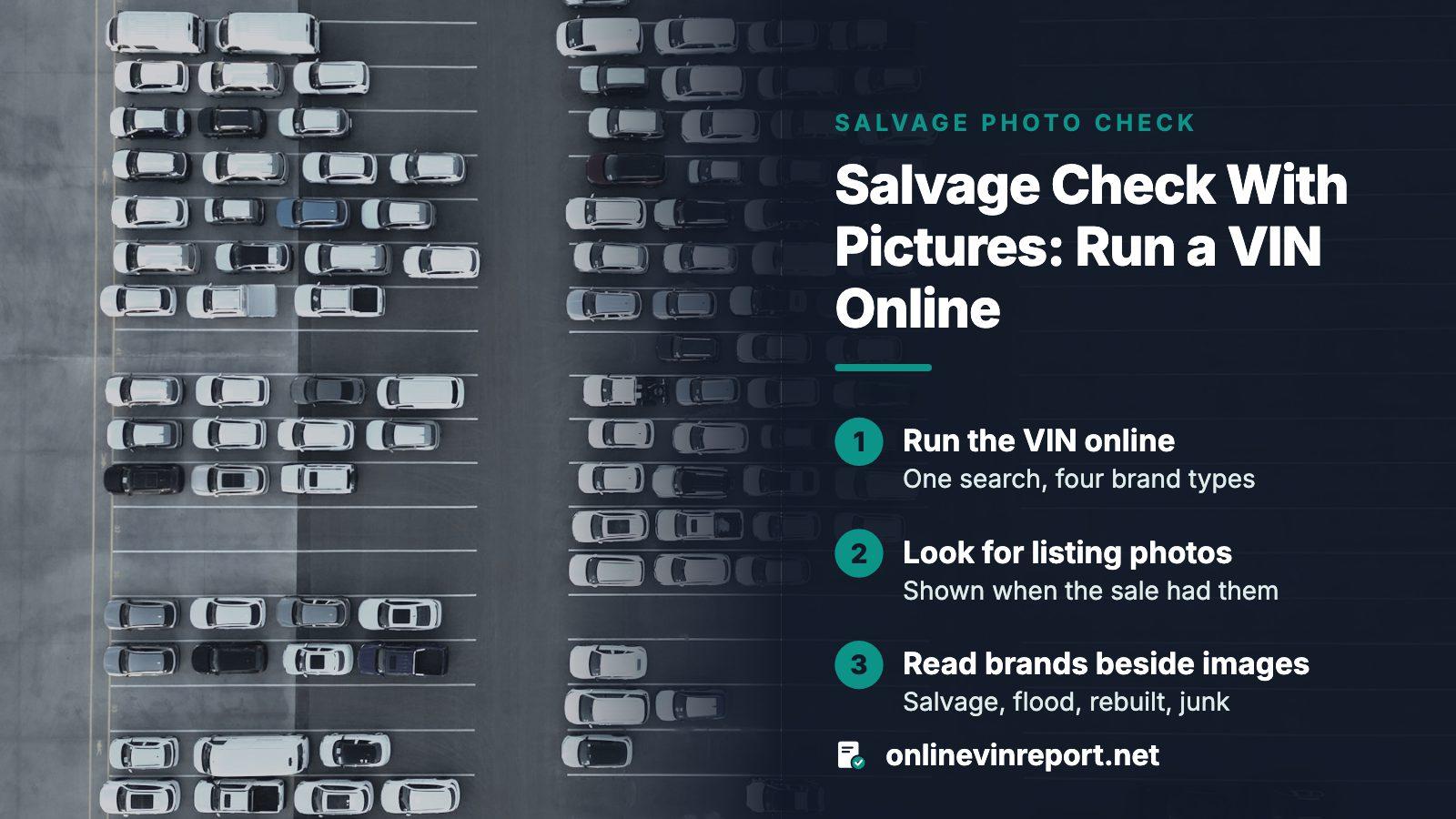
Enter the VIN and read the brand and salvage entries first. A salvage, junk, flood or rebuilt label means the car has been written off before. Next, open the photos if there are any and compare the damage shown with the repairs on the car in front of you. No photos does not mean no wreck, so finish with a mechanic's inspection.
- Brands covered
- Salvage, flood, rebuilt, junk
- Photos
- Shown when the sale listing had them
- Preview
- Free, no card needed
- Full report
- One payment, no subscription
What one VIN pulls up
The lookup runs a single VIN through three kinds of record and sorts the hits by date: brands from title agencies, write-offs from insurers, and wreck sales from salvage yards and auctions. Where a sale came with photographs, they appear beside that entry.
| Record | What it tells you | Question for the seller |
|---|---|---|
| Title brand | A state labeled the car salvage, junk, flood or rebuilt | Which state, which date, who repaired it |
| Total-loss entry | An insurer judged repairs to cost more than the car was worth | Why does my title show no brand |
| Yard or auction entry | The car changed hands as a wreck | Where was it hit, according to the photos |
| Mileage at each event | The odometer reading on the day of the loss or sale | Why is today's figure not higher |
What the photographs add to the paperwork
A brand says a car was written off but never what hit it. Photos from the sale fill the gaps, and five details repay a close look.
- Where the impact landed. Front, rear, side or roof shows which panels to examine in person.
- Whether the airbags fired. California's DMV lists a restraint light that stays lit and resealed airbag covers among the signs of earlier damage.
- Water marks. Mud, silt or stained upholstery suggests a flood, and the FTC warns that water slowly corrodes mechanical and electrical parts.
- Whether it is the same car. Color, wheels, trim and interior should match the one you are standing beside.
- What was missing. A stripped cabin or absent panels explain a low sale price and what had to be replaced.
From an NHTSA owner complaint
A Hyundai Sonata owner wrote to NHTSA that Hyundai refused an engine claim on account of a salvage title. By that owner's telling, a damaged door alone had become an insurance write-off after a body shop padded its bill, and the frame was untouched. Photos were attached to the complaint.
One owner's version, yet it shows why photos matter: the brand says an insurer gave up on the car, and the pictures show how much was hurt.
Running the lookup before the test drive
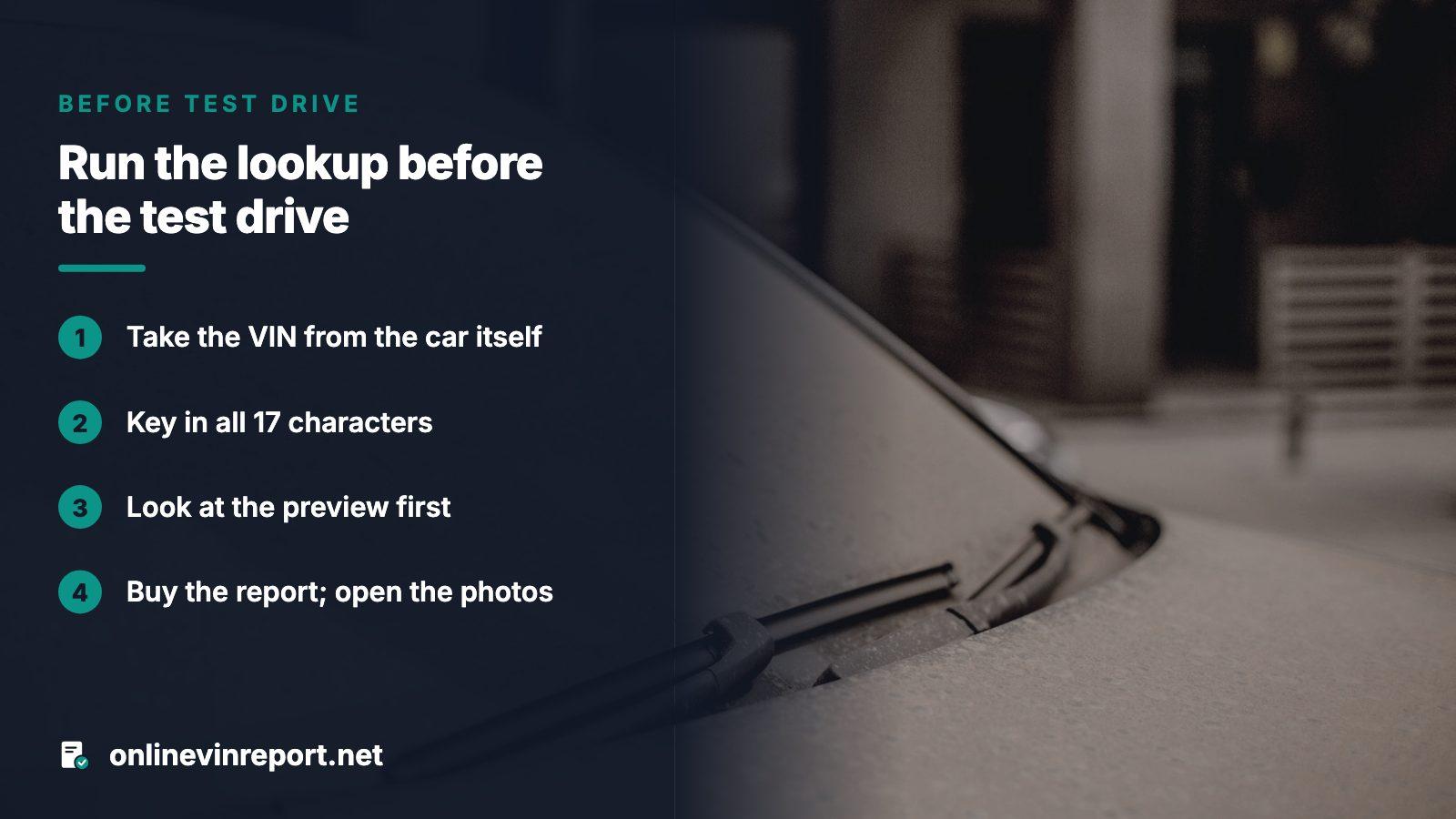
- Take the VIN from the car, not from the listing: the stamped plate seen through the windshield's lower corner at the driver's end, the door-frame label and the title should all agree.
- Key in every one of the 17 characters. A single wrong one pulls up a stranger's car, or nothing.
- Look at the preview first. It asks for no payment details.
- For a car you are still weighing, buy the report and start with the brand and salvage entries.
- Open the photos, note each date and send your questions to the seller in writing.
Four brands, translated
Wording differs by state, yet four labels cover most of what turns up. The meanings below follow the FTC and the Texas DMV.
| Brand | Plain meaning | Your move |
|---|---|---|
| Salvage | Insurer ruled it a total loss after major damage, though repair remains possible | Price it as a wreck until repairs are proven |
| Rebuilt | A former salvage car that was repaired and cleared the state's inspections, which Texas also calls prior salvage | Ask for repair records and have the frame checked |
| Flood | Water rose until it filled the engine compartment | Hunt for mud and mold, or pass |
| Junk | In Texas, never to be titled or registered again | Not a car to drive |
Why no result, or no photos, is half an answer
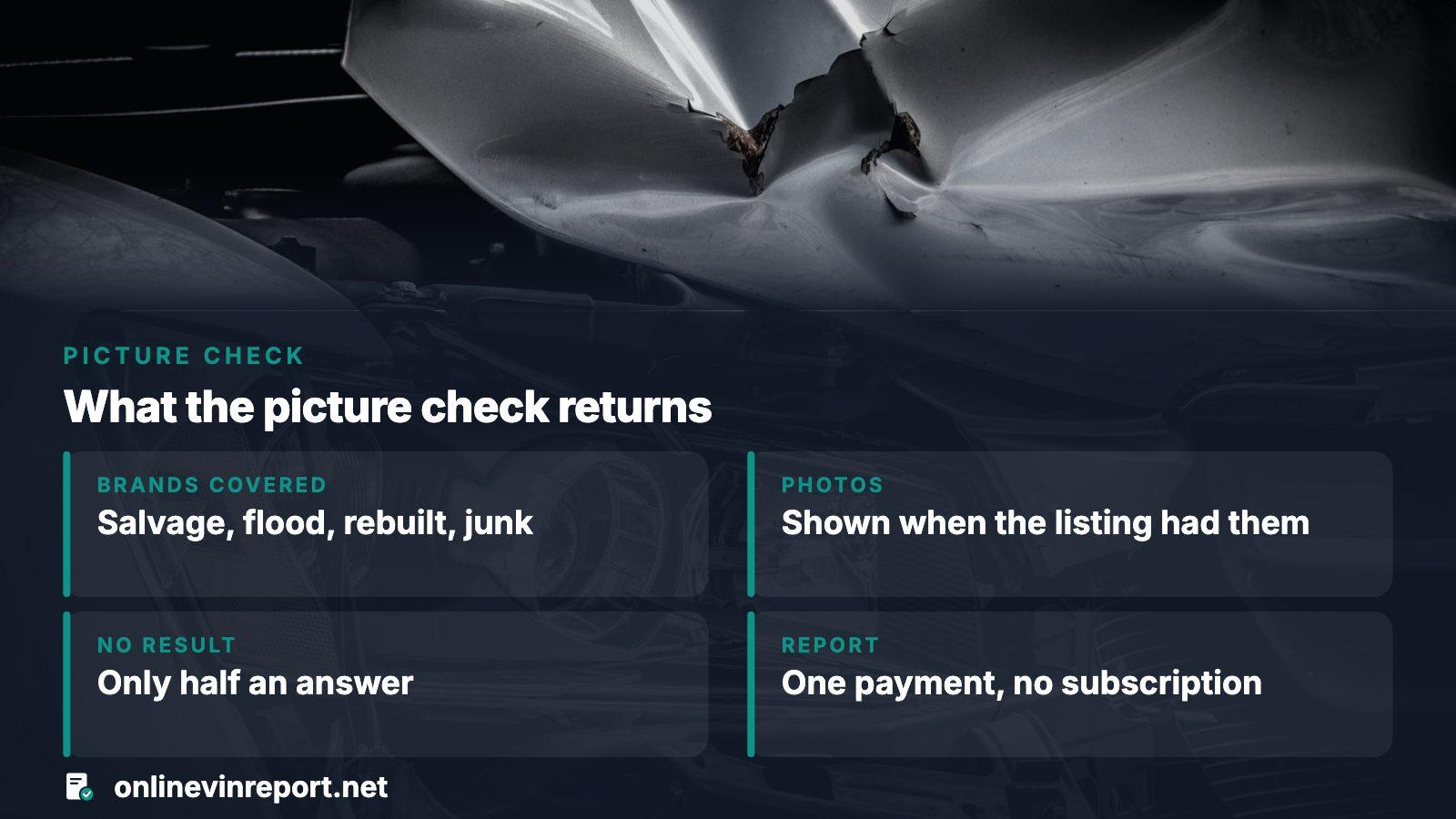
The federal title record covers five things: title state, brands, odometer reading, total loss and salvage record. Pictures are not on the list, and the Justice Department treats an empty report as good news, not proof of a perfect car. Insurer data has an edge too: the FTC notes that the NICB database lists a loss only when the car carried insurance at the time.
A wreck repaired privately, with no claim filed, produces no record anywhere, and a car that never passed through a listed sale has no pictures at all.
From an NHTSA owner complaint
A 2023 Tesla Model 3 owner told NHTSA the seller called the title clean and, in the owner's words, "showed me pictures" to prove it, and the title later issued in Colorado looked clean too. Then a Tesla service center refused the car after a crash, citing a salvage status. History records the owner pulled up listed junk-and-salvage and total-loss entries.
A seller's paperwork is one record among several, so run the VIN before payment day instead of after the first repair shop turns the car away.
How a brand from another state still finds you
Brand rules belong to each state. After Hurricane Katrina, officials reported flooded vehicles trucked from Louisiana to states that did not label flood damage, then cleaned up and sold. The national title system was built to stop that: it holds every brand any state has applied to a VIN, and the law obliges titling agencies, insurers, recyclers and yards to report in.
California adds a dealer duty: licensed dealers there must obtain a national title report before advertising a used car, and display a notice when it shows a junk or salvage past or a brand. The DMV concedes that sellers' disclosure is difficult to police for cars from other states, so weigh a private seller's word below the record.
What a brand changes once the car is yours
A branded title moves more than the price. Texas warns that rebuilt vehicles are often refused insurance and sell for far less than unbranded ones, and it tells buyers to ask where the repairs happened, whether parts were cut and welded, and whether the frame is straight.
From an NHTSA owner complaint
One buyer took a 2014 Ford Escape home from an auction with a branded title. It smoked and overheated once it arrived by tow truck. The dealer's service department put the question to Ford and, the buyer wrote, came back after 20 days refusing the recall work on the grounds that warranties exclude branded cars.
Those are single accounts, not rulings on any maker's policy. Still, ask a dealer in writing how a brand affects recall and warranty work, and get an insurance quote against the VIN before committing.
Results that should stop a purchase
- A total-loss or auction entry beside a title that shows no brand at all.
- Photos of damage on a part that looks untouched in person.
- A different color, wheel style or interior in the pictures than on the car for sale.
- A brand from another state that the seller never brought up.
- A yard entry that marks the car as dismantled, crushed or exported.
One item is a reason to ask questions, while two or more are a reason to walk.
Cost, and the step after the report
The preview costs nothing and reveals whether the VIN has any record at all. Paying for the report happens one time, with no renewals, and packs for people comparing several cars are listed on the pricing page. Spend it on the car you would sign for.
Then take the report to the car. Walk around it with the photos open on your phone, get a mechanic to look underneath, and ask the seller to account for every entry. Where story and record disagree, treat the record as the answer.
Where this information comes from
- NMVTIS: Understanding an NMVTIS vehicle history report — the five items in the federal title record and what an empty report means
- FTC: How to steer clear of a flood-damaged car — insured-only limit of the NICB database and what a mechanic can find
- California DMV: Branded titles — dealer disclosure duty and the physical signs of earlier damage
- Texas DMV: Title check, look before you buy — brand meanings and the advice to inspect before paying
- NHTSA owner complaint 11616948 — owner experience, paraphrased
- NHTSA owner complaint 11246496 — owner experience, paraphrased
- NHTSA owner complaint 11468333 — owner experience, paraphrased
Sources and photos: Facts checked against the sources above in November 2026. Photos by Iain, JavyGo and Clark Van Der Beken on Unsplash; diagrams by OnlineVINReport.
Keep reading
- Salvage auction history check: see if a car was sold as a wreckWhere the photos come from and how to read an auction entry.
- Salvage title VIN check: run it online before you payThe full salvage title lookup, with the limits of each record.
- Title washing: how a brand vanishes and what a VIN title check can showHow a brand goes missing between states, and how to spot it.
- Sample reportSee how the entries and photos are laid out in a finished report.
Frequently asked questions
Can a salvage VIN check show pictures of the damage?
Yes, when the car went through a salvage sale and the listing carried photographs; they sit beside that sale entry. Some branded cars have none on record, so a missing picture says little either way.
Is a salvage check with pictures free?
No charge applies to the preview, which shows whether the VIN has any record. The full report, photos included, is a single payment with nothing recurring. The NICB database the FTC mentions is free too, but it lists only insured losses.
Why does my check show a salvage entry but no photos?
Photos come from the listing of a wrecked car being sold, so a car with no listed sale has none. Use the gap as a reason to inspect closely, since a missing picture never proves the damage was minor.
Can a rebuilt car be insured and registered?
Rebuilt means a former salvage car cleared its state inspections, so it can return to the road. Insurance is a separate matter: Texas warns that rebuilt vehicles are often refused coverage. Get a quote from your insurer using the VIN before paying for the car.
What if the seller's title is clean but the check shows salvage?
Believe the check until the seller proves otherwise. A brand can drop off a paper title once a car is retitled elsewhere, and a total-loss entry can exist with no brand beside it. Ask for repair paperwork, get an inspection, and leave if the explanation does not fit.
Now check the car itself
The guide explains what to look for. The report shows what this VIN has on record.